
Not All Succulents Need Full Sun — Here Are the Best Low Light Succulents
Low light succulents are real, and they can thrive in the dim corners, north-facing windowsills, and shadowy shelves of your home. Here’s a quick look at the top picks:
| Succulent | Light Tolerance | Best Spot |
|---|---|---|
| Haworthia (various) | Very low light | Desk, shelf, bathroom |
| Snake Plant (Sansevieria) | Very low light | Any room corner |
| Gasteria | Low to moderate | North or east window |
| String of Pearls | Low to moderate | Hanging basket, bookshelf |
| Panda Plant | Low to moderate | Tabletop, office |
| Ponytail Palm | Low to moderate | Floor, bright corner |
| Mistletoe Cactus | Low light | Hanging basket |
| Holiday Cacti | Low to moderate | Windowsill, shelf |
Most people assume succulents need a blazing sunny windowsill to survive. That’s only half true.
The reality? A handful of succulent species have evolved to live in shaded, rocky habitats — under canopies, tucked into crevices, or even partially buried underground. Indoors, that translates to plants that can handle the kind of light most rooms actually have.
That said, “low light” is relative. Indoor low light typically means 25 to 200 footcandles — enough to read by, but not enough for most plants to photosynthesize well. The succulents in this list are the ones that genuinely cope with those conditions, not just the ones that survive a week before slowly dying.
If you’ve killed succulents before and blamed yourself, there’s a good chance the problem was light — or rather, too little of it for the wrong plant. Choosing the right variety from the start makes all the difference.
This list covers 30 shade-tolerant succulents that work hard in low-light spaces, with honest notes on what each one actually needs.

Defining “Low Light” for Indoor Succulents
Before we dive into the list, we need to clear up a massive misconception. What a plant nursery calls “shade” and what you call “shade” in your hallway are two very different things.
In botany, light is often measured in footcandles (FC). To give you some perspective, a bright sunny day outdoors can hit 10,000 FC. A “shady” spot under a tree might still receive 500 to 3,000 FC. However, once you move indoors, the numbers plummet.
A typical “low light” room—where you can read a book comfortably but don’t see any sunbeams—usually registers between 25 and 200 FC. A north-facing window, which is the gold standard for low light succulents, usually hovers around 500 FC. If you place a succulent in a spot with less than 25 FC, it isn’t “growing”; it’s essentially in a slow-motion state of starvation.
When succulents don’t get enough light, they undergo etiolation. This is a fancy word for “stretching.” The plant becomes tall, leggy, and pale as it desperately reaches for a light source. To avoid this, we need to match the plant’s biological threshold with the actual light available in our homes.
| Light Level | Footcandles (FC) | Typical Indoor Location |
|---|---|---|
| Very Low Light | 25–100 FC | Room corners, away from windows |
| Low Light | 100–200 FC | North-facing windows, office desks |
| Outdoor Shade | 500–3,000 FC | Covered patios, under tree canopies |
Ideal Indoor Locations for Shade-Tolerant Plants
If you want your low light succulents to do more than just survive, placement is key.
- North-facing windows: These provide consistent, weak light throughout the day without the scorching intensity of the afternoon sun.
- Room centers: A coffee table in the middle of a well-lit room often provides just enough ambient light for varieties like Sansevieria.
- Office desks: If your office has overhead fluorescent lighting, many “shade” succulents can actually utilize that light to maintain their health.
- Bathroom shelves: As long as there is a small window, the humidity can be a bonus for epiphytic succulents like Mistletoe Cactus.
The Best Low Light Succulents for Your Home
When we look for the champions of the shadows, three genera stand above the rest: Haworthia, Gasteria, and Sansevieria. These plants are naturally chlorophyll-rich, often sporting deep green tones that allow them to absorb every scrap of available light.
For a deeper dive into specific species, check out our guide on the top-succulent-varieties-for-low-light.
One of our favorite beginner plants is Haworthiopsis concolor. This little gem grows up to 6 inches tall and features pointed green leaves with raised white spots. It’s incredibly hardy and thrives on neglect, making it perfect for a dim office or a bedroom shelf.
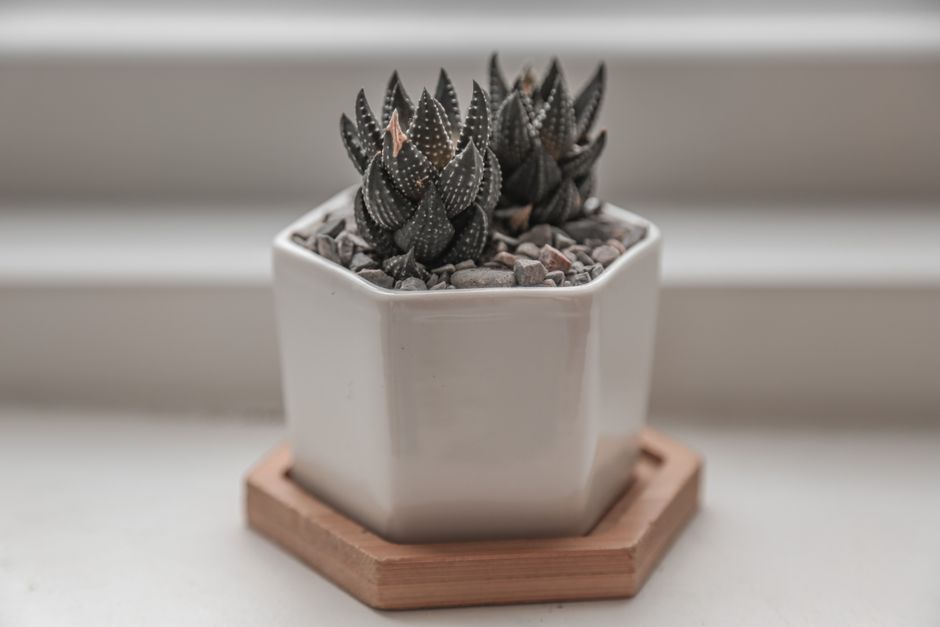
Another standout is the Haworthiopsis fasciata, often called the Zebra Plant. It is frequently confused with its cousin, H. attenuata, but you can tell them apart by the leaf texture: H. fasciata has smooth inner leaf surfaces, while the outer surfaces are covered in those iconic white “zebra” ridges.
Why Haworthia are the Ultimate Low Light Succulents
Haworthia (and the closely related Haworthiopsis) are the undisputed kings of the shade. Native to South Africa, these plants have evolved a brilliant survival strategy. In the wild, they often grow partially buried in the sand to protect themselves from the sun.
Many species, such as the Window Haworthia, have translucent “windows” on their leaf tips. These windows allow sunlight to penetrate deep into the internal tissues of the leaf, where photosynthesis happens safely away from the drying heat. This adaptation makes them naturally suited for the lower light levels found inside our homes. They are slow-growing, compact, and rarely outgrow their pots.
Structural Stars: Snake Plants and Gasteria
If you need something with more height or a unique “tongue-like” shape, look no further than Sansevieria (Snake Plants) and Gasteria.
Snake Plants, often called “Mother-in-Law’s Tongue,” are virtually bulletproof. They can survive for years in near-darkness. While they won’t grow much in a dark corner, they won’t die either. They act almost like “permanent furniture” until you move them to a brighter spot.
Gasteria get their name from their stomach-shaped flowers (gaster is Greek for stomach). Their leaves are thick, fleshy, and often have a rough, sandpapery texture. They are incredibly slow growers and are very happy in the lower light of a north or east window.
30 Shade-Tolerant Varieties for Dim Corners
Ready to go shopping? We’ve curated a list of 30 succulents that won’t throw a tantrum if they aren’t in direct sun.
- Snake Plant (Sansevieria trifasciata): The gold standard for low light.
- Zebra Haworthia (Haworthiopsis fasciata): Iconic white stripes and shade tolerance.
- ZZ Plant (Zamioculcas zamiifolia): Technically a succulent, this plant loves dark corners.
- Gasteria ‘Little Warty’: A fun, bumpy-textured plant that stays small.
- Panda Plant (Kalanchoe tomentosa): Also known as “pussy ears” due to its fuzzy, soft leaves. It grows 12-18 inches tall.
- Ponytail Palm (Beaucarnea recurvata): Not a palm, but a succulent with a water-storing trunk. It can reach 8 feet but grows very slowly.
- Mistletoe Cactus (Rhipsalis baccifera): An epiphyte from the rainforest that hates direct sun.
- String of Pearls (Senecio rowleyanus): Popular for its pea-like leaves; does well in indirect light.
- String of Hearts (Ceropegia woodii): Features beautiful heart-shaped leaves and trailing vines up to 3 feet.
- Christmas Cactus (Schlumbergera): A flowering succulent that prefers cool, shaded spots.
- Burro’s Tail (Sedum morganianum): Great for hanging baskets in bright, indirect light.
- Haworthia retusa: Known as “Star Cactus,” it has flat, windowed leaf tops.
- Gasteria bicolor: Features long, tongue-shaped leaves with white spots.
- Aloe Vera: While it prefers light, it can tolerate lower light indoors if kept dry.
- Bird’s Nest Sansevieria (Sansevieria hanhii): A dwarf version of the snake plant that forms a tight rosette.
- Wax Plant (Hoya carnosa): Famous for its fragrant, star-shaped flowers.
- Haworthia emelyae: A slow-growing evergreen that turns pinkish in brighter light but stays green and healthy in shade.
- Ox Tongue (Gasteria verrucosa): Deep green leaves with a rough, “tongue” texture.
- Lance Aloe (Aloe aristata): A small, hardy aloe that stays under 8 inches.
- Devil’s Backbone (Pedilanthus tithymaloides): A unique, zig-zagging stem succulent.
- Jade Plant (Crassula ovata): Can tolerate lower light, though it grows much slower.
- String of Bananas (Curio radicans): A faster-growing trailer for dim bookshelves.
- String of Dolphins (Senecio peregrinus): Needs slightly more light than pearls but handles indirect light well.
- Easter Cactus (Rhipsalidopsis): Similar to Christmas cactus, blooming in spring.
- Haworthia limifolia: Often called “Fairy Washboard” due to its corrugated leaves.
- Haworthia cymbiformis: Boat-shaped leaves that are very translucent.
- Elephant Bush (Portulacaria afra): The variegated version handles lower light better than the solid green.
- Peperomia dolabriformis: Also known as “Prayer Pepper,” it has unique folded leaves.
- Crassula ‘Moonglow’: A columnar succulent with velvet-soft leaves.
- Conophytum minimum: A tiny “cone plant” that produces night-scented flowers.
Hanging and Trailing Low-Light Favorites
If you want to add vertical interest to a dim room, trailing succulents are the way to go. Senecio rowleyanus (String of Pearls) is a fan favorite, often sold in 2-inch to 4-inch pots. It looks like a string of green peas and can dangle 2 to 3 feet from a shelf.
Ceropegia woodii (String of Hearts) is another winner. It’s slightly more forgiving than String of Pearls and produces small “beads” or bulbils along the stem that make it incredibly easy to propagate. For those with very little light, the Mistletoe Cactus is the safest bet, as it naturally grows in the shade of jungle canopies.
Flowering Succulents for Shady Spaces
Who says you need sun for flowers? The “Holiday Cacti” (Schlumbergera) are epiphytes, meaning they grow on trees in the rainforest. They actually require long nights and cooler temperatures to trigger their bloom cycle.
Hoya carnosa (Wax Plant) is another excellent choice. It produces clusters of porcelain-like flowers that are often highly scented at night. If you’re looking for something truly unique, Conophytum minimum is a dwarf succulent that forms clumps of fleshy “bodies” and produces small, night-scented blossoms during its growing season.
Essential Care and Watering in the Shadows
The #1 mistake people make with low light succulents is watering them like they’re sitting in the Sahara Desert. In a low-light environment, water evaporates much slower. The plant’s metabolism is also slower, meaning it “drinks” less.
We recommend the “Soak and Dry” method. This means you water the soil until it’s thoroughly saturated, then wait—sometimes weeks or even a month—until the soil is bone-dry all the way to the bottom before watering again.
Adjusting Your Watering for Low Light Succulents
- Check the bottom: Don’t just feel the surface. Use a wooden skewer or a moisture meter to ensure the bottom of the pot is dry.
- Winter reduction: Most succulents enter a period of dormancy in the winter. During this time, you should barely water them at all—perhaps once every 6 to 8 weeks.
- Summer dormancy: Be aware that some species, like many Haworthia and Conophytum, are actually summer dormant. They take a rest when it gets too hot. Providing too much water during their rest period is a fast track to root rot.
- No “sips”: Never give your plants small sips of water. This encourages shallow root growth. Always soak thoroughly, then dry completely.
Common Misconceptions and Mistakes to Avoid
One of the biggest pitfalls is trusting “Top 10” lists that include plants like Echeveria ‘Afterglow’ or Echeveria pallida. While these are stunning plants, they are not low-light succulents. Echeverias need full sun to maintain their tight rosette shape and vibrant colors. In a low-light room, an Echeveria will stretch out and lose its beauty within weeks.
Another myth is that succulents can live in total darkness. No plant can survive without some light. If you have a room with no windows, you must use artificial lighting or accept that your plant is essentially a “long-lived bouquet” that will eventually need to be replaced.
Finally, avoid over-fertilizing. Low-light plants grow slowly. Giving them a heavy dose of fertilizer will only lead to weak, leggy growth or chemical burns on the roots. A half-strength, low-nitrogen fertilizer once or twice a year is plenty.
Frequently Asked Questions about Low Light Succulents
Can succulents survive in a room with no windows?
Strictly speaking, no. However, you can make it work using artificial grow lights. Small tabletop grow lights can be set on a timer for 6 to 8 hours a day to provide the spectrum of light the plant needs. If you don’t want to deal with lights, a high-quality “fake” succulent is a better choice for a windowless bathroom or basement.
Why is my succulent stretching and losing its color?
This is etiolation. Your plant is literally starving for light and is stretching its stems to find a source. If this happens, you should move the plant to a brighter location (like a north or east window). You can also “behead” the stretched top, let it callous for a few days, and replant it to start over with a more compact shape.
How do I know if I’m overwatering in the shade?
Look for these red flags:
- Yellow, translucent leaves: The leaves may feel mushy or fall off at the slightest touch.
- Blackened stems: This is a sign of rot moving up from the roots.
- Fungus gnats: These tiny flies love damp, decaying organic matter in the soil. If you see these signs, stop watering immediately and consider repotting the plant in fresh, dry cactus compost.
Conclusion
At FinanceBoostX, we believe that everyone should be able to enjoy the “leafy good looks” of a succulent collection, regardless of how much sun their home gets. By choosing the right low light succulents—like the “tough-as-nails” Snake Plant or the windowed Haworthia—you can create a thriving indoor garden in even the dimmest corners.
Remember: the secret to success isn’t a green thumb; it’s matching the right plant to the right light. Start with a Zebra Plant or a Gasteria, keep the watering can at bay, and watch your shady business flourish.
For more tips on optimizing your home for greenery, explore our More info about indoor setups page!
