
Why Light Requirements for Succulents Are the Key to Keeping Them Alive
Light requirements for succulents are simple once you know the basics. Here’s a quick overview:
| Succulent Type | Daily Light Needed | Best Spot |
|---|---|---|
| High-light (Echeveria, Sedum) | 6+ hours bright light | South-facing window |
| Medium-light (Jade, Kalanchoe) | 4-6 hours indirect light | East or West window |
| Low-light (Haworthia, Sansevieria) | 3-4 hours indirect light | East-facing window |
| Under grow lights (any type) | 12-14 hours artificial light | 6-12 inches below light |
Succulents are tough plants. They store water in their leaves and can handle neglect better than most houseplants. But there’s one thing they really can’t survive without: enough light.
Without adequate light, succulents start to stretch out and look leggy. Their colors fade. They grow weak and lopsided, leaning toward whatever light source they can find. This is called etiolation — and it’s one of the most common problems indoor succulent owners face.
The good news? Whether you have a bright south-facing window or a dim apartment with no natural light at all, there’s a solution. You just need to understand what your succulents actually need — and how to give it to them.
This guide covers everything: natural light, grow lights, seasonal changes, and how to avoid the most common mistakes.

Understanding Natural Light Requirements for Succulents
When we bring succulents indoors, we are essentially trying to replicate the vast, sun-drenched landscapes of Africa, Mexico, and South America. In their natural habitats, these plants are subjected to intense solar radiation. To thrive in our homes, we must understand how to measure and provide that energy.
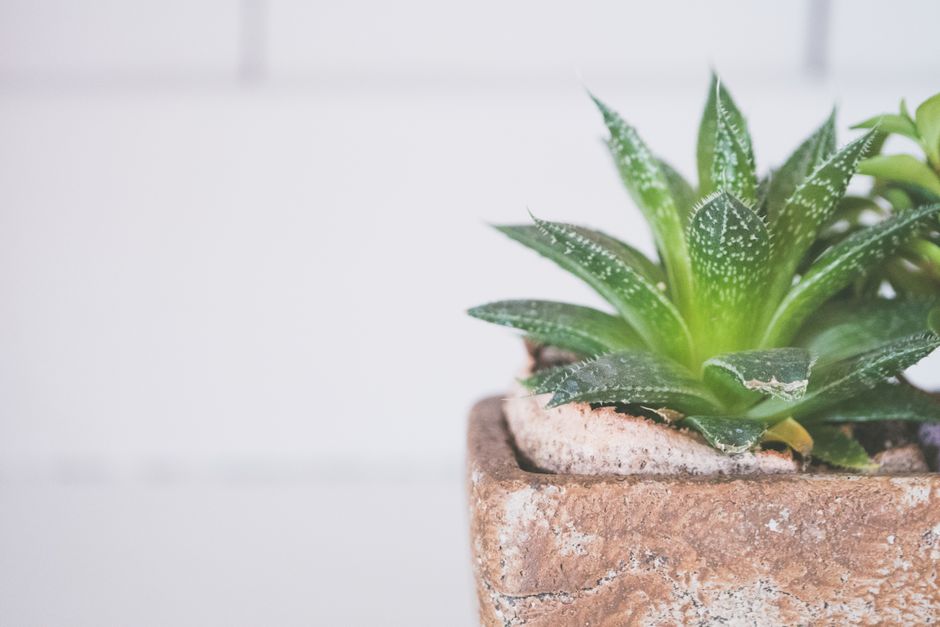
Succulents use a unique form of photosynthesis called Crassulacean Acid Metabolism (CAM). Unlike most plants that breathe during the day, succulents keep their pores (stomata) closed during the heat of the day to prevent water loss. They “inhale” carbon dioxide at night and store it as malic acid, then use the daytime sun to convert that acid into energy. This is why consistent daytime light is non-negotiable; if the sun doesn’t show up, the plant can’t process the “food” it collected overnight.
To gauge if your spot is bright enough, we often look at foot-candles (a measurement of light intensity). In direct noon sunlight, there are roughly 10,000 lumens per square foot. Indoors, even a “bright” spot might only offer a fraction of that. Understanding Indoor Succulent Success The Role Of Light starts with knowing which window in your house is the MVP.
Window Orientation and Intensity
Not all windows are created equal. The direction your window faces determines the quality and duration of light your plants receive.
- South-Facing Windows: These are the “Gold Standard” for high-light succulents like Echeveria and Agave. In the Northern Hemisphere, south windows provide the brightest, most consistent light throughout the day.
- East-Facing Windows: These provide gentle, direct morning sun. This is ideal for “low-light” succulents or those prone to scorching, as the morning rays are cooler than afternoon heat.
- West-Facing Windows: These offer intense, hot afternoon sun. While bright, the heat can sometimes be too much for fleshy-leaved varieties, potentially leading to sunburn if the plant is pressed against the glass.
- North-Facing Windows: These provide the weakest light. Most succulents will struggle here without supplemental grow lights.
| Window Direction | Light Intensity (Foot-Candles) | PPF (umol m⁻²s⁻¹) | Best For |
|---|---|---|---|
| South | 1,000+ | 250-450 | High-light varieties |
| East/West | 250-1,000 | 150-250 | Medium-light varieties |
| North | 50-250 | 50-150 | Very low-light tolerant only |
Signs Your Succulent Needs More or Less Light
Your plants are excellent communicators; you just need to know what to look for. When the light requirements for succulents aren’t met, the plant changes its physical structure.
Signs of Too Little Light (Etiolation):
- Stretching: The stem grows rapidly upward, creating large gaps between leaves.
- Fading Colors: Vibrant reds, purples, and pinks turn back to a dull green as the plant produces more chlorophyll to catch what little light is available.
- Flattening: Rosette-shaped plants (like Echeveria) may flatten their leaves downward to increase the surface area exposed to light.
Signs of Too Much Light (Sunburn):
- Bleaching: Leaves turn white or pale yellow.
- Brown Patches: Crispy, permanent scars appear on the parts of the plant facing the sun (often on the “ridges” of the plant).
- Stress Colors: While some “stress” (red or orange tips) is desirable and beautiful, deep bronze or shriveled leaves mean the plant is over-taxed.
For more help identifying these signals, check out our guide on Understanding Light Preferences For Indoor Succulents.
Choosing the Best Artificial Grow Lights
If your home lacks a south-facing window, or if you live in a region with dark, gloomy winters, artificial lighting is your best friend. In fact, modern technology is so good that artificial lights can sometimes be more effective than natural light because they provide a consistent, 100% predictable energy source.
Lumens, Kelvins, and Watts Explained
When shopping for grow lights, don’t get distracted by fancy marketing. Focus on these three metrics:
- Lumens (Brightness): Succulents generally need at least 2,000 lumens per square foot. For context, a standard 2-foot High Output (HO) T5 bulb gives out about 2,000 lumens, while a 4-foot version can provide 5,000 lumens.
- Kelvins (Color Temperature): This tells you the “color” of the light. Succulents thrive under “cool” light that mimics the midday sun. We recommend a color temperature between 5,000K and 6,500K.
- Watts (Energy Consumption): This is simply how much electricity the light uses. LEDs are the winners here, providing high lumens for very low wattage.
Ideal Specifications for Succulent Grow Lights:
- Lumen Output: 2,000+ per square foot.
- Color Temp: 5,000K – 6,500K (Full-spectrum).
- **PAR**: Look for “Full Spectrum” labels to ensure the light includes the blue and red wavelengths plants need for growth and flowering.
To find the perfect match for your collection, see our recommendations for the Top Led Lights For Your Indoor Succulent Garden.
LED vs. Fluorescent Options
For years, the T5 HO (High Output) fluorescent bulb was the industry standard. They are affordable and effective. However, LEDs have now become superior in almost every way.
- T5 Fluorescents: Cheap upfront cost, but they emit more heat and the bulbs need replacing every year as their light spectrum degrades. You must place them very close to the plants (3-6 inches) because they aren’t as “punchy.”
- LED Panels: More expensive initially but much cheaper to run. They produce almost no heat, last for years, and can be placed further away (6-24 inches depending on the strength).
For a deep dive into the pros and cons, read about the Best Lighting Options For Indoor Succulents.
Setting Up Your Indoor Succulent Lighting System
Once you have your lights, the setup is where the magic happens. You can’t just flip the switch and hope for the best; you need a strategy.
Optimal Distance and Light Cycles
The “intensity” of light drops off significantly the further away the light is from the plant.
- Distance: For T5 fluorescents, keep them 3 to 6 inches from the tops of the plants. For LEDs, start at 24 inches and move them closer (down to 6-12 inches) if you don’t see the plants “blushing” or maintaining their compact shape.
- Duration: Artificial light isn’t as strong as the sun, so we have to leave it on longer. Aim for 12 to 14 hours of light daily.
Using an automatic timer is essential. Succulents need a period of darkness to complete their CAM metabolism cycle. Consistency is key; flipping the lights on and off at random times can stress the plant. Learn more about Effective Indoor Succulent Lighting Ideas to streamline your setup.
Seasonal Adjustments for Light Requirements for Succulents
Just because your plants are indoors doesn’t mean they don’t feel the seasons. During the summer, succulents are in their active growth phase. You can run your grow lights for 14 to 20 hours to mimic long summer days.
In the winter, many succulents enter a semi-dormant state. To respect this natural rhythm:
- Overwintering Cycle: Start at a 20/4 (light/dark) cycle and slowly transition to a 16/8 cycle as the days get shorter.
- Natural Light Supplementation: If you rely on windows, winter sun is lower in the sky and less intense. You may need to move your plants closer to the glass or add a small grow light to bridge the gap.
For more tips on seasonal care, check out how to Revamp Your Indoor Garden Lighting Tips For Succulents.
Acclimation and Protecting Your Plants
One of the most common ways to kill a succulent is “light shock.” Imagine spending all winter indoors and then lying on a beach in Hawaii for 8 hours without sunscreen. You’d burn—and so will your succulent.
Whenever you move a plant to a brighter location (like moving it outdoors for summer or putting it under a new, powerful LED), you must acclimate it.
- Week 1: Place it in bright indirect light or give it 1 hour of direct morning sun.
- Week 2: Increase to 2-3 hours of direct sun.
- Week 3: Move to its final high-light destination.
It only takes one hour for a non-acclimated plant to get scorched. If you see brown, crispy spots, move it back to the shade immediately.
High Light vs. Low Light Varieties
Not all succulents want the same thing. Identifying your plant’s “personality” helps you meet the light requirements for succulents perfectly.
- High-Light Lovers: Echeveria, Sedum (Stonecrop), Agave, and most cacti. These usually have vibrant colors (pinks, purples, blues) or thick “farina” (a waxy powder that acts as natural sunscreen). They need 6+ hours of direct sun.
- Low-Light Tolerant: Haworthia (Zebra Plant), Sansevieria (Snake Plant), and Gasteria. These are typically dark green because they have more chlorophyll to absorb light in shadier spots. They only need about 3-4 hours of indirect light.
If you have a dim corner, stick to the Top Succulent Varieties For Low Light to ensure success.
Frequently Asked Questions about Succulent Lighting
Can succulents grow in a room without windows?
Yes! This is the “secret weapon” of modern indoor gardening. As long as you provide a full-spectrum LED grow light and run it for 14 hours a day, succulents can thrive in a basement or windowless office. They don’t need “Vitamin D” from the sun like humans; they just need photons for photosynthesis.
How do I know if my grow light is too close?
If the leaves start to look “bleached” or turn a ghostly white, or if the tips become crispy and brown, the light is too intense. Use the “hand test”: place your hand at the level of the plant’s leaves. If the light feels uncomfortably hot on your skin, it’s definitely too hot for the plant.
Why is my succulent losing its vibrant color?
This is almost always due to light deprivation. When a plant doesn’t get enough energy, it stops producing the colorful pigments (anthocyanins) that protect it from the sun and starts producing more green chlorophyll to survive. To bring the color back, gradually increase its light exposure.
Conclusion
Mastering the light requirements for succulents is a journey of observation. By understanding the difference between a south-facing window and a north-facing one, and knowing when to supplement with a high-quality LED, you can keep your plants compact, colorful, and healthy for years.
Remember to rotate your pots a quarter-turn every week to ensure even growth, and always use a timer for your artificial lights to maintain a healthy CAM metabolism cycle. With the right light, your indoor garden will transform from a collection of struggling stems into a vibrant, living work of art.
Ready to take your setup to the next level? Explore our complete guide to indoor succulent setups or learn how to Boost Your Indoor Succulent Growth With The Right Light. Happy growing!
