
The Best Forgiving Indoor Plant Types at a Glance
Forgiving indoor plant types are the easiest way to bring life and style into your home — even if you’re too busy to remember watering schedules.
Here are the top resilient indoor plants worth buying:
- Snake Plant (Dracaena trifasciata) — tolerates low light, rarely needs water
- ZZ Plant (Zamioculcas zamiifolia) — thrives on neglect, survives in artificial light
- Pothos (Epipremnum aureum) — droops visibly when thirsty, bounces back fast
- Peace Lily (Spathiphyllum) — blooms for up to 9 months, communicates its needs clearly
- Spider Plant (Chlorophytum comosum) — adaptable, air-purifying, nearly impossible to kill
- String of Hearts (Ceropegia woodii) — drought-tolerant, trailing, non-toxic to pets and people
Most people assume keeping houseplants alive takes real skill or a lot of free time. It doesn’t — if you choose the right plants.
The truth is, some plants are practically designed to survive beginner mistakes. They handle missed waterings, dim corners, and imperfect conditions without complaint. A few will even tell you when something’s wrong, so you can fix it before any real damage is done.
Whether you’re furnishing a modern apartment or just want some greenery that won’t guilt-trip you, there’s a resilient plant that fits your space and your lifestyle.
What Defines These Forgiving Indoor Plant Types?
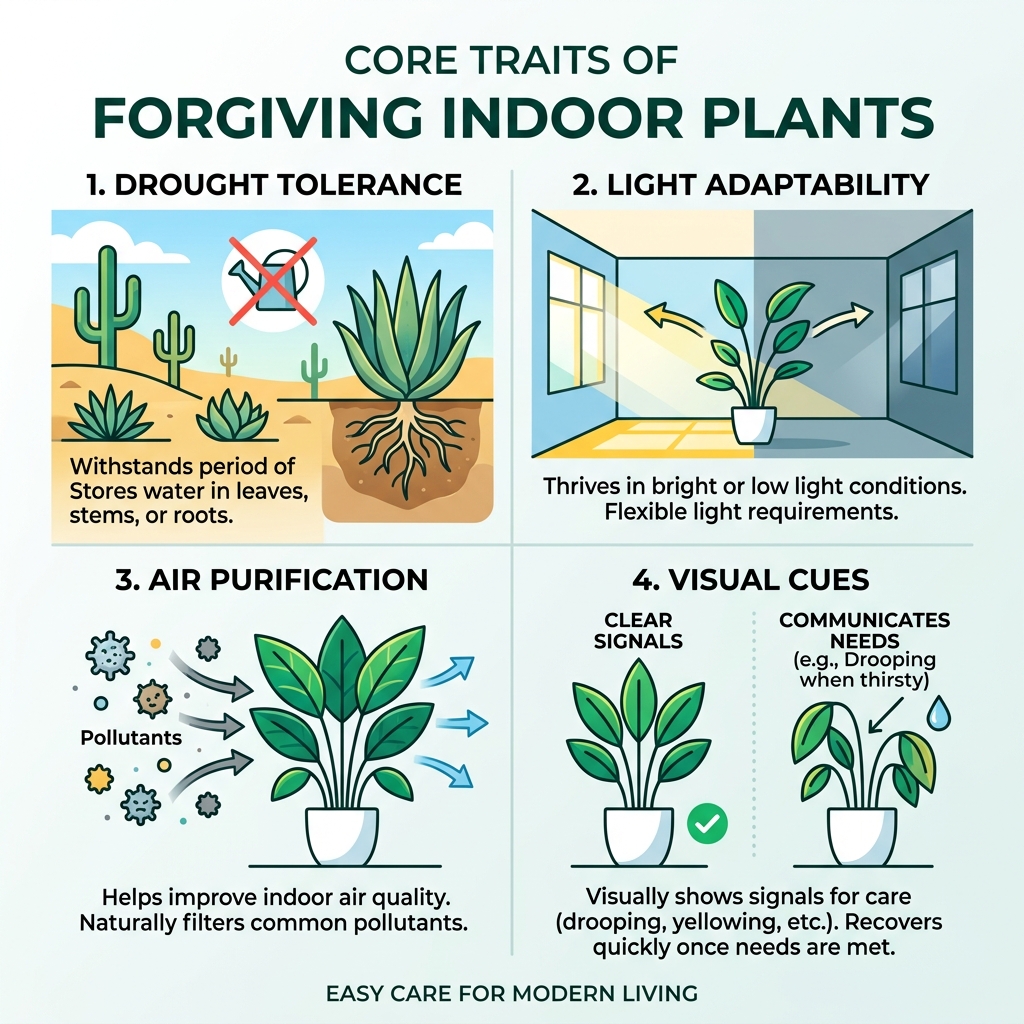
When we talk about “forgiving” plants, we aren’t just saying they are hard to kill. We are talking about biological powerhouses that have evolved to survive in some of the toughest environments on Earth. To understand why these plants are so resilient, we have to look at their natural history.
Drought Resistance and Light Adaptability
Many of the most popular forgiving indoor plant types come from regions with extreme seasons. For example, the Snake plant – Dracaena trifasciata | Kew is native to West and West Central Africa. In these environments, plants must survive long periods of drought followed by sudden deluges.
This history has gifted them with incredible adaptations. One of the most fascinating is Crassulacean Acid Metabolism (CAM). While most plants open their “pores” (stomata) during the heat of the day to breathe—losing precious water in the process—CAM plants like the Snake Plant keep their stomata closed during the day. They only open them at night to collect carbon dioxide, which significantly reduces water loss. This is why you can ignore a Snake Plant for weeks and it will still look as fresh as the day you bought it.
Air Purification Power
Beyond their ruggedness, these plants are functional. According to the famous NASA Clean Air Study, many resilient plants are exceptionally good at removing toxins from the air. Snake plants, for instance, were found to remove four out of five major toxins, including benzene, formaldehyde, trichloroethylene, and xylene.
If you are just starting your journey into greenery, we recommend checking out our Beginner’s Guide to Indoor Succulent Gardening to learn more about how these hardy species can transform your living space. As noted in this Snake Plant: A Forgiving, Low-maintenance Houseplant guide, these plants are long-lived and unfussy, making them the ultimate “set it and forget it” roommates.
Top Resilient Plants for Beginners and Busy Owners
If you’re ready to start your collection, here are the heavy hitters of the plant world. These species have earned their reputation as “unkillable” through years of surviving in dark offices and neglected apartments.
Snake Plant (Dracaena trifasciata)

Formerly known as Sansevieria, the Snake Plant is the gold standard of forgiving indoor plant types. There are over 70 recognized species and hundreds of varieties, ranging from the tall, sword-like ‘Laurentii’ to the compact ‘Hahnii’ (or Bird’s Nest Snake Plant).
In the wild, these plants can reach heights of up to 2 meters, but as houseplants, they typically stay between 0.7 and 1 meter. They are so hardy that some experts joke you don’t even need artificial versions because the real thing is just as easy to maintain. For a deep dive into specific varieties, you can explore How to Grow and Care for Snake Plants (Sansevieria).
ZZ Plant (Zamioculcas zamiifolia)
The ZZ plant is a favorite for windowless offices. It features glossy, waxy leaves that look almost artificial. The secret to its survival lies beneath the soil: it has fleshy rhizomes (potato-like structures) that store water for months. It is one of our Top Succulent Varieties for Low Light because it can thrive even under standard fluorescent office lights.
Peace Lily (Spathiphyllum)
While some “resilient” plants are tough because they don’t need much, the Peace Lily is resilient because it is highly communicative. It is a bit of a “drama queen”—if it’s thirsty, the entire plant will wilt visibly, looking like it’s auditioning for a Victorian tragedy. However, once you give it a drink, it bounces back within hours. With adequate light, these plants can bloom for nearly nine months of the year!
Spider Plant (Chlorophytum comosum)
The Spider Plant is a classic for a reason. It is incredibly adaptable to different light levels and produces “pups” or baby plants on long, arching stems. It’s a great choice for families, as it is non-toxic and fun for children to propagate.
Comparison Table: Top 5 Resilient Plants
| Plant Name | Light Requirement | Watering Frequency | Growth Habit |
|---|---|---|---|
| Snake Plant | Low to Bright Indirect | Every 3-4 weeks | Upright/Vertical |
| ZZ Plant | Low to Medium | Every 3-4 weeks | Upright/Arching |
| Pothos | Low to Bright Indirect | Every 1-2 weeks | Trailing/Climbing |
| Peace Lily | Medium Indirect | Every 1 week (when drooping) | Clumping/Flowering |
| Spider Plant | Medium to Bright Indirect | Every 1 week | Arching/Trailing |
The Communicative Pothos: A Forgiving Indoor Plant Type for Beginners
The Pothos (Epipremnum aureum) is perhaps the most popular trailing plant in the world. It’s often the first plant people buy, and for good reason. It offers lush, tropical greenery without the tropical fuss.
Pothos is an excellent “communicator.” If it needs more light, its beautiful variegation (the white or yellow splashes on the leaves) may fade to solid green. If it is thirsty, the leaves will lose their turgidity and droop. If it is too wet, it might develop yellow leaves. Learning these visual cues is a great way to master Proper Watering Techniques for Succulent Plants and other indoor flora.
String of Hearts: A Forgiving Indoor Plant Type for Vertical Spaces
If you have high shelves or hanging baskets, the String of Hearts (Ceropegia woodii) is a must-have. This plant features delicate, heart-shaped leaves with stunning purple marbling on the undersides.
Despite its dainty appearance, it is surprisingly tough. It is technically a succulent, meaning its leaves and tubers store water, making it very drought-tolerant. According to experts at How to Grow a String of Hearts Plant—and Keep It Lush Year-Round, these vines can grow between 6 and 12 feet long. If the top of the plant starts looking a little “bald,” you can simply coil the vines back into the pot to encourage new growth. For more on managing water for these types of plants, see The Ultimate Guide to Watering Succulents.
Essential Care Requirements and Common Pitfalls
Even the most forgiving indoor plant types have their limits. While they can handle neglect, they usually can’t handle “over-care.” The number one killer of resilient houseplants is actually overwatering.
The Danger of “Kindness”
Many new owners feel guilty about not watering their plants, so they give them a little splash every day. This is a recipe for disaster. Most resilient plants, especially Snake Plants and ZZ Plants, prefer to dry out completely between waterings. Constant moisture leads to root rot, a fungal condition that turns roots into mush.
We highly recommend Avoiding Overwatering: Succulent Care Guide to help you recognize the signs of a saturated plant. A good rule of thumb is to use the “soak and dry” method: water the plant thoroughly until water runs out of the drainage holes, then don’t water again until the soil is dry several inches down. You can learn more about this in our guide on Watering Succulents: The Soak and Dry Method.
Lighting and Soil
While many of these plants tolerate low light, they don’t necessarily prefer it. A Snake Plant in a dark corner will survive, but it won’t grow much. If you want your plants to thrive, give them bright, indirect light. As the Sansevieria / RHS Plant Guide points out, they are much happier and grow faster in brighter locations, though you should avoid direct afternoon sun which can scorch their leaves.
Always use a well-draining potting mix. A standard cactus or succulent mix—which often contains perlite or pumice—is ideal for most forgiving indoor plant types. This ensures that even if you get a little heavy-handed with the watering can, the excess moisture can escape.
Safety and Toxicity: Choosing the Right Plant for Your Household
Before you rush out to buy a new green friend, it is important to consider who else lives in your home. Many resilient plants contain defensive chemicals that can be harmful if ingested by curious pets or toddlers.
Toxicity Concerns
- Snake Plants and ZZ Plants: Both contain calcium oxalate crystals or saponins, which can cause irritation, drooling, and vomiting in cats and dogs.
- Pothos and Peace Lilies: These are also toxic to pets, often causing oral pain and swelling if chewed.
Safe Alternatives
If you have a “nibbler” at home, don’t worry—there are plenty of safe, forgiving indoor plant types.
- Spider Plants: These are completely non-toxic and safe for cats who love to swat at the dangling “pups.”
- Prayer Plants (Maranta leuconeura): These are beautiful, non-toxic, and famous for folding their leaves up at night as if in prayer. You can find more details on their care in the Maranta leuconeura | prayer plant Houseplants/RHS guide.
- String of Hearts: As mentioned, these are non-toxic and safe for households with pets.
When Achieving a Perfect Indoor Succulent Garden, always cross-reference your choices with the ASPCA toxic plants list to ensure a safe environment for everyone.
Frequently Asked Questions about Resilient Houseplants
Which forgiving plants are best for low-light offices?
The ZZ Plant and the Snake Plant are the undisputed kings of low light. They can survive in rooms with small windows or even just fluorescent overhead lighting. If you want something trailing, the Golden Pothos is also quite hardy in lower light levels, though its growth will slow down significantly.
How do I know if I am overwatering my resilient plants?
The most common sign is yellowing leaves that feel soft or mushy. You might also notice a “sour” smell coming from the soil, which indicates root rot. If you see tiny black gnats flying around the soil, that’s another sign that the medium is staying too wet for too long.
Are snake plants really effective at purifying indoor air?
Yes! They are one of the few plants that continue to produce oxygen at night due to their CAM photosynthesis. They are particularly effective at filtering out formaldehyde and benzene, which are common in household cleaning products and synthetic fabrics.
Conclusion
At FinanceBoostX, we believe that everyone should enjoy the benefits of indoor greenery without the stress of high-maintenance care. Investing in forgiving indoor plant types isn’t just about aesthetics; it’s about creating a sustainable, stress-reducing environment that works with your lifestyle, not against it.
Whether you choose a towering Snake Plant for a corner or a cascading String of Hearts for a bookshelf, these resilient species offer the perfect entry point into plant parenthood. By choosing plants that communicate their needs and tolerate a bit of neglect, you’re setting yourself up for long-term success.
Ready to dive deeper into plant maintenance? Explore our full Category: Succulent Care for more tips on keeping your resilient garden healthy and vibrant for years to come. Happy planting!
