
Why Getting Sempervivum Watering Right Makes All the Difference
Sempervivum watering care advice comes down to one core rule: water deeply, then wait. These tough little succulents are built to survive drought, but they’ll rot fast if kept too wet.
Here’s a quick-reference summary before we dive in:
| Situation | What to Do |
|---|---|
| General frequency | Once a week in hot, dry months (0.5–1.0 inch total including rain) |
| How to water | Soak thoroughly, then let soil dry completely before watering again |
| Seasons to reduce watering | Autumn and winter — little to none needed |
| Biggest risk | Overwatering — causes root rot faster than any other problem |
| Best water type | Rainwater, distilled, or RO water preferred |
| Check before watering | Poke top 1 inch of soil — only water if fully dry |
Sempervivum (also called hens and chicks) are alpine natives. They evolved on rocky mountain slopes across Europe and Asia, where rainfall is light and drainage is instant. That background shapes everything about how you should water them.
The good news? They’re almost impossible to underwater. Mature plants can bounce back from months of drought. Overwatering, though, is a different story — soggy roots rot quickly and are hard to save.
Whether you grow them in a pot on a patio or tucked into a rock garden, getting your watering rhythm right is the single most important thing you can do for these plants.
Mastering Sempervivum Watering Care Advice

When we talk about sempervivum watering care advice, we have to look at their natural habitat. These plants are alpine dwellers, meaning they are used to rocky soil and light, frequent mountain showers rather than tropical monsoons. To keep them happy in our gardens, we need to mimic those conditions.
The golden rule for most succulents is the “soak and dry” method. This involves watering the plant until the soil is completely saturated and water runs out of the drainage holes, then waiting until the soil is bone-dry before watering again. You can learn more about this foundational technique in Watering Succulents: The Soak and Dry Method.
For Sempervivum specifically, they generally require approximately 0.5″ to 1.0″ of water once a week during the dry months of the year. This includes any natural precipitation. If it rains half an inch, you don’t need to add a drop!
Timing also matters. We always recommend watering in the early morning or late evening. Watering in the heat of the afternoon can cause water droplets on the leaves to act like magnifying glasses, leading to leaf scorch. Furthermore, evening watering allows the plant to drink up the moisture before the sun evaporates it all the next day. This deep hydration encourages deep root development, making your “hens” much more resilient to heatwaves.
Sempervivum Watering Care Advice for Different Plant Sizes
Not all Sempervivums are created equal when it comes to thirst. A massive, mature mother rosette (the “hen”) has a much higher water storage capacity in her thick, fleshy leaves than a tiny, newly formed “chick.”
- Mature Rosettes: These are the tanks of the succulent world. They can survive months of drought by slowly consuming the water stored in their leaves. Because they have a larger volume-to-surface-area ratio, they lose moisture more slowly.
- Tiny Offsets (Chicks): These little ones have smaller root systems and less storage space. While they are still drought-tolerant, they may need slightly more frequent attention than the mother plant until they establish their own deep roots.
When applying Proper Watering Techniques for Succulent Plants, frequency is often more important than volume for younger plants, whereas mature plants prefer one big drink followed by a long period of neglect.
The Best Water Types for Succulent Health
You might think water is just water, but your Sempervivum might disagree! These plants are sensitive to the chemicals often found in municipal tap water.
- Rainwater: This is the gold standard. It is naturally soft, slightly acidic (which succulents love), and free of chlorine and fluoride.
- Distilled or RO (Reverse Osmosis) Water: These are excellent alternatives if you don’t have a rain barrel. They have had the minerals and chemicals stripped away, preventing unsightly white mineral buildup on the leaves.
- Tap Water: If you must use tap water, let it sit out in an open container overnight. This allows the chlorine to evaporate, making it safer for your plants.
To dive deeper into how different sources affect your garden, check out How Water Type Affects Succulent Health.
Seasonal Irrigation Strategies for Hens and Chicks
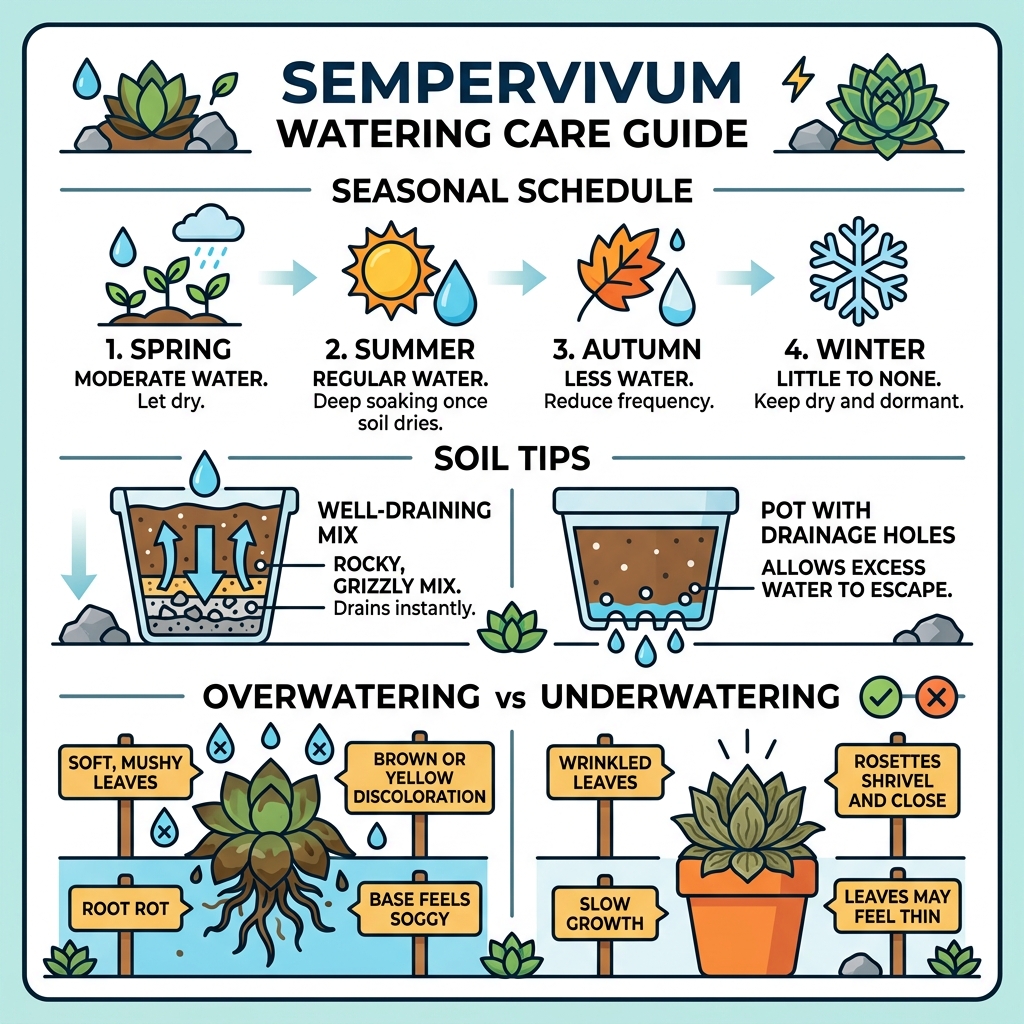
One of the most fascinating things about Sempervivum is how they change with the seasons. Their watering needs fluctuate wildly depending on the temperature and their growth cycle. Understanding Understanding Variations in Succulent Watering Needs is key to keeping them alive year-round.
In Spring, the plants wake up and start producing offsets. This is a period of high energy, and they appreciate regular watering (about once a week) if the weather is dry. Autumn is a time of transition where the plant prepares for the cold, and you should begin tapering off your watering schedule.
Summer Hydration and Heat Management
Summer is the primary growing season, but it’s also the time of highest stress. Sempervivum needs a minimum of 6 hours of direct sunlight each day for the brightest colors, but high heat combined with bone-dry soil can lead to trouble.
During the hottest, driest periods of summer, aim for that 0.5″ to 1.0″ of water per week. If temperatures soar above 85°F for extended periods, keep a close eye on them. If the leaves look thin and puckered, they are telling you they’re thirsty. For more on timing your summer drinks, see How Often Should You Water Your Succulents?.
Winter Care and Moisture Protection
Sempervivum are incredibly cold-hardy, with some species surviving temperatures as low as -30°F. They survive the freeze by naturally dehydrating their cells and concentrating sugars (acting like a natural antifreeze).
The biggest winter danger isn’t the cold—it’s the wet. If a Sempervivum sits in frozen, soggy soil, it will rot.
- In the ground: If you have snow, leave it! Snow acts as a wonderful insulating blanket.
- In containers: Move them to a spot where they won’t get pelted by winter rain.
- Watering: Stop watering almost entirely. They are dormant and do not need supplemental moisture.
For a deeper dive into protecting your plants from the “silent killer” of winter wet, read our Avoiding Overwatering Succulent Care Guide.
The Impact of Soil, Pots, and Drainage on Hydration
You can have the perfect watering schedule, but if your soil is wrong, your plants are doomed. Sempervivum requires loose, sandy, quick-draining soil with a pH between 6.5 and 7.5.
If you are planting in containers, we highly recommend a mix of 50% grit (like perlite or sharp sand) and 50% potting soil. This ensures that water moves through the root zone quickly. The Importance of Well-Draining Soil in Watering Succulents explains why this “gritty” environment is so vital.
The type of pot matters too. Terracotta is breathable and helps moisture evaporate from the sides, which is a great safety net for those of us who might be a bit heavy-handed with the watering can. Regardless of the material, a drainage hole is non-negotiable. Without one, you’re essentially creating a swamp. See The Role of Drainage in Succulent Watering for more details.
Pro Tip: Apply a 3/16″ grit gravel top-dressing around the base of the plant. This keeps the lower leaves off the damp soil and prevents “crown rot,” which is a common issue when the center of the rosette stays wet.
Sempervivum Watering Care Advice for New Offsets
Propagating “chicks” is one of the joys of growing Sempervivum. When a chick has developed its own small roots and the “stolon” (the umbilical cord connecting it to the mother) has withered, it’s ready to be on its own.
- Separate: Gently wiggle the chick and snip the stolon.
- Callous: Let the chick sit in a dry, shaded spot for 24 hours to let the “wound” heal.
- Plant: Place it in a shallow hole in gritty soil.
- Water: Give it a light misting or a very small drink to settle the roots, then wait a week before watering again.
Using the right Succulent Watering Guide: Tools and Techniques—like a squeeze bottle for precision—can help you avoid getting water trapped in the tiny rosettes.
Indoor vs Outdoor Watering Requirements
While Sempervivum can be grown indoors, they usually prefer the great outdoors. Indoors, they often suffer from low light and poor airflow.
- Outdoors: They benefit from natural wind and temperature fluctuations which help dry the soil.
- Indoors: Soil stays wet much longer because there is no wind and less intense light. You will need to water significantly less often.
If your indoor plant starts stretching out (etiolation), it’s looking for light—but it’s also a sign that your watering might be out of sync with the light levels. Check out Demystifying Succulent Watering: Tips for Healthy Plants for more on balancing these factors.
Troubleshooting Common Watering Mistakes
Even the best gardeners make mistakes. The key is catching them early. We can learn a lot by Learning from Common Mistakes in Watering Succulents.
Signs of Overwatering (The Danger Zone):
- Leaves become translucent or yellow.
- The texture feels mushy or “squishy.”
- The center of the plant turns black (root/crown rot).
- Fix: Remove the plant from the soil immediately. Cut away any black or mushy parts with a sterile knife. Let the healthy part dry for 48 hours, then replant in fresh, dry, gritty soil.
Signs of Underwatering (The Thirsty Zone):
- Leaves look wrinkled, puckered, or thin.
- Bottom leaves become crispy and brown (though some of this is normal aging).
- The rosette closes up tightly.
- Fix: This is much easier to solve! Simply give the plant a thorough, deep soak. It should plump back up within a day or two.
For a complete list of what to do (and what to avoid), see our Dos and Donts of Watering Succulents.
Frequently Asked Questions about Sempervivum Watering
Can Sempervivum survive on rainfall alone?
In many climates, yes! In places like California or the UK, natural rainfall is often enough for in-ground plants for most of the year. However, during extended droughts (2+ weeks with no rain and high heat), you should supplement. Always let the plant tell you—if it looks puckered, it’s time for a drink. You can find more context in Understanding Succulent Watering Needs.
How do I know if my Sempervivum is overwatered?
The most obvious sign is the “mush factor.” Healthy leaves are firm and “snap” if bent. Overwatered leaves feel like wet sponges and may look see-through. If you see these signs, stop watering immediately! Our The Ultimate Guide to Watering Succulents has photo examples to help you identify this.
What is the best time of day to water?
Early morning is best. It allows the plant to hydrate before the sun gets intense and ensures any water that accidentally gets on the leaves dries up quickly, preventing rot and fungal issues. Evening is the second-best choice. For more tips on timing, visit Keeping Succulents Hydrated: Proper Watering Techniques.
Conclusion
Mastering sempervivum watering care advice is really about learning to trust the plant’s resilience. These alpine beauties are designed to thrive on a bit of neglect. By using well-draining soil, choosing the right water type, and adjusting your schedule for the seasons, you’ll ensure your “hens and chicks” colony continues to spread for years to come.
Remember: when in doubt, don’t water! It is always easier to revive a thirsty plant than a rotten one. We hope this guide helps your garden flourish.
