
The Hardiest Indoor Plants You Actually Can’t Kill
The hardiest indoor plants are the ones that thrive even when you forget to water them, skip the fertilizer, or stick them in a dark corner. Here are the top picks:
| Plant | Light | Watering | Difficulty |
|---|---|---|---|
| Snake Plant | Low to bright indirect | Once a month | Extremely easy |
| ZZ Plant | Low to bright indirect | Every 2-4 weeks | Extremely easy |
| Pothos | Low to bright indirect | Weekly | Very easy |
| Cast Iron Plant | Low to shade | Weekly | Extremely easy |
| Chinese Evergreen | Low to medium | Weekly | Very easy |
| Spider Plant | Indirect | Weekly | Very easy |
| Aloe Vera | Bright indirect | Every 2-3 weeks | Easy |
| Jade Plant | Bright indirect | Every 2 weeks | Easy |
| Peace Lily | Low to indirect | Weekly | Easy |
| Rubber Tree | Bright indirect | Every 1-2 weeks | Easy |
Most houseplants die from one of two things: too much water or too little light. Yet millions of people walk past the same plants at the garden center every year, convinced they just don’t have “the gift.”
Here’s the truth: the right plant makes all the difference.
Some plants are practically designed to survive neglect. They store water in their leaves. They close their pores during the day to avoid drying out. They grow in dim African forests and dry grasslands where conditions are far worse than your apartment.
You don’t need a green thumb. You need the right plant for your lifestyle.
This guide covers the 10 hardiest indoor plants that real beginners — busy people with no time for fussy care routines — can actually keep alive and looking good.
Top 10 Hardiest Indoor Plants for Any Home
We have all been there: you buy a beautiful, leafy fern, only to watch it turn into a pile of crispy brown sticks three weeks later. It feels like a personal failure, but often, the fault lies with the plant’s high demands, not your effort. When we look for the hardiest indoor plants, we are looking for “nature’s unstoppable green machines.” These are plants that have evolved in harsh environments, making them uniquely suited for the modern (and sometimes forgetful) home.
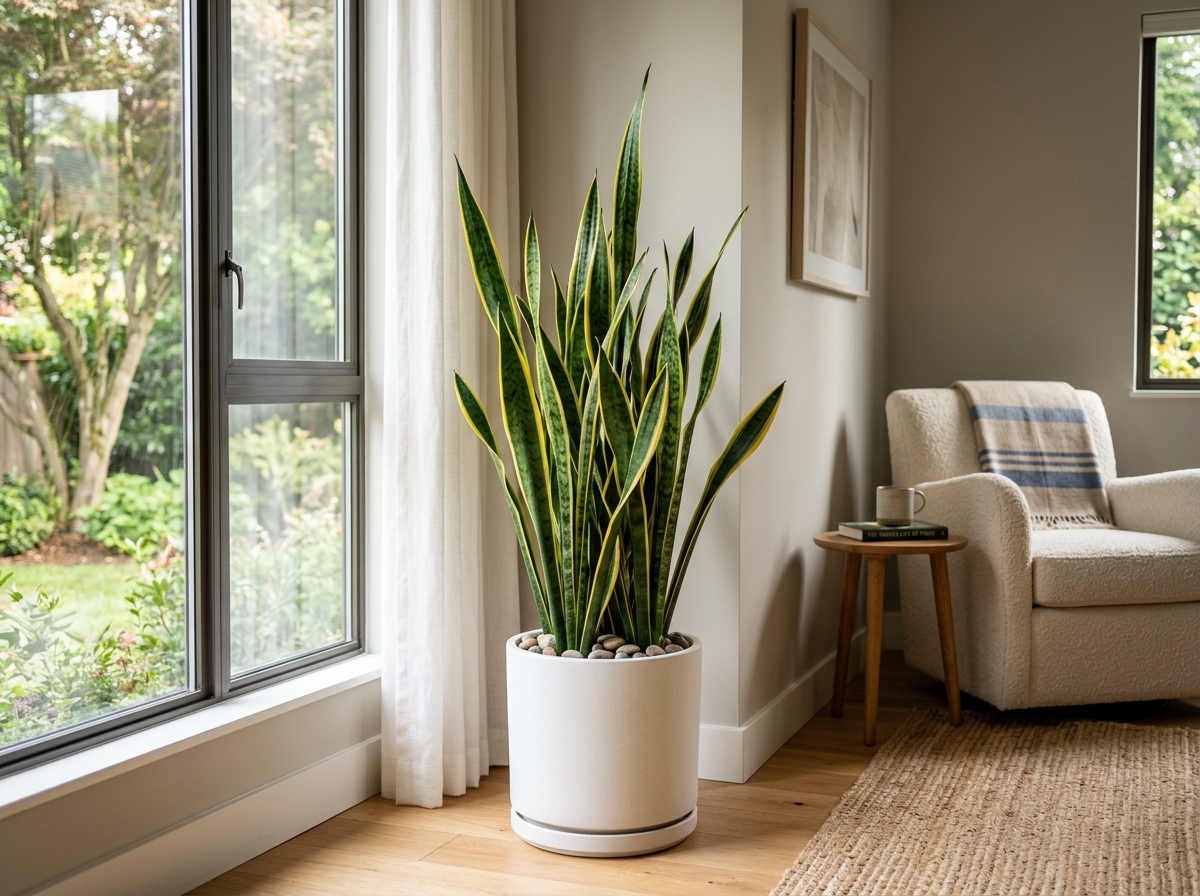
1. Snake Plant (Dracaena trifasciata)
The Snake plant – Dracaena trifasciata | Kew is arguably the champion of resilience. Formerly known as Sansevieria, this plant is often nicknamed “Mother-in-Law’s Tongue” because of its sharp, sword-like leaves. What makes it one of the hardiest indoor plants? It is a succulent that stores water in its thick, leathery leaves.
According to Snake Plant: A Forgiving, Low-maintenance Houseplant, these plants are “tough-as-nails.” They can survive for weeks without water and are perfectly happy in low-light corners where other plants would wither. Interestingly, they use CAM photosynthesis, meaning they open their stomata at night to exchange gases, which helps them conserve moisture during the day.
2. ZZ Plant (Zamioculcas zamiifolia)
If you want a plant that looks like it belongs in a high-end magazine but requires almost zero effort, the ZZ Plant is your best friend. As noted by the Zamioculcas zamiifolia – Plant Finder, this plant features shiny, waxy green leaflets that look almost artificial.
The secret to its survival lies underground. The ZZ plant grows from thick, potato-like rhizomes that store massive amounts of water. In fact, research shows that the leaves consist of about 91% water. This allows the plant to survive up to four months without a single drop of water in low-light conditions. It is the ultimate “set it and forget it” greenery.
3. Pothos (Epipremnum aureum)
Often called “Devil’s Ivy” because it’s nearly impossible to kill, Pothos is a trailing vine that can thrive in almost any environment. We love Pothos because it communicates with us; when it’s thirsty, the leaves will droop slightly, but they perk right back up after a quick drink. It handles low light, fluorescent office lights, and irregular watering schedules like a pro.
4. Cast Iron Plant (Aspidistra elatior)
The name says it all. The Aspidistra / RHS Plant Guide explains that these plants earned their name in the Victorian era because they could survive the dark, smoky, and cold halls of 19th-century British homes. They grow slowly but are nearly indestructible. They don’t mind dry air, low light, or temperature fluctuations, making them perfect for that one drafty corner in your hallway.
5. Chinese Evergreen (Aglaonema)
Chinese Evergreens are famous for their ability to thrive under fluorescent lights. They come in various patterns, from deep green to speckled silver and even pink. They are slow-growing and don’t mind if the soil dries out occasionally. If you work in a windowless office, this is the plant we recommend most.
6. Spider Plant (Chlorophytum comosum)
The Spider Plant is a classic for a reason. It produces “babies” (offsets) that hang down from the mother plant like little spiders on a web. They are incredibly forgiving of varied light conditions and are excellent at cleaning the air. Plus, they are one of the few plants on this list that are completely non-toxic to pets!
7. Peace Lily (Spathiphyllum)
While the Peace Lily has a reputation for being a bit “dramatic”—it wilts visibly when it needs water—it is actually very resilient. It is one of the few hardiest indoor plants that will bloom reliably indoors, producing elegant white spathes. It also acts as a powerhouse air purifier, removing toxins like benzene and formaldehyde.
8. Aloe Vera
Aloe Vera is a must-have for any kitchen windowsill. Not only is it a hardy succulent that requires very little water, but the gel inside its leaves can be used to treat minor burns and skin irritations. It prefers bright, indirect light and well-draining soil.
9. Jade Plant (Crassula ovata)
The Jade Plant is often associated with good luck and prosperity. It is a long-lived succulent with thick, woody stems and plump leaves. Because it stores water in its foliage, it can handle a fair amount of neglect. Some Jade plants have been known to stay in families for generations, passed down as living heirlooms.
10. Rubber Tree (Ficus elastica)
While its cousin, the Fiddle Leaf Fig, is notoriously finicky, the Rubber Tree is much more laid back. It features large, glossy, dark green or burgundy leaves. It can grow into a stunning indoor tree over time but is happy to stay contained in a pot if you prune it back. It loves bright, indirect light but can tolerate medium light levels.
Essential Care for the Hardiest Indoor Plants
Even the “unkillable” plants need a baseline of care to look their best. The biggest mistake beginners make isn’t neglect—it’s actually “smothering” the plant with too much attention.
| Care Factor | Requirement for Hardy Plants |
|---|---|
| Light | Most prefer bright indirect light, but many (Snake, ZZ) tolerate low light. |
| Water | Generally, less is more. Let the top 2 inches of soil dry out. |
| Soil | Use well-draining potting mix; cactus mix works well for succulents. |
| Temperature | 60°F to 75°F (standard room temperature) is ideal. |
| Drainage | Essential! Always use a pot with holes to prevent root rot. |
The #1 Killer: Overwatering
If we could give you only one piece of advice, it would be this: stop watering your plants so much! Overwatering leads to root rot, which is much harder to fix than a dry plant. Most hardiest indoor plants prefer to dry out between waterings.
When setting up your Indoor Setup, always prioritize drainage. If you find a beautiful decorative pot that doesn’t have a hole, keep the plant in its plastic nursery liner and place that inside the decorative pot. This allows you to take the plant to the sink, water it, let it drain, and then put it back.
For those focusing on Succulent Care, these plants are adapted to arid climates. In the winter, many of these hardy varieties go into a semi-dormant state and may only need water once every 4 to 6 weeks.
Mastering Water and Light for Hardiest Indoor Plants
Understanding the nuances of light and water will move you from “surviving” to “thriving.”
- The Finger Test: Before you reach for the watering can, stick your finger two inches into the soil. If it feels moist, wait. If it’s bone dry, it’s time to water.
- Bottom Watering: For plants like the Peace Lily or Pothos, try placing the pot in a bowl of water for 20 minutes. The soil will soak up exactly what it needs through the drainage holes.
- Low-Light vs. No-Light: No plant can survive in total darkness. “Low light” means a room with a window that doesn’t get direct sun, or a spot a few feet away from a window. If your room is windowless, we suggest keeping the lights on for at least 8-10 hours a day to mimic the sun.
- Water Quality: Some plants, like the Peace Lily or Dracaena, can be sensitive to the chlorine and fluoride in tap water, which causes brown leaf tips. If you notice this, try using distilled water or let your tap water sit out overnight before using it.
For more inspiration on where to place these plants, check out our Decor Ideas for maximizing small spaces with greenery.
Troubleshooting and Benefits of Resilient Greenery
Adding the hardiest indoor plants to your home isn’t just about aesthetics; it’s a boost for your health and wallet.
The Science of Clean Air
In the late 1980s, a famous NASA study discovered that certain houseplants are incredibly efficient at removing Volatile Organic Compounds (VOCs) from the air. Pollutants like benzene (found in plastics), formaldehyde (found in carpets and furniture), and trichloroethylene (found in cleaners) are filtered out by the leaves and roots of these plants.
The Snake Plant and Peace Lily are top performers in this category. Beyond air quality, having greenery in your home is proven to reduce stress levels, lower blood pressure, and improve concentration. It’s why we see so many plants in modern office designs!
Multiplying Your Collection for Free
One of the best things about these resilient plants is how easy they are to propagate. You don’t need to be a scientist to grow new plants from the ones you already have.
- Water Cuttings: For Pothos or Heartleaf Philodendron, simply snip a vine (ensure there is a “node” or little bump on the stem) and place it in a jar of water. In a few weeks, roots will grow!
- Division: Plants like the ZZ Plant or Snake Plant can be divided. When the pot gets too crowded, gently pull the plant apart at the roots and repot the sections into separate containers.
Check out our full guide on Propagation Tips to start your own indoor nursery.
Solving Common Issues with the Hardiest Indoor Plants
Even the hardiest indoor plants can run into trouble. Here is how to fix the most common “black thumb” problems:
- Yellow Leaves: This is almost always a sign of overwatering. Check the roots; if they are mushy and brown, you have root rot. Let the plant dry out completely and reduce your watering frequency.
- Leggy Growth: If your plant is growing long, thin stems with very few leaves, it’s “reaching” for the light. Move it closer to a window or add a grow light.
- Brown, Crispy Tips: This usually indicates low humidity or a reaction to hard water. Try misting your plants or placing them on a tray filled with pebbles and water. Wiping the leaves with a damp cloth also helps the plant “breathe” by removing dust.
- No Growth: If your Zamioculcas or Snake Plant hasn’t moved in a year, it might be time for a light feeding. Use a half-strength fertilizer during the spring and summer months.
Frequently Asked Questions about Low-Maintenance Plants
Which hardy plants are safe for cats and dogs?
This is a vital question for pet owners. Unfortunately, some of the hardiest indoor plants, like the Snake Plant and ZZ Plant, contain saponins or calcium oxalate crystals that can cause stomach upset if chewed.
If you have curious pets, stick to these non-toxic options:
- Spider Plant
- Boston Fern
- Cast Iron Plant
- Hoya (Wax Plant)
Always check a reliable database if you are unsure about a specific variety’s toxicity.
Can these plants survive in a windowless office?
Yes, but with a caveat. No plant can live in a dark closet. However, plants like the ZZ Plant, Snake Plant, and Chinese Evergreen (Aglaonema) are highly tolerant of artificial fluorescent lighting. If the office lights are on during standard business hours, these plants will usually do just fine. If the office is dark all weekend, they may grow more slowly, but they will likely survive.
How often should I fertilize my resilient plants?
Less is more! Most hardy plants are slow growers and don’t require much food. We recommend fertilizing once a month during the “growing season” (late February through October) using a balanced, all-purpose liquid fertilizer diluted to half-strength. Do not fertilize in the winter, as the plants are resting and can’t absorb the nutrients, which might lead to chemical burns on the roots.
Conclusion
Starting your journey as a plant parent doesn’t have to be stressful. By choosing the hardiest indoor plants, you are setting yourself up for success from day one. Whether you live in a low-light apartment or have a busy schedule that keeps you away from home, there is a “brown-thumb-proof” plant waiting for you.
At FinanceBoostX, we believe that a healthy home environment contributes to a healthy life. Adding a bit of greenery is a low-cost investment that pays off in cleaner air, reduced stress, and the simple joy of watching something grow.
Ready to dive deeper into resilient greenery? Start your journey with expert succulent care and transform your space today!
