
One Leaf, Infinite Plants: What You Need to Know
Succulent propagation from leaves is one of the easiest — and most satisfying — ways to multiply your plant collection for free. Here’s a quick overview of how it works:
How to propagate succulents from leaves (quick steps):
- Remove a healthy leaf — twist it gently from the stem until it snaps off cleanly at the base
- Let it callous — set it aside for 3-5 days until the broken end dries and seals over
- Place on soil — lay it on top of well-draining cactus mix, don’t bury it
- Wait — keep it in bright indirect light and mist lightly every few days
- Watch for roots and pups — most leaves show results in 2-6 weeks
- Transplant — once the mother leaf shrivels and the baby plant is about an inch wide, pot it up
Not every leaf will succeed. Expect some to wither, some to grow roots but no plant, and some to thrive completely. That’s completely normal — even experienced growers lose more than half of a first batch.
It sounds almost too simple to be true. Take a single leaf, set it on some dirt, and a few weeks later you have a brand-new plant. But that’s exactly what succulents do — it’s essentially nature’s own cloning system, built into every plump leaf on the plant.
Whether you’ve got a leggy Echeveria hogging a windowsill or a Jade plant that keeps dropping leaves on your shelf, those leaves aren’t trash. They’re the start of your next plant.
This guide walks you through everything — from picking the right leaves to troubleshooting failures — so you can turn one succulent into many, without much time, money, or effort.

Choosing the Right Varieties for Succulent Propagation from Leaves
Before we start pulling leaves off every plant in the house, we need to understand that not all succulents are created equal. Some are “super-propagators” that seem to grow babies if you just look at them, while others are a bit more stubborn.
Fleshy-leaved succulents are generally the best candidates for succulent propagation from leaves. These plants store a massive amount of water and nutrients in their foliage, which acts as a “packed lunch” for the baby plant (or “pup”) until it can grow its own roots.
- Echeveria: These rosette-shaped beauties are the gold standard. They are incredibly prolific.
- Sedum (Stonecrop): Whether it’s the “Burro’s Tail” or the “Jelly Bean” plant, Sedums drop leaves easily and root even easier.
- Graptopetalum: Often confused with Echeveria, these are even hardier and very successful with leaf cuttings.
- Jade Plant (Crassula ovata): A classic choice. You can often find “volunteer” leaves that have fallen into the pot and started rooting all on their own.
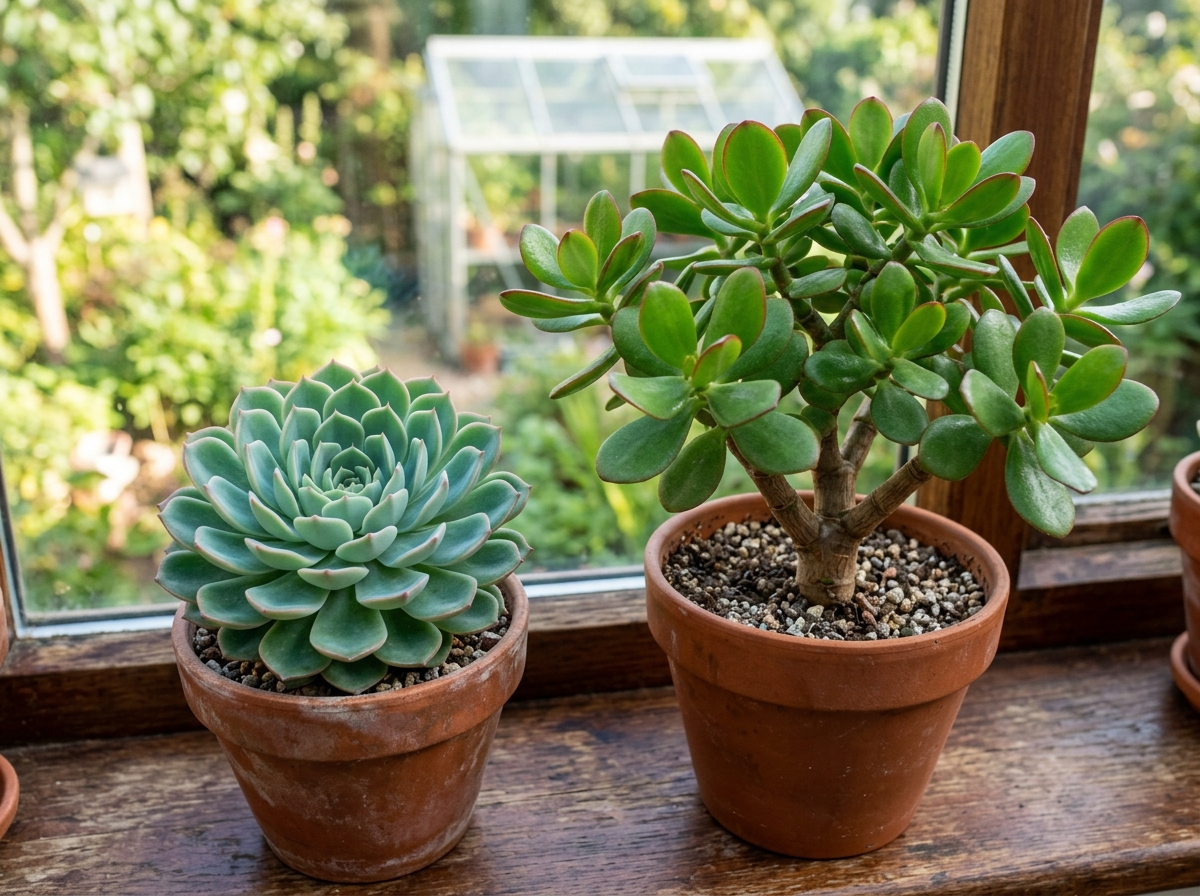
To help you decide which method to use, we’ve put together a quick comparison:
| Method | Success Rate | Time to Result | Best For |
|---|---|---|---|
| Leaf Propagation | 50% – 70% | 4-12 Weeks | Multiplying a collection for free |
| Stem Cuttings | 90% + | 2-4 Weeks | Fixing “leggy” or stretched plants |
For a deeper dive into these differences, check out the-no-nonsense-succulent-leaf-propagation-guide.
Succulents that struggle with leaf propagation
While we’d love to tell you that every succulent leaf is a potential baby, some species just don’t play by those rules. For certain varieties, the “meristematic tissue” (the specialized cells needed for growth) is located in the stem rather than the leaf base.
- Aeonium: These beautiful tree-like succulents almost never grow from a single leaf. If you want more Aeoniums, you’ll need to take a stem cutting.
- Sempervivum (Hens and Chicks): These plants propagate via “offsets”—tiny clones that grow on runners from the mother plant. Leaf propagation is rarely successful here.
- Haworthia (Zebra Plant): While technically possible, it is extremely slow and difficult. These are much better propagated by separating the pups that grow at the base.
If you are working with these trickier types, our easy-guide-to-propagate-succulents-from-leaves explains the alternative methods you’ll need.
Identifying healthy donor leaves
Success starts with selection. If you pick a leaf that is already shriveled, yellowing, or damaged, it won’t have the energy reserves needed to create a new life.
Look for plump, hydrated leaves from the bottom or middle of the plant. Avoid the very tiny leaves at the center of the rosette, as they aren’t mature enough. The most critical factor is the clean pull. You must ensure the entire leaf comes off the stem. If the leaf rips and leaves a little chunk behind on the mother plant, it will almost certainly rot rather than root. We call this the “U-shaped” base—it should be smooth and intact.
Learn more about selecting the perfect specimen in our guide on how-to-propagate-succulents-from-a-single-leaf.
Step-by-Step: Mastering Succulent Propagation from Leaves
Once you’ve picked your donor plant, it’s time to get to work. We like to think of this as “nature’s cloning glitch.”
- The Harvest: Hold the leaf firmly between your thumb and forefinger. Give it a gentle wiggle from side to side. You should hear a clean “snap.”
- The Callous: This is the most skipped step, and the number one reason for failure. You must let the leaves dry on a paper towel for 3 to 5 days. This allows the “wound” to scab over. If you put a fresh leaf directly onto moist soil, it will soak up too much water and turn into black mush.
- The Incubation: Lay your calloused leaves on top of the soil. Do not bury them! The new baby plant grows on the upward-curving side of the leaf, and the roots will naturally find their way down into the dirt.
For a more detailed breakdown of this delicate process, visit how-to-propagate-a-succulent-from-a-leaf-without-killing-it.
Preparing the soil for succulent propagation from leaves
Standard potting soil is often too heavy and retains too much moisture for succulent babies. We recommend a dedicated cactus or succulent mix. If you’re making your own, a 50/50 blend of potting soil and perlite or coarse sand works wonders.
The goal is a medium that provides enough “grip” for tiny roots but allows water to drain away instantly. You only need about two inches of soil in a shallow tray—anything deeper is a waste, as these tiny plants have very shallow root systems. Discover more about the “soil secret” at the-secret-to-growing-new-succulents-from-single-leaves.
Ideal lighting and temperature for succulent propagation from leaves
Temperature and light act as the “engine” for growth. Ideally, you want to keep your propagation tray in a spot that stays between 65 and 75 degrees Fahrenheit.
As for light, bright indirect sunlight is the sweet spot. A windowsill that gets morning sun but is shaded during the harsh afternoon heat is perfect. Never put leaf cuttings in direct, hot sun; they don’t have roots yet to replace the water they’ll lose, and they will literally cook.
If you’re propagating indoors during winter, you might need a grow light set for about 16 hours a day to prevent the babies from stretching. We cover more environmental factors in maximize-your-garden-how-to-propagate-succulents.
Troubleshooting Common Propagation Pitfalls
Even with the best care, things can go wrong. It’s estimated that roughly 50% of beginners fail at the harvest or callousing step.
The most common sight is a rotting leaf. If the leaf turns black, translucent, or mushy, it’s a goner. This is usually caused by high humidity, watering before roots appear, or failing to let the leaf callous. If you see this, remove the rotting leaf immediately so it doesn’t spread fungus to the others.
For a comprehensive list of what to watch for, see succulent-propagation-a-comprehensive-look and the-dos-and-donts-of-succulent-propagation.
Why some leaves produce roots but no plants
Sometimes, you’ll get a leaf that grows a massive, healthy root system but never produces a tiny green rosette. These are affectionately known as “Zombie Leaves.”
This happens when the leaf has enough energy to search for water but lacks the specific hormonal balance to trigger the growth of a new “meristem” (the plant’s equivalent of stem cells). Unfortunately, there isn’t much you can do for a zombie leaf except wait. Sometimes they surprise you after a few months, but often they just remain a single leaf with roots until they eventually wither.
We explore the science behind this “biological waiting game” in mastering-succulent-propagation-an-in-depth-guide.
Dealing with etiolation in baby succulents
If your tiny new pups are growing tall, skinny, and pale instead of tight and colorful, they are suffering from etiolation. This is the plant’s way of “stretching” to find more light.
While baby succulents are sensitive, they still need significant brightness. If they start to stretch, gradually move them to a brighter location. Using a 16-hour fluorescent light timer can also help keep them compact. For more on keeping your “succulent forest” healthy, check out succulent-propagation-techniques-for-every-home-gardener.
Caring for Your New Succulent Pups and Cuttings
As the baby plant grows, you’ll notice the mother leaf starting to shrivel and turn yellow or brown. Don’t panic! This is a good sign. The mother leaf is sacrificing itself, pumping all its stored water and nutrients into the baby.
Do not pull the mother leaf off while it is still plump or even slightly attached. Wait until it is a dry, crispy husk that falls off with a light touch. If you remove it too early, you might deprive the pup of its main food source before its roots are strong enough to take over.
Further care instructions can be found at grow-more-succulents-propagation-techniques and up-your-gardening-game-propagating-succulents.
When to transplant your new succulents
Patience is key. We recommend waiting until the baby plant is at least one inch in diameter and the mother leaf has completely withered away. At this point, the pup should have a visible, pink or white root system that is at least half an inch long.
When you transplant, be very gentle with the roots. Use a small tool (like a toothpick or a spoon) to lift the pup and its roots out of the propagation tray and into its new home. You can find more tips for new growers in our beginners-guide-propagating-succulents.
Post-propagation watering schedule
Once the babies are in their own pots, their watering needs change. While they are in the “leaf stage,” we recommend misting the soil surface every 2-3 days to keep the roots from drying out.
However, once they are established plants, you should switch to a “soak and dry” method. Water the soil until it runs out of the drainage holes, then wait until the soil is bone-dry (usually 10-14 days) before watering again. For advice on picking the right starter pots, see choosing-the-best-container-for-succulent-propagation.
Frequently Asked Questions about Succulent Propagation
How long does it take for roots to form?
Generally, you will see the first signs of pink roots or tiny leaves in 2 to 4 weeks. However, some varieties can take up to two months. Factors like temperature (warmer is faster) and the health of the original leaf play a huge role.
Is rooting hormone necessary for leaves?
While many people use rooting hormone for stem cuttings, it is usually unnecessary for succulent propagation from leaves. These leaves are already packed with the natural hormones needed to clone themselves. That said, if you are struggling with a particularly stubborn variety, a quick dip in rooting powder won’t hurt.
What is the best time of year to propagate?
Spring and summer are the ideal seasons. This is when succulents are in their active growth phase and have the most energy. You can propagate in winter, but expect the process to take twice as long and require supplemental lighting.
Conclusion
At FinanceBoostX, we believe that gardening shouldn’t have to be expensive. Mastering succulent propagation from leaves is like having a “buy one, get twenty free” coupon for your local nursery. It takes a little bit of patience and a willingness to accept that not every leaf will make it, but the reward of seeing a tiny, alien-looking pup emerge from a single leaf is pure plant wizardry.
By following these steps—clean pulls, proper callousing, and indirect light—you’ll be well on your way to a home filled with beautiful, home-grown succulents.
Ready to expand your garden even further? Check out More propagation tips and tricks for more expert advice!
