
Why Cactus Arrangements in Pots Are the Easiest Way to Bring the Desert Indoors
Cactus arrangements in pots are one of the simplest, most rewarding ways to add bold, desert-inspired style to your home — with almost no effort to keep them alive.
Here’s a quick overview of how to create one:
- Choose a shallow pot (2.5″–6″ deep) with drainage holes — terra cotta or ceramic work best
- Use fast-draining soil formulated for cacti and succulents
- Pick 2–4 small cacti (sold in 2″–4″ pots) with varied heights and shapes
- Plant in spring or summer using tongs or chopsticks to handle spines safely
- Water every 2–3 weeks in summer, every 3–5 weeks in winter
- Add decorative pebbles on top for a finished, polished look
- Place near a bright window — south-facing is ideal
One cactus in one pot is fine. But a whole mini desert landscape? That’s where things get fun.
Cacti grow incredibly slowly, so you can pack several varieties into one container without worrying about them crowding each other out for years. The result is a living piece of art that practically takes care of itself — perfect if you’re busy, travel often, or just don’t want another plant that demands daily attention.
Whether you’re a first-time plant parent or just looking for a low-fuss way to upgrade your space, a cactus dish garden is a smart, stylish choice.
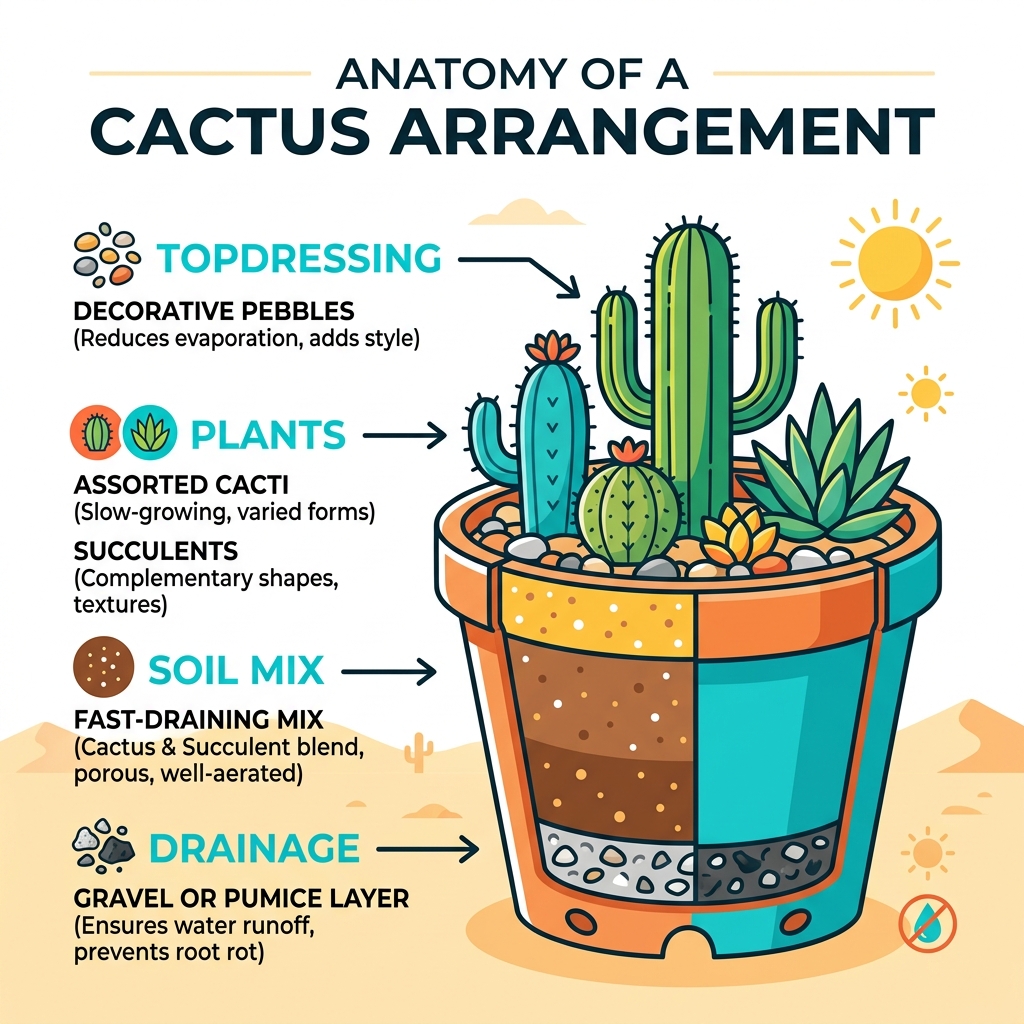
Choosing the Right Materials for Cactus Arrangements in Pots
Before we get our hands dirty, we need to talk about the foundation of your mini desert. Unlike tropical plants that love deep, damp soil, cacti are specialized survivalists. They have evolved to thrive in arid environments with rocky, shallow ground. If we want our cactus arrangements in pots to last for years, we have to mimic those conditions.

The Importance of Shallow Containers
One of the most common mistakes beginners make is choosing a pot that is too deep. Cacti generally have shallow, spreading root systems. In a deep pot, the soil at the bottom stays wet for too long because the roots can’t reach the moisture. This leads to the number one killer of indoor cacti: root rot.
For a successful dish garden, we recommend containers that are between 2.5 and 6 inches deep. This allows the soil to dry out quickly and evenly. If you are looking for more inspiration on how to start your collection, check out our guide on Choosing the best container for succulent propagation.
Material Matters: Clay vs. Glass vs. Plastic
The material of your pot isn’t just about aesthetics; it affects how much water stays in the soil.
| Material | Drainage/Breathability | Best Use Case |
|---|---|---|
| Terra Cotta / Clay | Excellent. Porous walls allow moisture to evaporate. | Beginners and outdoor arrangements in humid climates. |
| Ceramic Bowls | Moderate. Usually glazed, so they hold more moisture than clay. | Indoor centerpieces; ensure there is a drainage hole! |
| Glass | None. No breathability and often no drainage holes. | Expert level. Requires very careful, sparse watering. |
| Plastic | Low. Holds moisture well. | Temporary displays or very hot, dry outdoor spots. |
Terra cotta is the gold standard for cactus arrangements in pots because it “breathes,” helping to prevent overwatering. However, glazed ceramic bowls are fantastic for indoor decor because they come in various colors and patterns. For those who want to experiment with more unique vessels, see our tips on Beyond the plant pot creative containers for succulents or even Succulent arrangement in jars.
Selecting the Best Soil Mix for Your Arrangement
You cannot use standard “all-purpose” potting soil for cacti. It contains too much peat moss, which holds onto water like a sponge. Instead, we need a mix that prioritizes aeration and fast drainage.
A great DIY recipe is equal parts:
- Coarse sand (horticultural grade, not beach sand)
- Perlite or pumice (for air pockets)
- Potting soil (the organic base)
If you’re buying a bagged mix, look for labels specifically stating “Cactus and Succulent Mix.” These are designed so that when you water, the liquid flows straight through and out the drainage hole.
Step-by-Step Guide to Planting Your Arrangement
Timing is everything. The best time to create your cactus arrangements in pots is during the spring or early summer. This is when cacti are in their active growing phase, meaning they will establish their roots much faster in their new home.
- Prep the Pot: If your pot has a large drainage hole, cover it with a small piece of mesh or a coffee filter to keep the soil from washing out.
- Add Soil: Fill the container about two-thirds full with your specialized cactus mix.
- Arrange Before Planting: While the cacti are still in their nursery pots, move them around on top of the soil to see how they look. This prevents you from having to dig them up multiple times.
- The “Tongs” Technique: Use kitchen tongs or chopsticks to gently grasp the cactus and lift it from its nursery pot. If the roots are tightly bound, gently tease them apart with a chopstick.
- Planting: Dig a small hole, place the cactus, and fill in around it with more soil. Use a chopstick to tamp the soil down into the gaps between the plants.
- The “Dry Week” Rule: This is the most important step! Do not water your arrangement immediately. Wait about 7 days before the first watering. This allows any roots that were damaged during the move to callous over and heal, preventing rot.
For more advanced tips on layout, you might enjoy reading Succulent arrangement 101 and how to master the color wheel.
How to Safely Handle Spiny Cactus Arrangements in Pots
Let’s be honest: getting a spine in your finger is no fun. You don’t need professional equipment to handle “pokey” plants safely.
- Kitchen Tongs: These are your best friend for small 2-inch and 4-inch cacti.
- Newspaper or Bubble Wrap: Fold a piece of newspaper or a strip of bubble wrap into a thick band. Wrap it around the body of the cactus to create a “handle.”
- Thick Gloves: Leather or heavy-duty rubber gloves work well, but be warned: some fine spines (glochids) can still penetrate thin fabric.
Design Principles for Visual Appeal
Creating cactus arrangements in pots is like painting a 3D landscape. You want to create a sense of depth and movement.
- Height Variation: Place taller, columnar cacti (like a ‘Fairy Castle’ or ‘Silver Torch’) toward the back or center.
- Globular Forms: Use round, squat cacti (like ‘Golden Barrel’ or ‘Old Lady Cactus’) to fill the middle ground.
- Texture and Color: Contrast the fuzzy white spines of a ‘Powder Puff’ cactus with the smooth, geometric ribs of a ‘Bishop’s Cap’. Don’t be afraid to mix in a few succulents with different colors to make the greens pop.
For more inspiration on creating a vibrant look, check out Creating a colorful eden tips for vibrant succulent arrangements. If you prefer a more modern, clean look, we have guides on Minimalist succulent display ideas and Succulent display ideas a touch of green for small spaces.
Creative Decorating Ideas for Cactus Arrangements in Pots
The final touch is the “topdressing.” This is a thin layer of decorative material placed on top of the soil. Not only does it look professional, but it also keeps the base of the cacti dry and prevents soil from splashing onto the plants when you water.
- Decorative Pebbles: Small white river rocks or lava rocks provide a clean, desert look.
- Sand: A layer of coarse sand can mimic a true dunescape.
- Figurines: Some people love adding a small ceramic coyote, a tiny skull, or even colorful crystals to create a “micro-scene.”
For a deeper dive into making your pots a full sensory experience, visit Decorative succulent bowls a multi sensory experience.
Long-Term Care and Maintenance
Once your cactus arrangements in pots are planted, they are remarkably low-maintenance. However, “low maintenance” doesn’t mean “no maintenance.”
Light Requirements
Cacti are sun-worshippers. Indoors, they need a spot that gets at least 4 to 6 hours of bright light daily. A south-facing window is usually the best “real estate” in your house. If you notice your cacti starting to stretch out and become skinny (a process called etiolation), they aren’t getting enough light.
If you’re placing your arrangement on a table away from a window, make sure to read Placing succulents a guide to tabletop arrangements for tips on keeping them healthy in lower light.
Watering and Fertilizing Your Potted Desert Garden
The golden rule of cactus watering is: When in doubt, don’t.
- Frequency: In the summer, water every 2–3 weeks. In the winter, when the plants are dormant, scale back to once every 3–5 weeks (or even less).
- The Method: Use a narrow-spout watering can or a squeeze bottle. This allows you to aim the water directly at the soil between the plants rather than getting the cacti themselves wet, which can cause rot in the crevices.
- The “Soak and Dry”: Pour water in until it runs out the drainage hole. Then, do not water again until the soil is bone-dry all the way to the bottom.
- Fertilizing: During the growing season (spring/summer), you can use a liquid cactus fertilizer diluted to half-strength once a month. Skip the “food” entirely during the winter.
Frequently Asked Questions about Cactus Dish Gardens
Do cacti need deep pots?
Generally, no. Most small cacti used in cactus arrangements in pots have shallow root systems. A pot that is too deep will hold excess moisture at the bottom where roots can’t reach it, leading to fungal issues. Stick to containers between 2.5 and 6 inches deep for the best results.
Can different cactus species be planted together?
Absolutely! This is the best part of creating a dish garden. As long as the species have similar light and water requirements, they will play nicely together. Most desert cacti (the ones with spines) share the same needs. Just be careful when mixing cacti with “soft” succulents, as some succulents require more frequent watering than cacti.
How do I know when to repot my arrangement?
Cacti are slow growers, so you won’t need to repot often. You might see the same arrangement look great for 3 to 4 years! You should consider repotting if:
- The plants are literally pushing against each other or the sides of the pot.
- Water is running straight through the pot without soaking in (this means the plant is “root bound”).
- The cactus looks “tired” or has stopped growing entirely during the summer.
Conclusion
At FinanceBoostX, we believe that gardening shouldn’t be a source of stress. Cactus arrangements in pots offer the perfect blend of creative DIY expression and “set it and forget it” ease. By choosing the right shallow container, using fast-draining soil, and handling your prickly friends with care, you can create a stunning piece of desert magic that thrives for years.
Ready to start your own indoor eden? Explore more of our decor and gardening guides at https://www.financeboostx.com/ and turn your home into a low-maintenance sanctuary today!
