
Why an Indoor Succulent Arrangement Is the Smartest Way to Decorate Your Space
An indoor succulent arrangement is one of the easiest ways to add life, color, and texture to any room — with almost no effort required.
Here’s a quick overview of what makes them work:
- Water every 2-4 weeks — let the soil dry completely between waterings
- Light: 4-6 hours of bright, indirect light daily
- Temperature: Keep between 60-80°F
- Best starter plants: Haworthia, Echeveria, Aloe Vera, Jade, Gasteria
- Ideal container depth: 3-6 inches, with drainage holes
- Soil: 2 parts cactus mix + 1 part perlite or coarse sand
Succulents store water in their leaves. That means they’re built to survive — even when you forget about them for a week or two. According to Wikipedia, these plants have evolved specialized tissues to thrive in environments with limited water sources.
They’re not just hardy, though. The right arrangement can look genuinely stunning. A mix of rosette shapes, trailing vines, and spiky uprights can turn a windowsill or dining table into a living work of art.
And unlike cut flowers, a well-made succulent arrangement can last up to four years.
Whether you’re decorating a kitchen counter, a home office desk, or a porch ledge, succulents fit almost any space and style — from minimalist modern to rustic farmhouse.
This guide walks you through everything: picking the right plants, designing a beautiful arrangement, choosing containers, and keeping it all alive long-term.
Choosing the Best Plants for an Indoor Succulent Arrangement
When we start planning an indoor succulent arrangement, the first step isn’t picking the prettiest pot—it’s picking the right inhabitants. Not all succulents are created equal. Some crave the blistering desert sun, while others are perfectly content in the softer light of a living room.
For those just starting out, we highly recommend checking out our Beginners guide to indoor succulent gardening to get a feel for the basics. If you are ready to get your hands dirty, our guide on Cultivating your first succulent garden is the perfect companion.
Selecting Low-Light Succulents for Your Indoor Succulent Arrangement
Most people assume succulents need a tanning bed’s worth of light to survive. In reality, at least 45 varieties thrive in lower-light indoor conditions. If your space doesn’t have massive south-facing windows, focus on these champions:
- Zebra Plant: These are absolute stars for indoor displays. They have striking white horizontal stripes (tubercles) on dark green leaves. They stay compact, grow slowly, and don’t mind being away from direct sun.
- Jade Plant (Crassula ovata): A classic for a reason. Jade is incredibly resilient and can live for decades. It adds a woody, tree-like structure to your arrangement.
- Aloe Vera: Not just for sunburns! Aloe provides great vertical height and a “spiky” texture that contrasts beautifully with rounder plants.
- Gasteria: Often overlooked, these plants have tongue-shaped leaves and interesting textures that handle indoor shade better than most.
Hardy Varieties for Porch and Indoor Transitions
If you are planning an arrangement for a covered porch or a spot that bridges the indoors and outdoors, you need plants that can handle temperature swings.
- Sempervivum (Hens and Chicks): These are the tanks of the succulent world. Many are cold-hardy down to 0°F (some even to -30°F!). They form tight, beautiful rosettes and produce “chicks” that fill in gaps over time.
- Sedum (Stonecrop): These are excellent for “spilling” over the edges of a pot. Many varieties are tough enough to handle the transition from a cozy indoor shelf to a breezy porch.
Design Principles for a Stunning Display
Creating a professional-looking indoor succulent arrangement isn’t just about plopping plants in dirt; it’s about composition. We like to use the “Thriller-Filler-Spiller” framework. This ensures your arrangement has height, volume, and movement.
For more inspiration on color palettes, see our tips for Creating a colorful eden: tips for vibrant succulent arrangements, or if you prefer a cleaner look, explore these Minimalist succulent display ideas.
Artistic Elements of an Indoor Succulent Arrangement
To make your display pop, consider these three design pillars:
- Contrast: Pair opposites. Put a spiky Haworthia next to a soft, round Echeveria. Place a dark purple plant next to a lime green one. Contrast is what catches the eye.
- Repetition: Using the same plant or color in three different spots creates a sense of harmony. It guides the eye around the arrangement.
- Mounded Design: Instead of planting everything flat, stack the root balls slightly in the center to create a “dome” or mound. This makes the arrangement look established and lush immediately.
Using Texture and Form to Create Visual Interest
Succulents are essentially living sculptures.
- Rosette Shapes: Echeverias and Sempervivums provide that classic flower-like look.
- Trailing Vines: String of Pearls or String of Bananas act as the “spiller,” softening the edges of the container.
- Vertical Spikes: Sansevieria (Snake Plant) or taller Aloes provide the “thriller” focal point that draws the eye upward.
Essential Supplies and Container Selection
The container is more than just a decorative choice; it’s the life-support system for your plants. A common mistake is choosing a pot that is too deep. For most succulent dish gardens, a depth of 3 to 6 inches is the sweet spot.
Container Materials Comparison
| Material | Pros | Cons |
|---|---|---|
| Terracotta | Porous, breathes well, prevents root rot | Dries out very fast, heavy |
| Ceramic (Glazed) | Holds moisture longer, many colors | Less airflow to roots |
| Wood/Birch | Natural look, great for farmhouse styles | Can rot over time if not lined |
| Glass/Jars | Modern, see-through | No drainage holes; requires expert watering |
If you’re feeling adventurous with glassware, check out our guide on Succulent arrangement in jars.
The Perfect Soil Mix and Preparation
Succulents hate “wet feet.” If their roots sit in damp soil for too long, they will rot and die. Forget standard potting soil—it holds too much water.
We recommend a DIY mix: 2 parts cactus or succulent potting mix and 1 part perlite or coarse sand. This creates an airy, fast-draining environment. Some enthusiasts even add a layer of pea gravel at the bottom of the container to further assist drainage, though a hole in the bottom of the pot is always the best insurance policy.
Sourcing Affordable Succulents and Tools
You don’t need to spend a fortune to create a high-end look. We’ve found that local farmers’ markets often have small 2-inch succulents for $1-$3 each. Buying in “multi-packs” or “flats” from online nurseries is another great way to get a variety of textures for a lower price per plant.
For tools, a simple squirt bottle with a narrow nozzle is perfect for watering the soil directly without getting the leaves wet (which can cause rot). If you want to take your DIY skills to the next level, see our Succulent wall planter DIY guide.
Step-by-Step Guide to Planting and Care
Ready to plant? Follow these steps to ensure your indoor succulent arrangement thrives from day one.
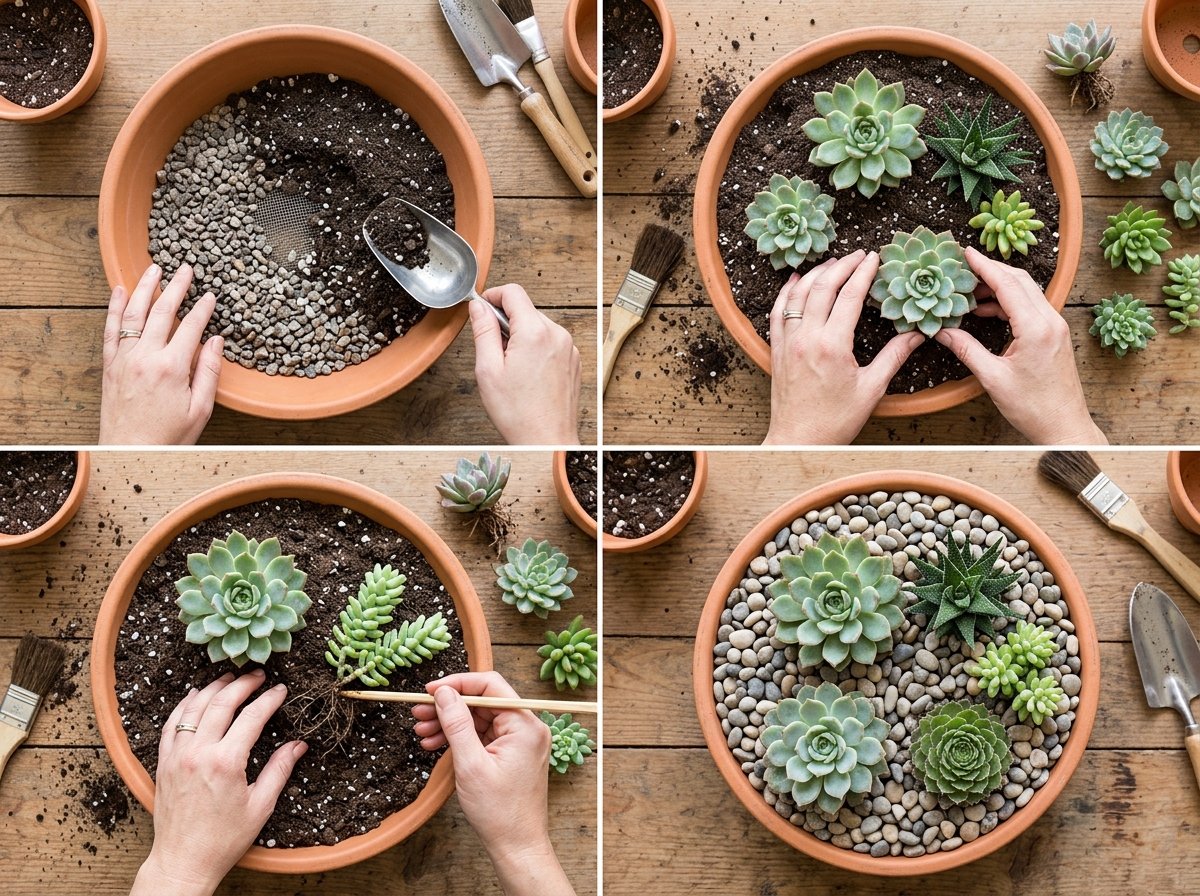
- Prepare the Base: If your container doesn’t have a hole, add an inch of rocks or charcoal at the bottom. If it does, just fill it with your succulent soil mix until it’s about an inch below the rim.
- The “Dry Run”: Before you remove the plants from their nursery pots, arrange them on top of the soil. Move them around until you like the look. Put your “thriller” slightly off-center and your “spillers” near the edges.
- Planting: Remove the succulents from their pots. Gently loosen the root balls. Dig a small hole, place the plant, and firm the soil around it. Ensure there is good root-to-soil contact.
- Top Dressing: This is the “secret sauce.” Cover the exposed soil with small pebbles, sea glass, or decorative sand. This prevents soil from splashing onto the leaves when you water and gives the arrangement a finished, professional look.
For more detailed tips on perfecting this process, visit Achieving a perfect indoor succulent garden.
Watering and Lighting Requirements
Indoor succulents need 4-6 hours of bright, indirect light daily. A windowsill is usually perfect, but avoid “high noon” summer sun which can actually scorch the leaves through the glass. If your plant starts “stretching” (growing tall and thin with wide gaps between leaves), it’s screaming for more light.
When it comes to watering, follow the “Soak and Dry” method. Dribble water onto the soil until it’s moist, then wait. Don’t water again until the soil is bone-dry all the way through. In most homes, this happens every 2-4 weeks. In the winter, you can often go a full month or more without watering.
Common Mistakes to Avoid
- Overwatering: This is the #1 succulent killer. If the leaves turn yellow and mushy, stop watering immediately.
- Overcrowding: It’s tempting to pack them in, but leave a little “breathing room” (about a half-inch) between plants so they can grow.
- No Drainage: If you use a pot without a hole, you must be extremely careful with your water volume.
- Misting: Succulents are not tropical ferns. They hate being misted. Misting leads to humidity-loving pests and rot.
Creative Styling and Long-Term Maintenance
An indoor succulent arrangement is a living piece of decor that evolves over time. With a little maintenance, your “dish garden” can look great for years.
Unique Display Ideas for Home Decor
- Dining Table Centerpiece: Use a long, shallow trough (like a birch-wrapped planter) to create a focal point for your table. It’s low enough that guests can still see each other over it. Check out more Succulent centerpieces for tables.
- Vertical Wall Planters: Use a picture frame with a mesh backing to create living wall art. We have a full guide on DIY succulent wall planters: a fresh approach to home decor.
- Small Spaces: If you live in an apartment, try Succulent display ideas: a touch of green for small spaces or Placing succulents: a guide to tabletop arrangements.
- Fairy Gardens: Use miniature succulents and tiny accessories to create a whimsical world in a terra cotta pot.
Maintaining and Propagating Your Arrangement
After a year or two, your succulents might get “leggy” or outgrow the pot. This is actually a great opportunity!
- Pruning: You can snip off the tops of leggy plants and replant them. They will grow new roots!
- Leaf Cuttings: If a leaf falls off, don’t throw it away. Lay it on top of some dry soil. In a few weeks, a tiny new “baby” succulent will sprout from the end of the leaf.
- Offsets: Many succulents, like Hens and Chicks, produce small babies (offsets). You can gently pull these away and start a brand new pot.
- Repotting: Every 2-4 years, the soil will become depleted of nutrients. This is the time to disassemble the arrangement, refresh the soil, and perhaps move some of the larger plants into their own individual pots.
Frequently Asked Questions about Indoor Succulents
How often should I water my indoor succulent arrangement?
Typically every 2 to 4 weeks. The best way to tell is to stick your finger an inch into the soil. If it feels even slightly damp, wait. If it’s dry and dusty, it’s time for a drink.
Do succulents need direct sunlight when kept indoors?
Most prefer bright, indirect light. Direct sun through a window can actually act like a magnifying glass and burn the leaves. A spot near a bright window (but not directly in the scorching afternoon sun) is ideal.
What is the best way to prevent root rot in shallow containers?
Use a very porous soil mix (with plenty of perlite or sand) and ensure the container has a drainage hole. If you must use a container without a hole, use a very small amount of water and use a moisture meter to ensure the bottom isn’t a swamp.
Conclusion
At FinanceBoostX, we believe that decorating your home shouldn’t be a chore or an expensive recurring cost. An indoor succulent arrangement is a sustainable, long-lasting, and incredibly rewarding way to bring nature inside. Whether you are creating a massive centerpiece or a tiny desk companion, the process is a form of creative expression that pays off for years to come.
Ready to transform your space? Start your indoor garden journey today and discover how a little bit of green can make a big difference in your home’s atmosphere. Happy planting!
