
Why the Arrangement of Succulent Plants Is the Smartest Way to Decorate Your Home
Arrangement of succulent plants is one of the easiest ways to bring lasting, low-maintenance beauty into your home. Here’s a quick overview of how it works:
Quick-Start Guide: How to Arrange Succulent Plants
- Pick compatible succulents – choose plants with similar light and water needs
- Choose the right container – drainage holes are key to preventing root rot
- Use fast-draining soil – mix cactus soil with perlite or coarse sand
- Apply the Thriller-Filler-Spiller rule – one tall focal plant, medium fillers, trailing spillers
- Plant densely for a lush look – succulents actually thrive when crowded
- Water sparingly – indoors, every 2-4 weeks is usually enough
- Place in bright indirect light – aim for 6-8 hours daily
Succulents come in nearly every color of the rainbow. They hold their shape for months. And they ask very little from you in return.
That’s a rare combination in the plant world.
Whether you want a striking centerpiece for your dining table or a low-effort desk accent, a well-designed succulent arrangement delivers both style and staying power. The best part? It looks harder than it is.
This guide walks you through everything — from design principles and soil science to step-by-step planting and long-term care.

Mastering the Arrangement of Succulent Plants: Design Principles
Creating a visually stunning arrangement of succulent plants is an exercise in both art and horticulture. While it might look like a random cluster of greenery, the most professional-looking displays follow specific design principles that ensure visual balance and long-term health.
The golden rule of container gardening, which applies perfectly to succulents, is the Thriller-Filler-Spiller technique.
- The Thriller: This is your focal point. It should be the tallest or most visually dramatic plant in the pot. Think of a striking Aloe, a tall Crassula, or a large, vibrant Aeonium. Place this slightly off-center for a more natural, dynamic look.
- The Filler: These plants surround the thriller, adding bulk and texture. Rosette-shaped succulents like Echeveria or Sempervivum are classic fillers. They provide a “floral” aesthetic that makes the arrangement look like a living bouquet.
- The Spiller: These are trailing plants that “spill” over the edges of the container, softening the transition between the plants and the pot. String of Pearls (Senecio rowleyanus) or Burro’s Tail (Sedum morganianum) are excellent choices.
Beyond this formula, we must consider texture contrast and scale. Mixing smooth, waxy leaves with fuzzy or spiky varieties creates a multi-sensory experience. For more inspiration on making your plants pop, check out our tips for vibrant succulent arrangements.
The Color Wheel and Harmony
One of the most exciting aspects of an arrangement of succulent plants is the sheer diversity of colors available. From icy blues and deep purples to fiery oranges and neon pinks, succulents allow us to “paint” with living organisms.
To master the color wheel, consider these three primary schemes:
- Monochromatic: Use different shades and textures of the same color (e.g., various shades of sage and lime green) for a sophisticated, calming look.
- Analogous: Choose colors that sit next to each other on the color wheel, such as yellows, oranges, and reds. This creates a warm, harmonious feel.
- Complementary: Use colors from opposite sides of the wheel. A fan-favorite is the blue and orange pairing; the rarity of blue in nature makes it incredibly intense when placed next to a bright orange Sedum nussbaumerianum.
We often recommend the “Rule of Three”—sticking to three main colors to keep the design cohesive rather than chaotic. Warm tones (reds, oranges) tend to advance toward the eye, while cool tones (blues, purples) recede, helping you create depth in your display.
Selecting the Right Species for Your Arrangement of Succulent Plants
A beautiful arrangement is only successful if the plants can survive together. This means matching their “lifestyle” needs. Before you start planting, we must look at three critical factors:
- Light Requirements: Don’t pair a sun-loving Sedum that needs 6 hours of direct light with a shade-tolerant Haworthia. If one stretches while the other burns, the arrangement will quickly lose its appeal. Check out our guide to tabletop arrangements for more on placement.
- Watering Compatibility: A great trick is to look at leaf thickness. Generally, succulents with thicker, plumper leaves store more water and need less frequent watering than those with thinner leaves.
- Growth Rates: If you plant a fast-growing Graptopetalum next to a slow-growing “living stone” (Lithops), the former will quickly overshadow the latter.
For outdoor arrangements in colder climates, we suggest focusing on cold-hardy varieties like Sempervivum, which can survive temperatures as low as -30°F.
Essential Materials: Containers and Soil Science
The foundation of any successful arrangement of succulent plants is what you can’t see: the drainage and the dirt.
When choosing a container, drainage is the non-negotiable factor. Succulents are prone to root rot if they sit in soggy soil. While you can use creative containers like wooden boxes, seashells, or vintage tins, you must ensure water has a way out. If a vessel lacks holes, we recommend using a masonry bit to drill them or, at the very least, using a heavy mil plastic liner and watering with extreme precision.
| Container Material | Drainage Efficiency | Pros | Cons |
|---|---|---|---|
| Terracotta | High | Porous; allows soil to breathe | Dries out very quickly; can break in frost |
| Ceramic (Glazed) | Low to Moderate | Holds moisture longer; beautiful finishes | Heavy; often lacks enough drainage holes |
| Wood | Moderate | Natural look; easy to drill | Can rot over time if not lined |
| Concrete | Moderate | Very stable; modern aesthetic | Can leach lime into soil initially |
The Ideal Succulent Soil Mix
Never use standard garden soil for your succulents. It holds too much moisture and will eventually suffocate the roots. The ideal mix is “gritty” and fast-draining. We recommend a ratio of:
- 2 parts cactus/succulent potting mix
- 1 part perlite or coarse sand
- 1 part pumice (for extra aeration)
Adding a handful of worm castings can provide a gentle, slow-release nutrient boost. This mix ensures that even if you’re a bit heavy-handed with the watering can, the water will move through the soil quickly, leaving the roots damp but not drowned.
Step-by-Step Guide to Your First Arrangement of Succulent Plants
Ready to get your hands dirty? Follow this step-by-step process to create a professional-grade display.
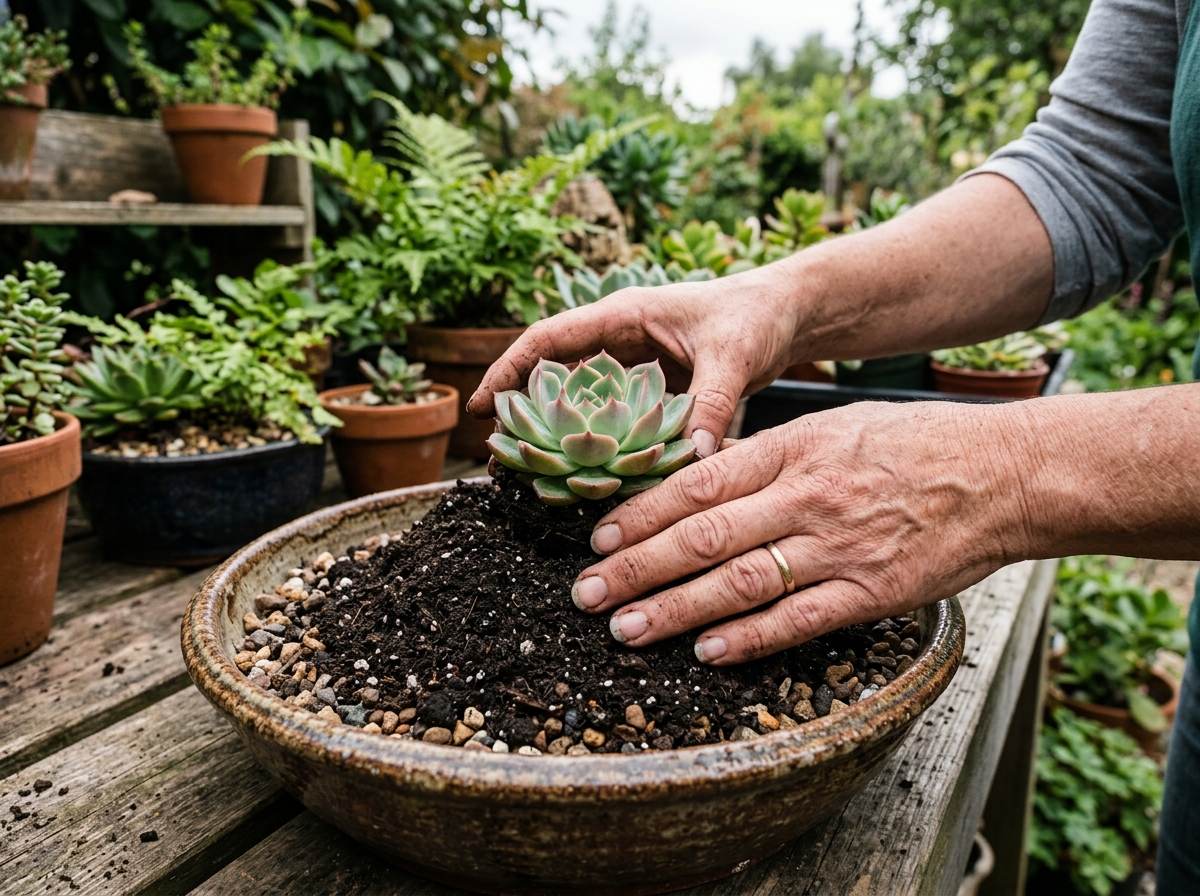
- Prepare the Container: If using a container without drainage, line it with plastic. Fill the pot about 3/4 full with your succulent soil mix.
- Create a Mound: Instead of a flat surface, form a slight mound of soil in the center. This allows you to plant at different elevations, making the arrangement look more “established” and 3D.
- Place the Thriller: Start with your largest or tallest plant. Dig a hole in the center (or slightly off-center) and settle the root ball in, firming the soil around it.
- Add the Fillers: Work your way outward. We like to place these symmetrically or in a “mirror” fashion to create balance. Angle the rosettes slightly outward so they face the viewer.
- Tuck in the Spillers: Place trailing plants near the rim of the pot. Ensure their stems are securely tucked into the soil so they can begin to drape naturally.
- Fill the Gaps: Use smaller cuttings or “offsets” to fill any remaining holes. There should be no visible soil when you are finished.
Handling and Planting Techniques
Succulents can be delicate. Many have a powdery coating called farina that protects them from the sun; touching the leaves can leave permanent fingerprints. Always handle plants by the stem or the root ball whenever possible.
A secret tool of the trade is the chopstick. Use it to poke holes for small stems or to gently tamp down soil in tight spaces between plants. Once your plants are in place, add a “top dressing” of pebbles, crushed rock, or stabilized moss. This isn’t just for looks—it keeps the leaves off the damp soil, prevents soil from splashing during watering, and gives the whole piece a polished, professional finish. Finally, use a soft brush or a gentle puff of air to remove any stray soil from the leaves.
Long-term Care and Maintenance Strategies
The beauty of a succulent arrangement is its longevity. Unlike a bouquet of cut flowers, these “living bouquets” can thrive for a year or more in the same pot.
Watering: Use the “soak and dry” method. Wait until the soil is completely dry (check the top 1-2 inches) before watering again. Indoors, this is usually every 2-4 weeks. If your arrangement is crowded, use a squeeze bottle with a long neck to water directly at the soil line, avoiding the crowns of the plants. For more on vertical care, see our tips on hanging succulent plants.
Light: Most succulents need 6-8 hours of bright, indirect sunlight daily. If they don’t get enough, they will “stretch” (etiolate), losing their compact shape and vibrant color. Rotate your pot every week so all sides get equal exposure.
Temperature: Succulents are happiest between 70-80°F in the summer and 50-60°F in the winter. Keep them away from drafty windows or heating vents.
Troubleshooting and Pruning
Even with the best care, issues can arise.
- Mealy Bugs: These tiny white, cottony pests love to hide in the nooks of rosettes. Treat them by dabbing with a Q-tip dipped in 70% isopropyl alcohol or using a neem oil spray.
- Leggy Growth: If a plant has stretched out, don’t worry! You can “behead” it. Cut the top off, let the stem callous for 2-3 days, and replant it. The original base will often grow new “pups” as well.
- Dead Leaves: It is normal for succulents to shed bottom leaves as they grow. Remove these regularly to prevent pests from nesting and to keep the arrangement looking clean.
Creative Styles and Advanced Display Ideas
Once you’ve mastered the basic bowl, arrangement of succulent plants opens up.
- Succulent Wreaths: These use a moss-filled wire frame. You “pin” succulent cuttings into the moss, where they eventually root and create a living tapestry for your door.
- Vertical Gardens: Using a DIY wall planter, you can create a literal “living painting.”
- Terrariums: These work best with humidity-loving succulents or in open glass vessels that allow for plenty of airflow.
- Mounded Designs: By stacking root balls on top of each other, you can create a dome of succulents that looks like a lush hill of color.
Frequently Asked Questions about Succulent Arrangements
Can succulents be planted closely together?
Yes! In fact, we often recommend it. When succulents are crowded, they have to compete for resources, which naturally slows their growth rate. This keeps the arrangement looking “perfect” for a longer period. As long as you are careful not to overwater (since there is less soil to hold moisture), crowded succulents are very happy.
How often should I water an arrangement with no drainage?
Very sparingly. Since the water has nowhere to go, it’s easy to create a “swamp” at the bottom of the pot. Use a squeeze bottle to moisten the soil around the base of each plant about once a week, but never enough to leave standing water.
What are the best succulents for low-light indoor arrangements?
If your home doesn’t get much sun, stick to “low-light” varieties. Haworthia (Zebra plants), Sansevieria (Snake plants), and Gasteria are all excellent choices. They maintain their shape and color much better in indirect light than sun-hungry Echeverias.
Conclusion
At FinanceBoostX, we believe that gardening should be a source of joy, not stress. The arrangement of succulent plants is the perfect entry point into horticultural art. It allows you to express your personal style through color and texture while creating a piece of decor that actually grows with you.
By following these simple design principles—mastering the color wheel, choosing compatible species, and ensuring proper drainage—you can create a stunning living masterpiece. Whether it’s a tiny desk buddy or a massive outdoor centerpiece, your succulent journey starts with a single plant. Why not start your succulent journey today and see how these resilient, beautiful plants can transform your space?
