
The Truth About Spraying Water on Succulents
Can you spray water on succulents? The short answer is: no, you should not mist or spray succulents as a regular watering method. It does more harm than good.
Quick answer:
- Misting does not deliver water to the roots where succulents actually need it
- Water sitting on leaves leads to rot, fungal growth, and bacterial infections
- Misting raises humidity around the plant, which succulents are not built for
- The only exception is during leaf propagation, when tiny new roots need gentle surface moisture
Succulents have a reputation for being nearly impossible to kill. Low-maintenance, stylish, and tough — they seem like the perfect plant. So it makes sense that people assume a light spritz from a spray bottle is a gentle, safe way to water them.
It isn’t.
In fact, misting is one of the most common mistakes succulent owners make. These plants evolved in dry desert climates where rain is rare but heavy when it comes. Their entire biology is built around deep, infrequent watering — not a fine mist on their leaves.
Spraying water on them regularly can quietly cause serious damage: rotting leaves, weak roots, fungal disease, and even the death of an otherwise healthy plant.

Why You Should Not Spray Water on Succulents
When we think of houseplants, we often think of tropical ferns or philodendrons that love a humid bathroom environment. Succulents are the complete opposite. Most of these plants evolved in arid environments like deserts or rocky outcrops where the air is bone-dry. As noted in the Wikipedia guide to succulent plants, their specialized anatomy is designed specifically to store water for long periods of drought.
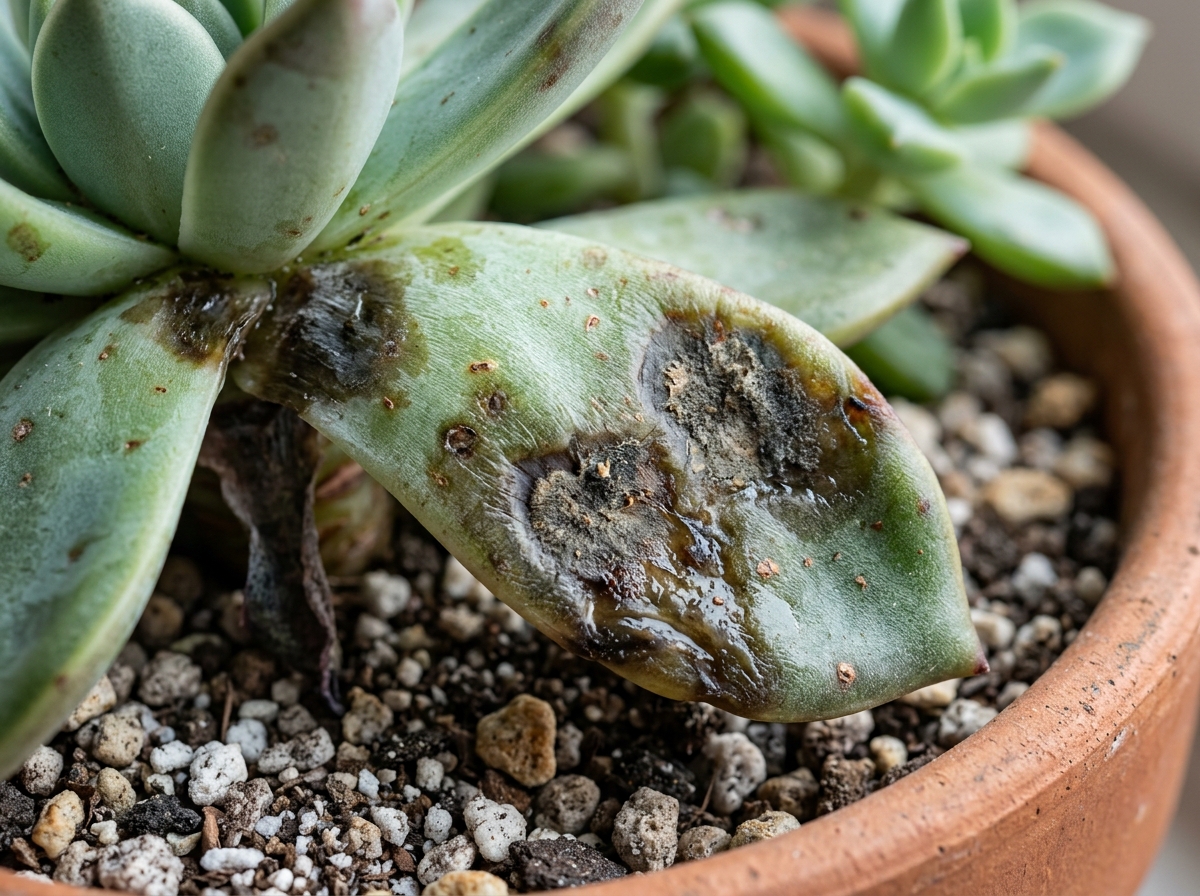
When you ask, “can you spray water on succulents,” you have to consider what happens to that water. In a desert, the sun and wind evaporate surface moisture almost instantly. In our homes, however, water droplets can sit on the leaves for hours. This creates a playground for fungal pathogens and bacterial growth.
Fungi love still, damp environments. When water settles in the “crown” (the center where new leaves grow) or in the crevices of the foliage, it can lead to crown rot, which is almost always fatal for the plant. By misting, you are essentially inviting disease to take a seat on your plant’s leaves. For a deeper dive into these requirements, check out our guide on Understanding Succulent Watering Needs.
Can you spray water on succulents for humidity?
A common misconception is that succulents need a humidity boost, especially in winter when indoor heaters dry out the air. While tropical plants might benefit from this, succulents do not. In fact, increasing the humidity around a succulent can be counterproductive.
High humidity levels mimic overwatering conditions. If the air is too moist, the soil takes longer to dry out, which can attract pests like fungus gnats. These tiny black flies thrive in damp organic matter and can quickly become a nuisance in your home. Instead of reaching for the spray bottle to help with air quality, focus on Avoiding Overwatering Succulent Care Guide to keep the environment appropriately dry.
Risks of water settling on foliage
Beyond rot and fungus, there is a physical risk to the leaves themselves. If your succulents sit on a sunny windowsill, water droplets left on the leaves can act like tiny magnifying glasses. When the sun hits these droplets, they focus the light into an intense beam, causing permanent burn marks or scarring on the delicate skin of the plant.
Furthermore, stagnant water trapped between leaves is the primary cause of “mushy” foliage. Once a leaf turns translucent and soft due to water sitting on it, there is no way to “heal” it. The leaf will eventually rot and fall off, potentially spreading the infection to the stem.
The Science of Succulent Hydration
To understand why misting fails, we have to look underground. Succulents have evolved unique root systems designed to maximize water intake during rare rainstorms. Many species have shallow but wide-reaching roots that are “primed” to drink deeply and then sit in dry soil for weeks.
In the wild, succulents experience a “drought and flood” cycle. They might go two months without a drop of rain, followed by a torrential downpour that saturates the ground. This encourages the roots to grow deep and strong to find every last bit of moisture. You can learn more about mimicking this natural rhythm in our article on Proper Watering Techniques for Succulent Plants.
Why misting causes weak root systems
When you use a spray bottle, the water usually only penetrates the top few millimeters of the soil. The roots at the bottom of the pot remain bone-dry. Over time, the plant realizes that moisture only ever appears at the surface.
This leads to:
- Shallow Root Growth: The plant stops sending roots downward, focusing all its energy on the surface.
- Lack of Deep Penetration: Without deep roots, the plant cannot access nutrients or stored moisture deeper in the soil.
- Plant Instability: A succulent with a shallow root system is top-heavy and prone to falling over or being uprooted easily.
Misting provides just enough water to keep the plant “limping along” but never enough to help it thrive. It’s one of the most Common Mistakes in Watering Succulents that leads to stunted growth.
Natural water storage mechanisms
Succulents are essentially living water tanks. They have specialized “balloon-like” sacs in their leaves, stems, or roots. When they receive a deep watering, these cells expand and fill with water, causing the leaves to feel firm and plump.
During a drought, the plant slowly sips from these internal reserves. This is why a succulent can look perfectly fine after a month of neglect. However, if you only mist the surface, the plant can never fully “refill” its tanks. It will eventually begin to shrivel because its internal storage is empty, even though the surface of the soil looks “wet” from your spray bottle. Different species have different storage capacities, which we discuss in Understanding Variations in Succulent Watering Needs.
Exceptions: When Can You Spray Water on Succulents?
Is there ever a time when the answer to “can you spray water on succulents” is yes? Actually, there are two specific scenarios where a spray bottle is your best friend.
The first is during leaf propagation. When you take a leaf cutting to grow a new plant, the “baby” succulent does not have a developed root system or a large water storage tank yet. These “propagation babes” are much more vulnerable to drying out than mature plants. For more on this delicate stage, see our Demystifying Succulent Watering Tips for Healthy Plants.
Using a spray bottle for succulent propagation
For leaf cuttings, you want to keep the very top layer of the soil slightly damp—not soaked.
- The Technique: Lay your calloused leaves on top of well-draining soil.
- The Misting: Use a spray bottle to lightly mist the soil surface (not necessarily the leaves themselves) every few days.
- The Goal: This provides just enough humidity for the tiny, hair-like roots to find moisture without causing the mother leaf to rot.
Note: This only applies to leaf propagation. Misting stem cuttings is much riskier, as the open “wound” of a stem is highly susceptible to rot if it stays too wet.
Can you spray water on succulents that are very small?
Very small seedlings or “plugs” that haven’t established deep roots yet can also benefit from a more controlled watering method. If you use a heavy watering can on a tiny seedling, you might wash away the soil or drown the plant.
In this case, you can use a spray bottle, but set the nozzle to the stream setting rather than the mist setting. This allows you to target the water directly at the base of the plant and the top layer of the soil, ensuring the moisture reaches the young roots without coating the leaves in a fine, rot-inducing fog. For more tool recommendations, visit our Succulent Watering Guide Tools and Techniques.
Better Alternatives to Misting Your Plants
If misting is off the table, how should you keep your plants hydrated? The gold standard for succulent care is the Soak and Dry Method. This method perfectly mimics the desert rain cycles we mentioned earlier.
| Feature | Misting / Spraying | Soak and Dry Method |
|---|---|---|
| Water Delivery | Surface only; roots stay dry | Deep saturation; reaches all roots |
| Root Health | Promotes shallow, weak roots | Encourages deep, strong root systems |
| Rot Risk | High (water sits on leaves) | Low (water goes directly to soil) |
| Humidity | Increases humidity (bad for succulents) | Keeps air dry (ideal for succulents) |
| Frequency | Needs to be done often | Done once every 10–14 days |
To master this, you must ensure your pot has a drainage hole. Without drainage, the “soak” part of the method becomes a “drown” method, leading to root rot. You can read a step-by-step breakdown in our guide: Watering Succulents the Soak and Dry Method.
How to check soil moisture levels
The biggest secret to succulent success isn’t knowing how much to water, but when to water. You should only water when the soil is 100% dry from top to bottom. Here are four ways to check:
- The Finger Test: Stick your finger into the soil up to the second knuckle. If you feel even a hint of moisture or coolness, wait.
- The Wooden Chopstick Method: Push a dry wooden chopstick or toothpick deep into the soil (avoiding the main root ball). If it comes out with soil clinging to it or looks dark/damp, the soil is still wet.
- Pot Weight: A dry pot is significantly lighter than a freshly watered one. Lift your pots regularly to get a “feel” for their dry weight.
- Moisture Meters: For those who want precision, a moisture meter can tell you exactly what’s happening at the bottom of the pot.
Understanding The Role of Drainage in Succulent Watering is crucial here; if the bottom stays wet while the top is dry, you’ll still face rot issues.
Signs of overwatering to watch for
If you have been misting your plants or watering too frequently, your succulent will try to tell you something is wrong. Catching these signs early can save the plant’s life.
- Translucent or Yellow Leaves: Healthy leaves are usually opaque and vibrant. If they start looking like “water balloons” or turn a sickly yellow, they are over-saturated.
- Mushy Texture: If the leaves feel soft or squishy to the touch, the internal cells have likely burst from too much water.
- Leaf Drop: Succulents will often drop their lower leaves if they are overwatered. If a gentle touch causes a leaf to fall off, it’s a red flag.
- Black Stems: This is a sign of advanced rot. If the base of the plant is turning black, the rot has likely traveled from the roots into the main “veins” of the plant.
If you spot these, stop watering immediately! For more tips on reviving a struggling plant, see Keeping Succulents Hydrated Proper Watering Techniques.
Conclusion
At FinanceBoostX, we want your indoor garden to be a source of joy, not stress. While the temptation to “baby” your plants with a spray bottle is strong, the best thing you can do for a succulent is to let it be. By avoiding the misting myth and embracing the soak-and-dry method, you are setting your plants up for years of healthy, vibrant growth.
Remember: when it comes to succulents, less is almost always more. Put the spray bottle away, let that soil dry out completely, and watch your desert beauties thrive.
Ready to become a true plant pro? Explore our full Succulent Care Category for more expert guides and tips!
