
The Beginner’s Guide to Cast Iron Plant Care
Cast iron plant care is remarkably simple — this is one of the toughest houseplants you can own.
Here’s what you need to know at a glance:
| Care Factor | What to Do |
|---|---|
| Light | Low to medium indirect light; avoid direct sun |
| Watering | Check soil every 10 days; water when top 2 inches are dry |
| Soil | Well-draining mix with perlite or sand |
| Temperature | Keep between 60–75°F (16–24°C) |
| Fertilizer | Balanced liquid fertilizer, spring and summer only |
| Repotting | Every 4–5 years; tolerates being rootbound |
| Toxicity | Non-toxic to pets and humans |
The cast iron plant (Aspidistra elatior) earned its name honestly. During the Victorian era, it was often the only houseplant that could survive gas-lit, coal-heated homes with poor air quality. That legacy of toughness carries right into your modern living room.
With leaves that stay bold and green for decades — this plant can live up to 50 years with minimal attention — it’s the perfect fit for anyone who wants stylish greenery without the fuss.
Whether you’re a first-time plant owner or just tired of plants that demand constant attention, the cast iron plant delivers. It thrives on low light, forgives missed waterings, and asks for very little in return.
Mastering Cast Iron Plant Care: Light and Water
When we talk about cast iron plant care, the two most important pillars are light and water. While this plant is famously “indestructible,” it does have preferences that will help it move from merely surviving to truly thriving.
The Aspidistra elatior is often called the “Bar room plant.” This nickname isn’t just a fun piece of trivia; it highlights the plant’s ability to live in the dim, sometimes neglected corners of a pub or a dark hallway. If it can handle the low light and questionable air of a 19th-century tavern, it can certainly handle your guest room or office.
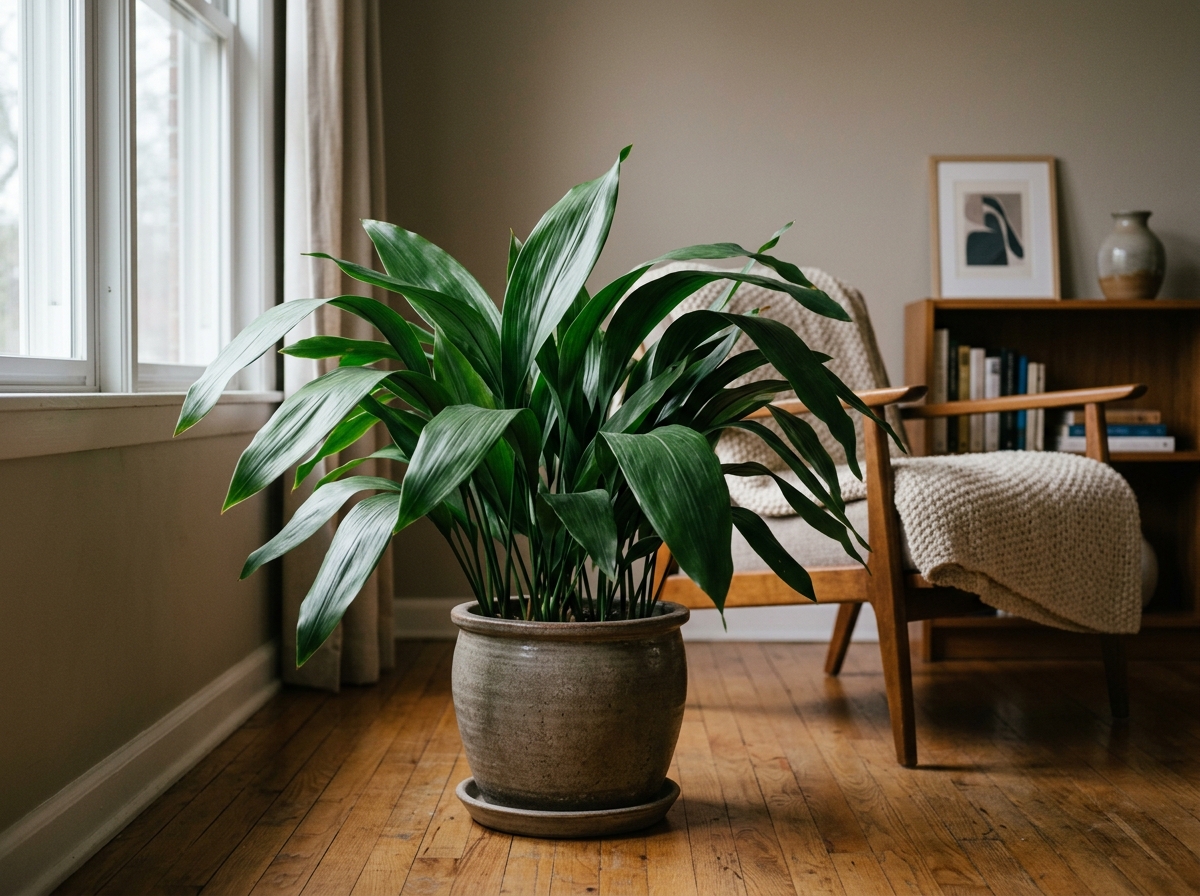
Ideal Light Requirements for Cast Iron Plant Care
One of the biggest mistakes we see with cast iron plant care is giving the plant too much “love” in the form of sunlight. These plants are native to the forest floors of East Asia, specifically Japan and Taiwan, where they grow in the deep shade of towering trees.
- Low to Medium Indirect Light: This is the sweet spot. A north-facing window is perfect, or a spot several feet away from an east or west-facing window.
- Avoid Direct Sunlight: This is non-negotiable. Direct sun will bleach the deep green color out of the leaves and eventually cause brown, crispy scorch marks. Think of the leaves like delicate skin that hasn’t seen the sun in years — it burns easily!
- Artificial Light: These plants are champions of the office world. They can live quite happily under standard fluorescent or LED office lighting, making them a top choice for windowless workspaces.
- Variegated Varieties: If you have a cultivar like ‘Variegata’ or ‘Milky Way,’ they need slightly more light than the solid green versions. If the light is too low, they may lose their beautiful white stripes or spots and revert to solid green to maximize their photosynthesis.
Watering Schedules and Signs of Distress
If there is one way to actually kill a “bomb-proof” plant, it is overwatering. We recommend a “less is more” approach when it comes to the watering can.
- The 10-Day Rule: Instead of watering on a strict schedule, we suggest checking the soil every 10 days. Stick your finger into the dirt; if the top 2 inches feel dry, it’s time for a drink.
- Drainage is Key: Always ensure your pot has drainage holes. The cast iron plant hates “wet feet.” If the roots sit in soggy soil for too long, they will succumb to root rot, which is often fatal.
- Signs of Overwatering: If you notice the leaves turning yellow or the base of the stems feeling mushy, you are likely watering too much.
- Signs of Underwatering: While very drought-tolerant, a completely parched plant will start to droop, and the leaves may lose their luster.
- Seasonal Adjustments: During the winter, the plant enters a dormant phase. We drastically reduce watering during this time, often waiting until the soil is almost entirely dry before adding more.
Using a moisture meter can be a great way to take the guesswork out of cast iron plant care, especially if you are new to indoor gardening.
Optimal Environment: Soil, Temperature, and Humidity
Creating the right environment for your Aspidistra is about stability. These plants don’t like sudden changes, but they are incredibly accommodating once they are settled. For more technical details on the species, you can refer to FPS53/FP053: Aspidistra elatior Cast Iron Plant.
The Best Potting Mix for Cast Iron Plant Care
The soil you choose acts as the foundation for your plant’s health. Because the cast iron plant is prone to root issues if kept too wet, the texture of the soil matters immensely.
- Well-Draining Mix: A standard high-quality potting soil is a good start, but we like to “level it up” by adding perlite or coarse sand. This ensures that water moves through the root ball quickly.
- Slightly Acidic pH: These plants prefer a soil pH between 5.5 and 6.5. A mix containing peat moss or coco coir naturally provides this slight acidity.
- Outdoor Soil: If you are planting them outdoors (common in USDA zones 7-11), they are surprisingly tolerant of various soil types, including clay and sandy loam, as long as the area doesn’t collect standing water.
Temperature and Humidity Preferences
One of the reasons the cast iron plant is a Victorian favorite is its ability to handle temperature fluctuations that would make a Fiddle Leaf Fig drop all its leaves in a huff.
- Ideal Range: They are happiest between 60°F and 75°F (16–24°C). This is basically standard human “room temperature.”
- Cold Tolerance: They can tolerate dips down to 45°F (7°C) without much trouble. In outdoor settings, they are hardy down to USDA zone 7, where they can survive occasional frosts.
- Humidity: Unlike many tropical plants, the cast iron plant doesn’t require high humidity. Average indoor humidity is perfectly fine. However, if your home gets very dry in the winter due to heating, a light misting or a gravel tray with water can help keep the leaves looking fresh.
- Drafts: While tough, we recommend keeping them away from direct blasts of cold air from air conditioners or scorching heat from radiators.
Maintenance: Fertilizing, Pruning, and Propagation
Because the cast iron plant is a slow grower — usually only producing a few new leaves every year — maintenance is a breeze. You won’t find yourself constantly pruning or repotting this one.
Fertilizing for Steady Growth
Since they grow slowly, they don’t need a lot of “food.” In fact, over-fertilizing can be more harmful than not fertilizing at all.
- When to Fertilize: Only feed your plant during the active growing season (spring and summer).
- What to Use: A balanced liquid houseplant fertilizer (like a 10-10-10) works well. We recommend diluting it to half the strength recommended on the bottle.
- Frequency: Once a month is plenty. Skip the fertilizer entirely during the fall and winter months.
- Organic Option: If you prefer a natural approach, a thin layer of compost or worm castings on top of the soil once a year in the spring provides a gentle, slow-release nutrient boost.
Pruning and Repotting Techniques
Pruning a cast iron plant is mostly about aesthetics. You aren’t trying to shape it like a bonsai; you’re just tidying up.
- Removing Old Leaves: If a leaf becomes yellow, brown, or tattered, use a pair of clean, sharp scissors to cut it off at the very base of the stem. This directs the plant’s energy toward new, healthy growth.
- Cleaning: Those broad leaves are dust magnets! We suggest wiping them down with a damp cloth every few months. This doesn’t just make them look pretty; it helps the plant “breathe” and photosynthesize more effectively.
- Repotting: You only need to repot every 4 or 5 years. These plants actually enjoy being slightly rootbound. When you do repot, choose a container that is only 2-3 inches wider than the current one.
How to Propagate Cast Iron Plants
You won’t have much luck with leaf cuttings in water for this species. Propagation is done through rhizome division.
- Timing: The best time to divide is in the spring or early summer.
- The Process: Gently remove the plant from its pot. You will see thick, underground stems called rhizomes.
- The Cut: Using a clean knife, cut the rhizome into sections. Each section must have at least 2 or 3 leaves and a healthy portion of roots attached.
- Planting: Place the new divisions into their own pots with fresh, well-draining soil.
- Aftercare: Keep the soil slightly more moist than usual for the first few weeks while the new plants establish themselves.
Popular Varieties of Cast Iron Plant
| Variety | Unique Features |
|---|---|
| ‘Variegata’ | Features bold, creamy white vertical stripes on dark green leaves. |
| ‘Hoshi-zora’ | Name means “Starry Sky”; has yellow to white dots speckled across the foliage. |
| ‘Asahi’ | The tips of the leaves turn white as they mature, looking like a morning sunrise. |
| ‘Milky Way’ | A smaller variety with heavy white spotting, resembling a galaxy. |
| ‘Lennon’s Song’ | Features a light green or yellow stripe down the center of the leaf. |
Troubleshooting Pests and Common Problems
Even the “cast iron” of plants can have a bad day. Most issues are easily fixed if you catch them early.
Identifying and Treating Common Pests
While the thick, leathery leaves are tough for many bugs to pierce, a few pests still try their luck.
- Spider Mites: These are the most common enemy. They cause tiny yellow speckles on the leaves.
- The Test: Shake a leaf over a white piece of paper. If you see tiny moving dots, you have mites.
- The Fix: Rinse the leaves with lukewarm water and apply neem oil or insecticidal soap.
- Scale and Mealybugs: These look like small brown bumps or white cottony tufts.
- The Fix: Wipe them off with a cotton swab dipped in rubbing alcohol.
- Prevention: Keeping the leaves clean of dust is your best defense against pests!
Fixing Yellowing and Browning Leaves
If your plant is looking a bit “off,” the leaves are its way of talking to you.
- Yellow Leaves: Usually a sign of overwatering. Check the soil moisture immediately. If it’s soggy, let it dry out completely before watering again.
- Brown Tips: This often points to low humidity or mineral buildup from tap water. Try using filtered water or letting your tap water sit out overnight before using it.
- Brown Spots/Edges: This is typically caused by direct sunlight (sunburn). Move the plant further away from the window.
- Winter Burn: For outdoor plants, cold winds can dry out the leaves, causing them to turn brown. Providing a sheltered spot can prevent this.
Frequently Asked Questions
Is the Cast Iron Plant toxic to pets?
Good news for pet parents! The cast iron plant is non-toxic to cats, dogs, and horses. It is one of the safest choices for a home with curious furry friends.
Can a Cast Iron Plant survive in a room with no windows?
It can survive for a while, but it cannot live in total darkness indefinitely. It needs some source of light, whether it’s a nearby window or consistent artificial overhead lighting (like in an office). If the room is pitch black 24/7, the plant will eventually fade.
Why is my Cast Iron Plant growing so slowly?
Don’t worry, it’s not you! These plants are notoriously slow growers. It is perfectly normal for a mature plant to only produce two or three new leaves in an entire year. This slow growth is part of why they are so hardy; they don’t use up energy quickly.
Conclusion
Mastering cast iron plant care is a rewarding journey because the “return on investment” is so high. For just a few minutes of attention every week or two, you get a lush, architectural plant that can stay with your family for half a century. Its resilience against low light, neglect, and varying temperatures makes it the ultimate “set it and forget it” greenery.
Whether you’re decorating a dim apartment or looking for a sturdy office companion, the Aspidistra elatior is a timeless choice. We hope this guide helps you feel confident in keeping your green companion happy!
For more tips on hardy plants that can handle a bit of neglect, check out our guide on succulent care to expand your low-maintenance indoor garden. Happy planting from all of us at FinanceBoostX!
