
The Best Hardy Indoor Plants for Low Light (Quick Answer)
Hardy indoor plants low light lovers can rely on include these top picks that genuinely thrive — not just survive — in dim conditions:
| Plant | Light Tolerance | Difficulty |
|---|---|---|
| ZZ Plant | 50–400 lux | Very Easy |
| Snake Plant | Full shade to indirect | Very Easy |
| Aglaonema (Chinese Evergreen) | 100–400 lux | Easy |
| Cast Iron Plant | Deep shade | Very Easy |
| Pothos | Low to medium indirect | Easy |
| Peace Lily | Low indirect | Easy |
Most of us have been there. You bring home a beautiful plant, tuck it into that cozy corner, and watch it slowly give up on life. The problem usually isn’t you — it’s the plant.
Many popular plants sold as “low light” actually need far more light than a typical indoor room provides. They tolerate dim conditions for a while, then slowly decline.
The good news? A handful of genuinely tough plants are built for exactly the kind of light most homes actually have — filtered, indirect, or far from any window.
This list focuses on plants that don’t just survive the shadows. They belong there.

Understanding Low Light for Hardy Indoor Plants
To succeed with greenery in a dim apartment or a windowless office, we first have to define what “low light” actually means. In botany, there is a massive difference between a plant that can tolerate low light and one that will actually thrive in it.
A plant that “tolerates” low light is essentially in survival mode. It isn’t growing; it’s just slowly using up its energy reserves until it eventually pales and dies. On the flip side, hardy indoor plants low light specialists are often “understory” plants. In their native tropical rainforests, they live on the ground level, shaded by massive tree canopies. They have evolved to be highly efficient at photosynthesis even when light levels are meager.
Scientifically, low light is often measured between 50 and 400 lux. To give you a mental image, 50–75 lux is a space so dim you would struggle to read a book without a lamp. Surprisingly, the ZZ Plant can survive in these “deep shade” conditions. For most low-light plants to truly grow and push out new leaves, an ideal range is 100–400 lux, which is roughly the level of light found in a north-facing window or a hallway far from a light source.
Beyond just looking pretty, these shadow-dwellers are functional. According to the famous NASA Clean Air Study, many of these species are top-tier air purifiers. Aglaonema species, for instance, were ranked among the top five plants for removing indoor pollutants like benzene, formaldehyde, and trichloroethylene. If you are curious about how these preferences differ from other indoor favorites, check out our guide on understanding light preferences for indoor succulents to see why your Echeveria might be struggling while your Snake Plant is soaring.
Top Hardy Indoor Plants Low Light Environments Can’t Kill
If you feel like you have a “black thumb,” it’s likely because you’ve been trying to force sun-loving plants into dark corners. To save your sanity (and your wallet), we’ve curated a list of the most resilient species available.
| Feature | ZZ Plant | Snake Plant | Aglaonema Maria |
|---|---|---|---|
| Water Needs | Extremely Low | Very Low | Moderate |
| Growth Rate | Slow (Spurts) | Slow to Moderate | Moderate |
| Air Purifying | Yes | Yes (Nighttime O2) | Yes (Top 5 NASA) |
| Unique Trait | Waxy, shiny leaves | Vertical, architectural | Stunning variegation |
The Cast Iron Plant (Aspidistra elatior)
The name says it all. This plant earned its reputation during the Victorian era because it could survive the dark, smoky, and drafty parlors of the time. It is perhaps the most neglect-friendly plant on this list, handling deep shade where almost nothing else will grow.
Pothos (Epipremnum aureum)
Often called “Devil’s Ivy” because it’s nearly impossible to kill, Pothos is a vining champion. It can trail down from a high shelf or climb up a pole. While variegated versions might lose some color in low light, the plant will continue to grow vigorously.
Peace Lily (Spathiphyllum)
If you want flowers in a dim room, the Peace Lily is your best bet. It’s one of the few low-light plants that produces elegant white blooms. It’s also a great “communicator”—it will droop dramatically when it’s thirsty, telling you exactly when it needs a drink.
For more options that fit the “tough as nails” category, explore these top succulent varieties for low light that can handle the darker side of your home. As noted in the Sansevieria / RHS Plant Guide, these plants are prized for their resilience and longevity, making them perfect for long-term indoor decor.
Why the ZZ Plant is a Hardy Indoor Plants Low Light Champion
The ZZ Plant (Zamioculcas zamiifolia) is almost suspiciously resilient. If you’re the type of person who forgets to water for three weeks, this is the plant for you. As detailed in The ZZ Plant | Yard and Garden guide, it features naturally glossy, waxy leaves that look like they’ve been polished with oil.
What makes it so hardy?
- Rhizomes: Beneath the soil, the ZZ plant has potato-like bulbs (rhizomes) that store water. This allows it to survive extreme drought.
- Low Light Efficiency: It can survive in light levels as low as 50 lux.
- Slow Growth: Because it doesn’t rush to grow, it doesn’t exhaust its energy in dim settings. It typically grows in spurts rather than a steady climb.
According to Better Homes & Gardens, the ZZ plant is the ultimate “set it and forget it” greenery. It can reach up to 3 feet tall indoors, making it a substantial architectural piece for a basement or a dim office corner.
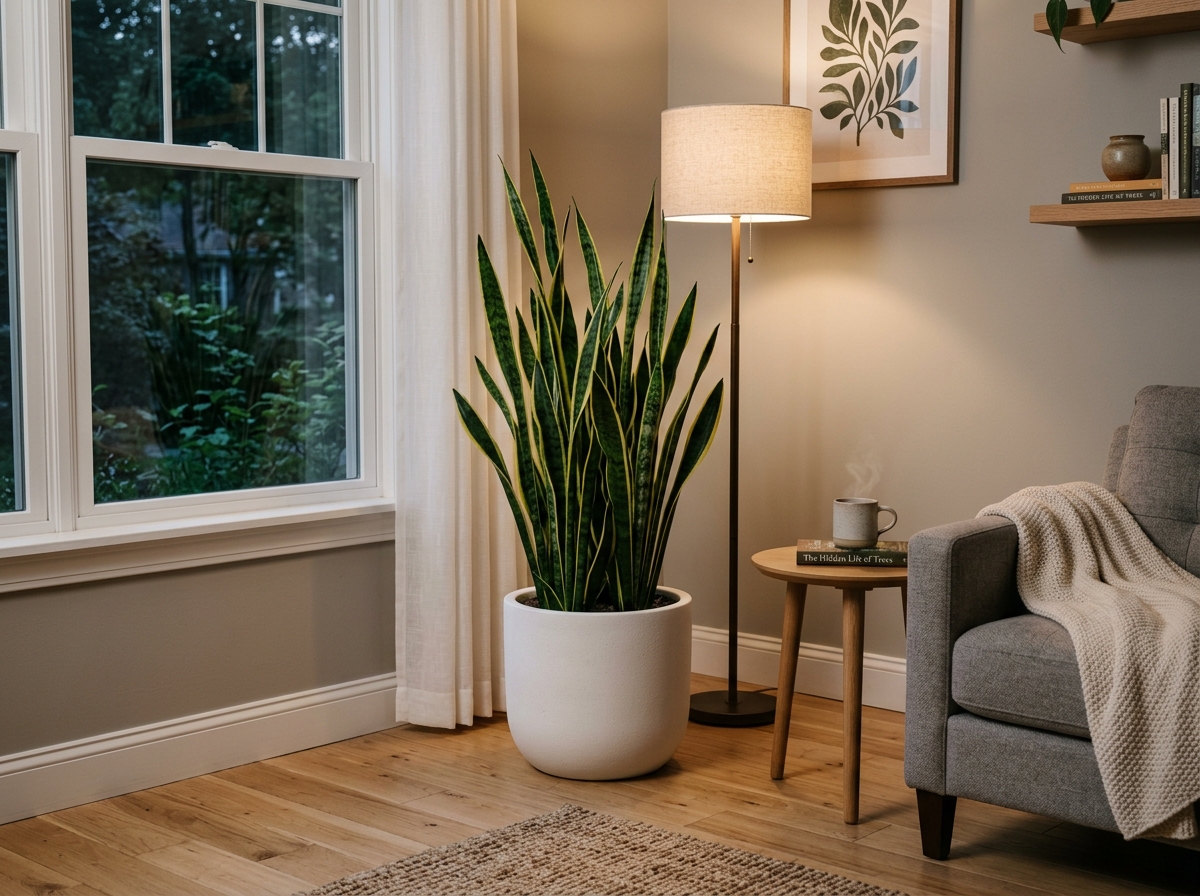
Snake Plants: The Ultimate Hardy Indoor Plants Low Light Survivor
The Snake Plant (also known as Mother-in-law’s tongue) is a staple for a reason. Its vertical, sword-like leaves add a modern touch to any space without taking up much floor real estate. Research from the University of Florida highlights its extreme tolerance for a wide range of temperatures (ideally 60–75°F) and its ability to thrive on neglect.
One of the coolest facts about Snake Plants is that they perform “Crassulacean Acid Metabolism” (CAM). Unlike most plants that release oxygen during the day, Snake Plants release oxygen at night, making them the perfect companion for a dim bedroom. To keep them at their best, you must learn how to keep your indoor succulents healthy, which primarily involves ignoring them. Overwatering is the number one way to kill a Snake Plant; they prefer their soil to dry out completely between sessions.
Essential Care and Maintenance for Shade-Loving Plants
Even the toughest hardy indoor plants low light varieties need some basic care to look their best. Because these plants aren’t receiving a lot of energy from the sun, their metabolic processes are slower. This means they need less of everything else—less water, less fertilizer, and less frequent repotting.
Watering Wisdom
The biggest mistake people make with low-light plants is watering them on a strict weekly schedule. In a dim room, water evaporates much slower. If the soil stays soggy, the roots will rot. Always use the “knuckle test”: stick your finger an inch or two into the soil. If it feels damp, wait. For ZZ plants and Snake Plants, you can often go 2–3 weeks between waterings in the summer, and even longer in the winter.
Dust is the Enemy
In low light, every photon counts. Dust buildup on leaves acts like a tiny window shade, blocking out the light the plant needs for photosynthesis. We recommend wiping the leaves with a damp microfiber cloth every few weeks. Not only does this help the plant “breathe,” but it also keeps that glossy shine looking spectacular.
Humidity and Feeding
While many tropical plants love high humidity, many hardy low-light plants are quite adaptable. However, if you live in a very dry climate, you might notice brown, crispy tips on plants like the Peace Lily or Aglaonema. You can find tips on lowering humidity for healthier indoor succulents if your home is prone to dampness, but generally, a simple misting or a pebble tray is enough for these hardy varieties.
When it comes to fertilizer, less is more. Apply a diluted liquid fertilizer once or twice a year during the growing season (spring and summer). Avoid feeding them in the winter when the plant is effectively “sleeping.”
Troubleshooting Common Low-Light Plant Problems
Even with hardy indoor plants low light specialists, things can occasionally go wrong. The key is to catch the signs early.
Leggy Growth
If your plant is developing long, thin stems with huge gaps between the leaves, it’s “reaching” for light. This is called etiolation. While the plant might survive, it won’t look its best.
- The Fix: Move the plant slightly closer to a window or rotate it a quarter turn every week so all sides get equal exposure. You can also use grow lights that will make your succulents beam to supplement natural light.
Yellowing Leaves
Yellow leaves can be tricky. If it’s just one old leaf at the bottom, it’s likely natural aging. If many leaves turn yellow at once, you are likely overwatering.
- The Fix: Check the drainage holes. If the soil is swampy, let it dry out completely before watering again. Use clean pruning shears to remove the damaged foliage to prevent rot from spreading.
Stunted Growth
In low light, plants grow slowly. However, if it hasn’t pushed out a new leaf in a year, it might be root-bound or starving for nutrients.
- The Fix: Check if roots are circling the bottom of the pot. If so, repot into a container one size larger with fresh, well-draining soil.
Frequently Asked Questions about Hardy Indoor Plants
Can low-light plants survive in rooms with no windows?
The short answer is: not forever. All plants need some form of light to photosynthesize. If a room is truly pitch black (like a windowless bathroom or basement), even a ZZ plant will eventually perish. However, you can easily solve this with artificial light. Standard fluorescent office lights or specialized LED grow lights can provide enough energy for these plants to thrive. Aim for 8–12 hours of artificial light a day if natural light is absent.
Which low-light indoor plants are safe for pets?
Safety is a major concern for pet owners. Many common low-light plants, like the ZZ Plant and Snake Plant, contain calcium oxalate crystals, which can cause oral irritation and swelling if chewed. If you have curious cats or dogs, opt for these non-toxic varieties:
- Bird’s Nest Fern: Lush, wavy green fronds that love shade.
- Calathea (Prayer Plant): Famous for moving its leaves up at night.
- Parlor Palm: A classic, pet-safe palm that handles dim corners beautifully.
Why is my low-light plant growing so slowly?
Don’t panic! Slower growth is a feature, not a bug, of low-light gardening. In dim conditions, the plant is conserving energy. While a plant in a sunny window might push out a new leaf every week, a hardy indoor plants low light variety might only grow a few inches a year. As long as the leaves look healthy and firm, your plant is doing just fine. If you want to give it a tiny boost, ensuring you are achieving a perfect indoor succulent garden setup with the right soil can help maximize what little energy it has.
Conclusion
Creating a lush, green sanctuary doesn’t require a sun-drenched solarium. By choosing hardy indoor plants low light environments can’t defeat, you can bring life into the darkest corners of your home. Whether it’s the architectural elegance of a Snake Plant or the “unkillable” nature of the ZZ Plant, these resilient species prove that you don’t need a green thumb to succeed — you just need the right plant for the right place.
At FinanceBoostX, we believe that a well-decorated, stress-free home is an essential part of a balanced lifestyle. Adding a few low-maintenance plants is one of the most cost-effective ways to boost your mood and clean your air. For more tips on keeping your greenery in top shape, check out our more info about succulent care section and start building your indoor jungle today!
