
What Is Haworthia Leaf Propagation (And Does It Actually Work)?
Haworthia leaf propagation is the process of growing a brand-new plant from a single leaf removed from a mature Haworthia. Here’s the short answer on how it works:
- Remove a healthy leaf – with stem tissue attached at the base
- Let it callus – dry in a shaded spot for at least 10 days
- Place on well-draining substrate – base down, but don’t bury it
- Wait – roots appear in a few weeks; tiny pups (new plantlets) follow later
- Water sparingly – only once root nodules have formed
It works – but only if you do one thing right: keep the stem tissue attached to the leaf base.
Unlike other succulents such as Echeveria, Haworthia leaves won’t produce roots or new plants on their own. The leaf needs a small piece of stem tissue, which contains the meristematic cells responsible for generating new growth. Without it, the leaf will simply dry out and die.
The good news? With the right technique, it’s entirely doable – even for a busy plant owner with limited time. And the reward is a collection of genetically identical, striking little succulents you can keep, display, or give away.

Why Haworthia Leaf Propagation Requires Stem Tissue
If you have ever propagated an Echeveria or a Sedum, you know the drill: snap off a leaf, toss it on some dirt, and wait for magic. With Haworthia, that “snap” is exactly what you want to avoid. The biological secret to success lies in the basal plate.
The basal plate is the area where the leaf meets the stem. This region is packed with meristematic cells. Think of these as the plant’s “stem cells”-they are undifferentiated cells capable of organogenesis, which is just a fancy way of saying they can grow into entirely new organs like roots and leaves. In the Haworthia genus, these cells are located on the stem itself, not within the leaf blade.
When we perform haworthia leaf propagation, we must ensure that a small sliver of white stem tissue remains attached to the base of the leaf. If you look closely at a successfully removed leaf, you will see a thin, white, slightly curved edge at the bottom. This is the “growing point.” Without this tissue, the leaf may stay green for months, but it will never produce a pup. It is essentially a “zombie leaf.”
By retaining this tissue, we are creating true plant clones. This is particularly useful for rare species like Haworthia emelyae var. comptoniana, which rarely produce offsets (pups) on their own. For more on the biological foundations of this process, check out our Mastering Succulent Propagation: An In-Depth Guide.
Essential Tools and Preparation for Success
Before we start “performing surgery” on our favorite succulents, we need to gather the right gear. Haworthia leaf propagation is a game of precision and hygiene. If you use a dirty knife, you’re just inviting rot to the party, and trust us, rot is a terrible houseguest.
Here is our recommended toolkit:
- Sterilized Scalpel or Sharp Knife: A clean, thin blade is essential for making precise incisions into the stem.
- Flat Dental Floss: Not the round kind and definitely not fishing line. Flat floss slides between leaves more easily.
- Cinnamon Powder: A natural antifungal that helps seal wounds.
- Rooting Hormone (Optional): Can speed up the process, though many experts find it unnecessary if the stem tissue is present.
- Well-Draining Substrate: Fine-grained pumice, perlite, or a very gritty cactus mix.
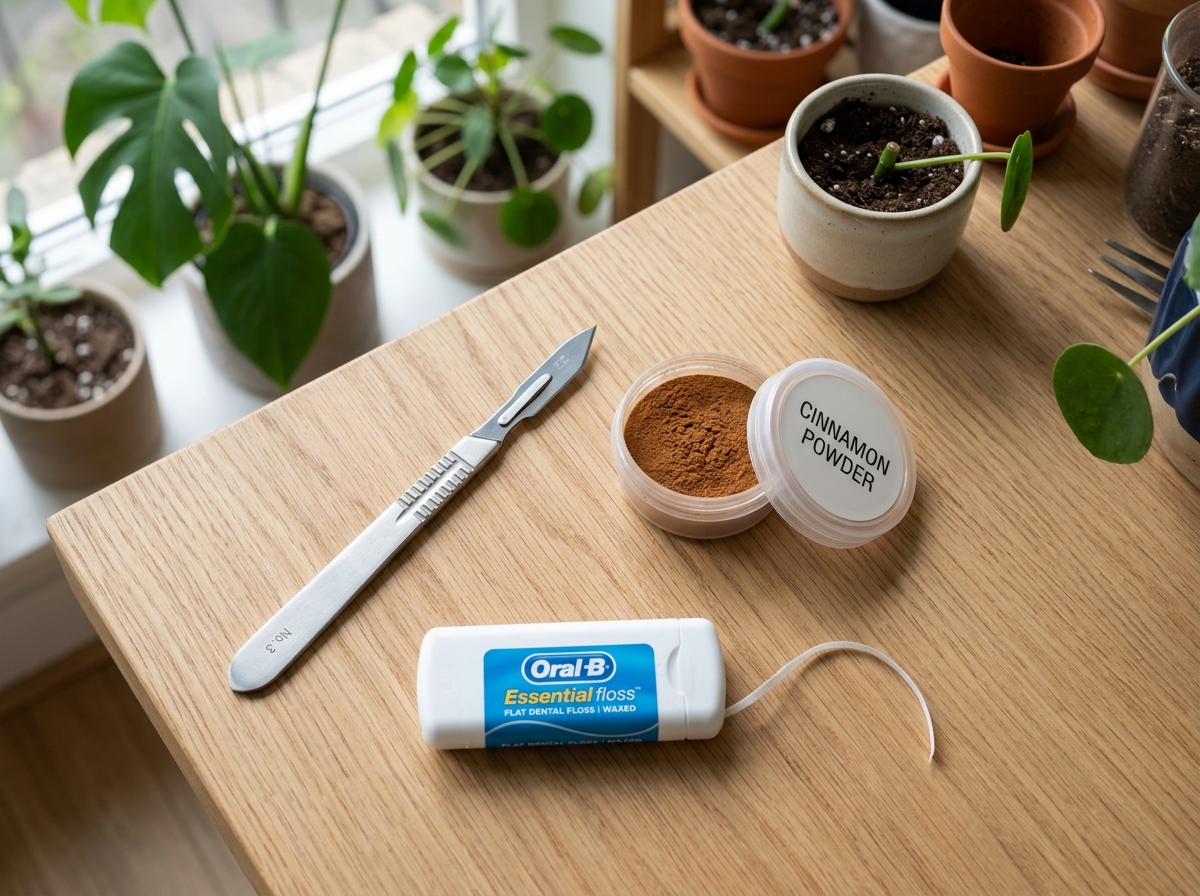
Preparation also involves the mother plant. We recommend unpotting the plant and rinsing the roots to remove all soil. This gives us a clear view of the stem and reduces the risk of infection from soil-borne pathogens. Once the plant is clean and dry, you are ready to begin. Choosing the right environment for your new cuttings is just as important as the tools you use; see our guide on Choosing The Best Container For Succulent Propagation to get started.
Three Expert Techniques for Removing Leaves
Removing a leaf from a Haworthia isn’t about strength; it’s about finesse. We want to maximize the amount of stem tissue on the leaf while minimizing damage to the mother plant.
| Method | Best For | Precision Level |
|---|---|---|
| Squeeze and Pinch | Beginners/Common Species | Moderate |
| Precision Scalpel | Rare/Expensive Species | Very High |
| Dental Floss | Tight Rosettes | High |
The Squeeze and Pinch Method
This technique was popularized by expert growers like Martin Scott. It works best on the lower, older leaves of the plant. Gently pull the leaf downward to create a small gap between it and the stem. Using your thumb and forefinger, squeeze the base of the leaf firmly and “pinch” it away from the stem with a slight twisting motion.
The goal is to feel that satisfying “pop” that indicates the leaf has come away with its basal tissue intact. If you’re just starting out, our Beginners Guide Propagating Succulents offers great foundational tips for handling delicate plants.
The Precision Scalpel Technique for Haworthia Leaf Propagation
For those who aren’t afraid of a little “botanical surgery,” the scalpel method (often associated with Gerhard Marx) is the gold standard.
- Identify the leaf you want to remove.
- Pull the leaf down slightly to expose the attachment point.
- Make a shallow incision (about 1-2mm) into the stem just below where the leaf attaches.
- Wiggle the knife slightly to loosen the leaf and pull it away. This method almost guarantees that you’ll get enough meristematic tissue for successful haworthia leaf propagation.
Using Dental Floss for Clean Cuts
If the leaves are packed so tightly that you can’t fit a blade between them, reach for the dental floss. Slide a piece of flat floss down to the very base of the leaf where it meets the stem. Cross the ends of the floss and use a gentle “sawing” motion from left to right. This slices through the attachment point cleanly. It’s a low-trauma way to harvest leaves without scarring the mother plant. For more tips on what to do (and what to avoid), see The Dos And Don’ts Of Succulent Propagation.
Post-Removal Care and the Callusing Process
Once the leaf is off, your first instinct might be to stick it straight into the dirt. Stop! This is the fastest way to kill your cutting. Because we have taken a piece of the stem, there is an open wound on the leaf base.
The “10-day rule” is a standard in the industry. You must allow the leaf to dry in a cool, shaded, and well-ventilated area for at least 10 days—some experts even suggest waiting until tiny root nodules (small white or pink bumps) appear. This drying period allows a callus to form, which acts as a protective barrier against bacteria and fungus.
During this time:
- Do not mist: The leaf has plenty of water stored inside. Moisture now only encourages rot.
- Apply cinnamon: Dust the wound on both the leaf and the mother plant with cinnamon powder to prevent infection.
- Keep it shaded: Intense sun will shrivel the leaf before it has a chance to root.
Patience is your best friend here. For a deeper dive into why this step is so critical, read our Easy Guide To Propagate Succulents From Leaves.
Planting and Rooting Your Haworthia Leaf Propagation
After the callus has formed and you perhaps see the first signs of root nodules, it’s time to plant. Unlike other succulents that you can just lay on top of the soil, haworthia leaf propagation benefits from a bit more stability.
We recommend using a fine-grained pumice or a very gritty substrate. Insert the base of the leaf about 5-10mm into the medium. Do not bury the entire leaf; you want the tip to remain exposed to light.
Place the pot in a spot with bright, indirect light. Avoid direct afternoon sun, which can “cook” the unrooted cutting. For a comprehensive look at the different media you can use, check out Succulent Propagation: A Comprehensive Look.
Ideal Environmental Conditions for Haworthia Leaf Propagation
To maximize your success rate, aim for the following conditions:
- Temperature: Ideally between 60°F and 85°F. Haworthias are active growers in the spring and fall, making these the best times for propagation.
- Watering: Keep the substrate “barely moist.” We prefer a light spray or misting of the soil surface rather than a deep soak until roots are well-established.
- Airflow: Good ventilation is key to preventing fungal issues.
- Light: Bright indirect light is best. If the leaf starts turning deep red or brown, it’s getting too much light stress.
For more specific environmental tweaks, browse our Propagation Tips category.
Frequently Asked Questions about Haworthia Leaf Propagation
How long does it take for Haworthia leaf cuttings to grow pups?
We won’t sugarcoat it: Haworthias are slow. You might see roots within 3 to 6 weeks, but the actual “pup” (the tiny new rosette) can take anywhere from 3 months to a full year to appear. The speed depends heavily on the species and the time of year. Summer heat can often slow them down as they go into a semi-dormant state.
Which Haworthia species are best for leaf cuttings?
“Retusoid” Haworthias—those with thick, fleshy, windowed leaves like Haworthia retusa, H. mutica, and H. emelyae—are generally the most successful. Species with very thin or leathery leaves, like H. attenuata (Zebra plant), can be propagated this way, but they tend to dry out faster, so your timing must be perfect.
Why is my Haworthia leaf cutting rotting?
The most common culprit is rushing the callusing process. If the wound isn’t fully dry, soil bacteria will enter the leaf and turn it into mush. Other causes include overwatering before roots have formed or using a soil mix that holds too much moisture. If you see the base turning translucent or black, it’s unfortunately time to toss it and try again.
Conclusion
Haworthia leaf propagation is a rewarding challenge that allows you to multiply your collection without spending a dime. It requires a steady hand, a bit of “surgical” prep, and a whole lot of patience, but seeing that first tiny green rosette emerge from a single leaf is a magical moment for any plant lover.
At FinanceBoostX, we believe that growing your garden should be as rewarding as growing your future. Whether you are a seasoned collector or a beginner, we hope this guide helps you succeed in your next botanical adventure. Ready to dive deeper into succulents? Start your succulent journey today and see what else you can grow!
