
What You Need to Know About Burro’s Tail Succulent Care
Burro’s tail succulent care is simpler than it looks. Here’s the quick version:
- Light: Bright indirect light, near a south- or west-facing window
- Water: Let soil dry completely, then water thoroughly — roughly once a month indoors
- Soil: Well-draining cactus or succulent mix with perlite or pumice
- Temperature: Keep between 65–75°F; protect from frost below 40°F
- Handling: Touch it as little as possible — leaves fall off easily
- Toxicity: Non-toxic to cats, dogs, and humans
Burro’s tail (Sedum morganianum) is one of those plants that looks high-maintenance but actually thrives on neglect. Native to southern Mexico and Honduras, it produces long, cascading stems packed with plump, blue-green leaves coated in a natural waxy layer called farina. That coating isn’t just pretty — it protects the plant from harsh sun and helps it hold water.
Given enough time — roughly six years — the trailing stems can reach up to 4 feet long. Most indoor plants stay closer to 24 inches, but even at that length they make a striking statement in a hanging basket or on a high shelf.
The catch? Those beautiful stems are extremely fragile. The leaves detach at the slightest touch, which can be frustrating if you’re not expecting it. But once you understand how this plant works, it’s genuinely one of the easiest succulents to keep alive.
This guide covers everything — light, water, soil, propagation, pests, and more — so you can enjoy this plant without the guesswork. For a broader starting point, check out our Beginners guide to indoor succulent gardening.
Understanding Burro’s Tail Succulent Care
When we talk about burro’s tail succulent care, we are dealing with a plant that is essentially a living water reservoir. Those thick, teardrop-shaped leaves are designed to store moisture for long periods, which is why this plant is so drought-tolerant. In its native habitat, it grows on cliffs and rocky outcrops, trailing its heavy stems downward.
A mature specimen is a sight to behold. While it takes about six years to reach its full 4-foot potential, the journey is half the fun. You will notice a chalky, white-ish film on the leaves; this is the epicuticular wax (or farina). Think of it as the plant’s built-in sunscreen and raincoat. We recommend avoiding touching the leaves not just because they fall off, but because skin oils can smudge this protective coating, leaving “fingerprints” that don’t go away.
To set the foundation for your entire collection, we recommend exploring our Beginners guide to indoor succulent gardening.
Lighting for Burro’s Tail Succulent Care
Lighting is perhaps the most critical factor in successful burro’s tail succulent care. These plants crave bright, indirect light. If you are growing yours indoors, a south-facing window is usually the “goldilocks” spot — not too dark, not too scorching.
If the plant doesn’t get enough light, it will suffer from etiolation. This is a fancy way of saying the plant “stretches” toward the light, resulting in long, weak stems with wide gaps between the leaves. It loses that lush, braided look we all love. On the flip side, too much direct afternoon sun can actually bleach the leaves, turning them a pale, sickly yellow or even causing brown burn spots.
If your home is naturally dark, don’t worry. We’ve seen great success using LED grow lights. For more on finding the perfect glow, read our guide on How to choose the right light for your indoor succulents.
Temperature and Humidity Requirements
Burro’s Tail is a tropical native, but it’s surprisingly hardy within a specific range. It is perennial in USDA growing zones 9 to 11. For the rest of us, it’s a houseplant that might enjoy a “summer vacation” on a shaded porch.
- Ideal Range: 65°F to 75°F (18°C to 24°C).
- The Threshold: It can tolerate temperatures down to about 40°F briefly, but frost is a death sentence. If you live in a colder climate, make sure to bring your plant inside well before the first frost.
- Humidity: These plants prefer the typical dry air of most homes (30–50% humidity). Unlike your tropical ferns, do not mist a Burro’s Tail. Excess moisture on the leaves can lead to fungal issues or rot.
When overwintering, keep the plant away from cold drafts or heating vents. Rapid temperature fluctuations can stress the plant and cause it to drop leaves in a dramatic “protest” move.
Mastering the Soak-and-Dry Watering Method
If you want to master burro’s tail succulent care, you must master the “soak-and-dry” method. Most beginners kill their succulents with kindness — specifically, by watering them too often.
The rule is simple: wait until the soil is bone-dry all the way through before watering again. When you do water, drench the soil until water pours out of the drainage holes at the bottom of the pot. This ensures the entire root system gets a drink, not just the top inch.
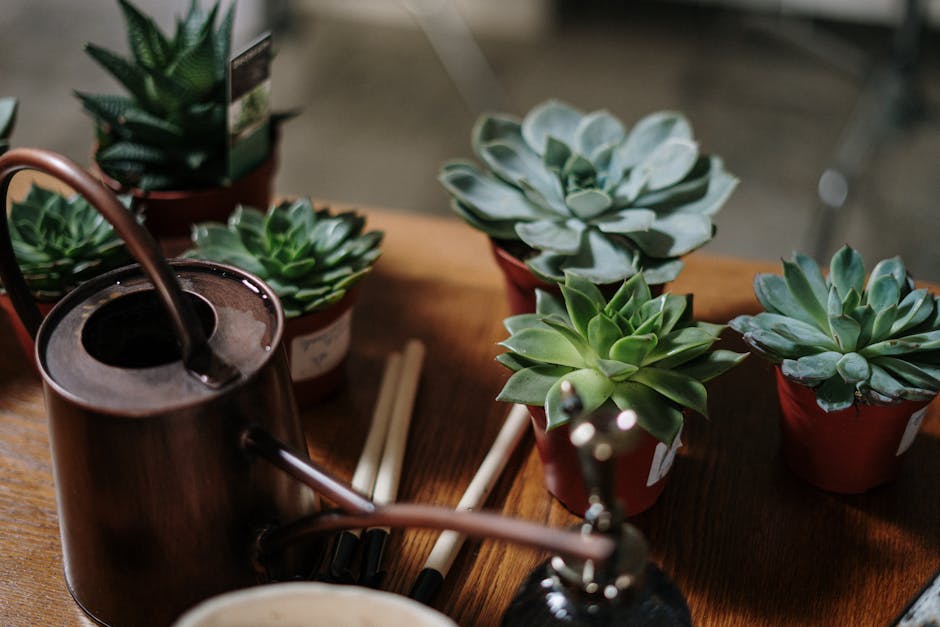
Using a pot with a drainage hole is non-negotiable. Terracotta pots are our favorite because the porous clay helps wick away excess moisture, protecting the roots from sitting in soggy soil. For a deep dive into the “how-to,” see our article on Proper watering techniques for succulent plants.
For a quick reference on how often to water based on the time of year, see the table below:
| Season | Watering Frequency | Why? |
|---|---|---|
| Spring/Summer | Every 10–14 days | Active growth period; higher light/heat. |
| Fall | Every 3 weeks | Growth slows down as light levels drop. |
| Winter | Once a month (or less) | Plant is dormant; very little water needed. |
For more tips, check out our own guide on Understanding succulent watering needs.
Troubleshooting Burro’s Tail Succulent Care
Your plant will talk to you if you know what to look for. Here are the most common visual cues:
- Leaf Puckering: If the leaves look shriveled or like little raisins, the plant is thirsty. It has used up its internal water stores and needs a thorough soak.
- Mushy, Yellow Leaves: This is a red flag for overwatering. If the leaves feel soft or look translucent, the plant is likely experiencing root rot.
- Leaf Drop: While some leaf drop is normal when handling, excessive shedding without being touched often means the soil is staying too wet.
If you suspect you’ve overdone it with the watering can, check out our Avoiding overwatering succulent care guide for recovery steps.
Soil, Fertilization, and Advanced Maintenance
The foundation of good burro’s tail succulent care is the soil. Never use standard garden soil or heavy potting mixes. They retain too much water and will suffocate the roots.
Instead, use a dedicated cactus and succulent mix. We like to “upgrade” commercial mixes by adding extra perlite or pumice (about a 1:1 ratio) to ensure lightning-fast drainage. Avoid using fine sand, as it can actually clog the air pockets in the soil over time.
Fertilization
Burro’s Tail isn’t a heavy feeder. A balanced, water-soluble fertilizer (like a 20-20-20) diluted to one-quarter strength is plenty. Feed it once a month during the spring and summer. Skip the fertilizer entirely in the fall and winter when the plant is resting.
Repotting
Here is a secret: Burro’s Tail actually likes being a little rootbound. Because they are so fragile, repotting is a high-stress event for both the plant and the owner. You should only need to repot every 3 to 5 years.
When you do repot, choose a container only one size larger than the current one. It’s best to do this in the spring. A pro tip: don’t water the plant for a few days before or after repotting. Dry soil is easier to work with, and dry roots heal faster from any minor damage during the move.
Propagation Methods: From Leaves to Stems
One of the best things about the Burro’s Tail is how easily it propagates. Since leaves fall off if you so much as look at them funny, you’ll have plenty of “spare parts” to grow new plants.
Stem Cuttings
This is the fastest way to get a new, substantial plant.
- Snip a 4-to-6-inch section of a healthy stem.
- Carefully strip the leaves off the bottom 2 inches.
- Crucial Step: Let the stem sit in a dry, shaded spot for 2 to 3 days. This allows the “wound” to callus over. If you plant it immediately, it will likely rot.
- Once callused, tuck the bare stem into moist succulent soil.
Leaf Propagation
Every single leaf that falls off has the potential to become a new plant. Simply lay the fallen leaves on top of some dry succulent soil. In a few weeks, you’ll see tiny pink roots and a miniature “baby” plant sprout from the end of the leaf. Once the original mother leaf shrivels up and falls off, you can treat the baby like a mature plant.
Varieties and Creative Home Placement
While Sedum morganianum is the classic variety with pointed, crescent-shaped leaves, you might also run into the ‘Burrito’ variety (often called Baby Burro’s Tail).
The ‘Burrito’ variety has shorter, more rounded, jelly-bean-shaped leaves. It tends to be slightly more compact and, in our experience, just a tiny bit less fragile than the standard variety. Both require identical care, so you can choose based on which look you prefer!
Styling Your Space
Because of their trailing nature, Burro’s Tails are born to be in hanging baskets. They look incredible spilling over the edge of a high shelf or a mantel. Some creative gardeners even plant them in “head” shaped pots so the trailing stems look like long, green dreadlocks.
Is It Pet Safe?
Good news for pet parents! According to the ASPCA, the Burro’s Tail is non-toxic to cats, dogs, and horses. While we still don’t recommend letting your cat use it as a chew toy (mostly for the plant’s sake!), you don’t have to worry if a stray leaf gets nibbled.
Managing Pests and Encouraging Blooms
Even with the best burro’s tail succulent care, pests can occasionally crash the party. The most common invaders are mealybugs (they look like tiny bits of white cotton) and aphids.
- The Fix: For a small infestation, a cotton swab dipped in isopropyl alcohol works wonders — just dab the bugs directly. For larger issues, a spray of diluted neem oil or insecticidal soap will do the trick. Just be sure to keep the plant out of direct sun while the treatment is wet to prevent leaf burn.
How to Get Those Elusive Blooms
In the wild, Burro’s Tail produces beautiful, star-shaped flowers in shades of pink, red, or lavender. Indoors, flowering is rare but possible. To encourage blooms:
- Maturity: The stems usually need to be at least 10 inches long before the plant is mature enough to flower.
- Winter Chill: The plant needs a period of cooler temperatures (around 50-60°F) in the winter to trigger bud formation in the spring.
- Light: It needs maximum bright light during the growing season.
Frequently Asked Questions about Burro’s Tail
Why are the leaves falling off my Burro’s Tail?
This is the plant’s most famous (and annoying) trait. They are physically designed to drop leaves easily as a survival mechanism — in the wild, a dropped leaf becomes a new plant. However, if the leaves are falling off in massive clumps without being touched, it’s usually a sign of overwatering or a lack of light.
Is Burro’s Tail toxic to cats and dogs?
No, it is completely non-toxic! It is one of the safest succulents you can bring into a home with curious pets.
How do I get my Burro’s Tail to flower?
Give it a “rest” in a cool room during the winter and make sure it gets plenty of bright light in the spring. Be patient; it rarely flowers until it is several years old and well-established.
Conclusion
At FinanceBoostX, we believe that gardening should be a source of joy, not stress. The Burro’s Tail is the perfect example of a plant that rewards a “hands-off” philosophy. By providing it with gritty soil, plenty of light, and the occasional deep drink, you can grow a spectacular cascading masterpiece that will be the envy of every guest.
Remember: when in doubt, don’t water it, and definitely don’t touch it! Let it do its thing, and it will reward you with years of beautiful, trailing growth.
Ready to expand your indoor jungle? Explore more at FinanceBoostX for all your succulent and home gardening needs. Happy growing!
