
The Low-Maintenance Outdoor Decor Trend You’ve Been Missing
Outdoor faux succulent arrangements are the easiest way to get a lush, desert-inspired patio or garden — with zero watering, zero upkeep, and year-round good looks.
Here’s a quick snapshot of why they work so well:
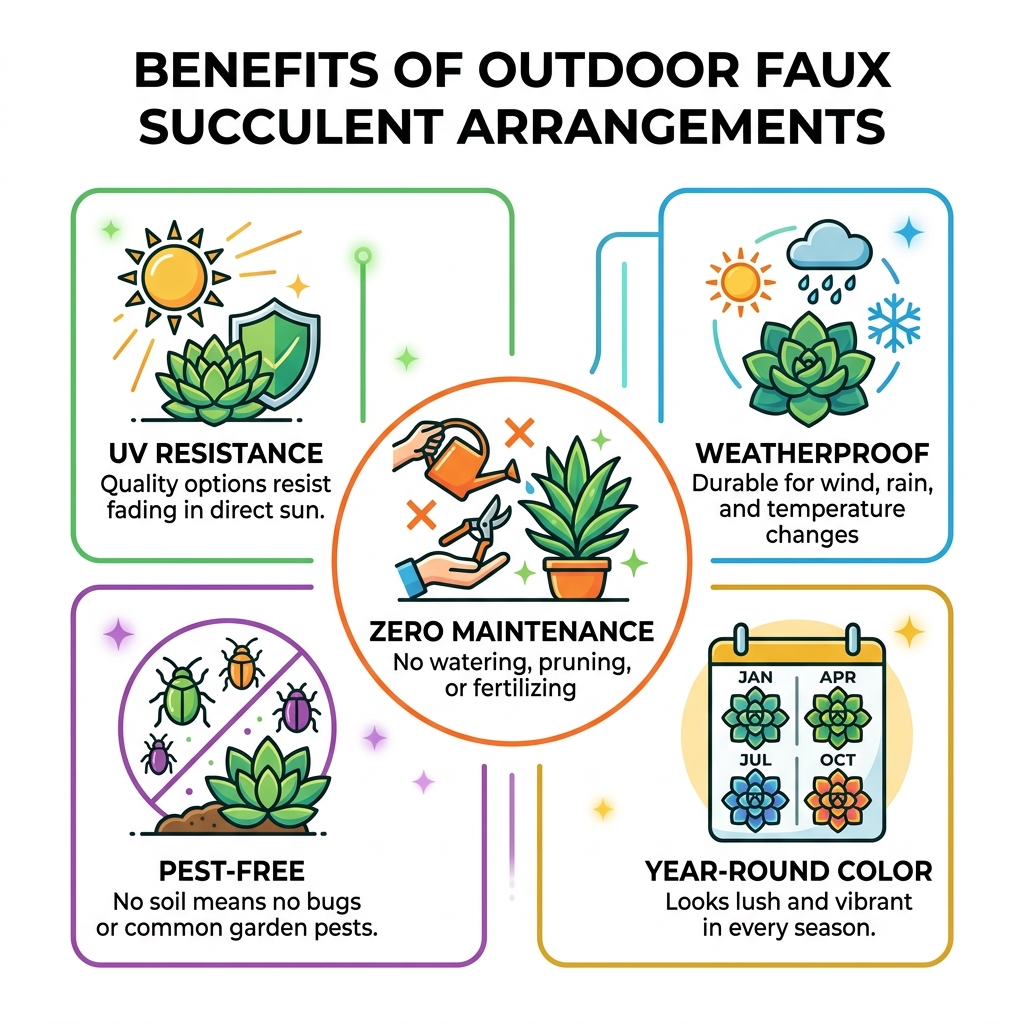
- No maintenance — no watering, pruning, or fertilizing ever
- Weatherproof — quality UV-resistant options won’t fade in direct sun
- Always in season — they look identical in July and January
- Pest and allergy free — no soil, no bugs, no pollen
- Flexible styling — works in pots, walls, hanging displays, garden borders, and more
Shoppers are catching on fast. Searches for artificial succulent plants for outdoors return over 3,000 results on Amazon alone, with top-rated packs regularly selling 1,000+ units per month. That kind of demand reflects a real shift — more homeowners want beautiful outdoor greenery without the time commitment that live plants demand.
If your patio, balcony, or front entry could use a refresh but your schedule doesn’t allow for regular plant care, faux succulents are a practical and stylish fix. This guide walks you through everything you need to know — from picking the right materials to styling arrangements that look genuinely realistic outdoors.
Why Choose Outdoor Faux Succulent Arrangements?
When we think about outdoor decor, we often imagine the struggle of keeping real plants alive during a heatwave or a sudden frost. This is where outdoor faux succulent arrangements truly shine. They offer a “set it and forget it” solution that live plants simply can’t match.
Unmatched Durability
Unlike their living counterparts, artificial succulents don’t care if you’re going on a two-week vacation. They don’t mind if your patio gets twelve hours of scorching afternoon sun or if it stays in the deep shade of a north-facing wall. High-quality faux options are built to withstand the elements, maintaining their structural integrity through wind and rain.
Zero Watering and Soil Mess
One of the biggest perks we love is the lack of mud. Traditional gardening involves soil, which can wash out of pots during heavy rain, staining your expensive patio stones or deck. With faux arrangements, you can use decorative stones, sand, or moss without the worry of drainage holes or water damage.
Pest and Allergy Resistance
Live succulents can occasionally attract mealybugs or aphids, and the damp soil required for some varieties can become a breeding ground for gnats. By choosing artificial versions, you eliminate the need for pesticides. Furthermore, for those of us with sensitive allergies, faux plants provide the aesthetic of nature without the pollen or mold spores often found in organic potting mixes.
Cost-Effectiveness
While a premium faux succulent planter might have a higher upfront cost than a single live plant, the long-term savings are significant. You won’t be spending money on specialized succulent fertilizers, expensive well-draining soil, or most importantly, replacement plants when the winter frost hits.
For more inspiration on how to mix and match colors for a high-end look, check out our guide on Creating a Colorful Eden: Tips for Vibrant Succulent Arrangements.
Essential Features for Durable Outdoor Faux Succulent Arrangements
Not all artificial plants are created equal. If you take a standard “indoor-only” silk plant and put it on your porch, it will likely be bleached white by the sun within a month. To ensure your outdoor faux succulent arrangements last for years, you need to look for specific technical features.
UV Resistance: The Holy Grail
The sun is the primary enemy of artificial greenery. UV rays break down the chemical bonds in plastic, leading to fading and brittleness. Look for products specifically labeled as “UV-rated” or “UV-resistant.” These plants have UV inhibitors infused directly into the material during the manufacturing process, rather than just sprayed on the surface.
Material Quality and Real-Touch Technology
The best faux succulents today use high-quality Polyethylene (PE) rather than cheap PVC. PE allows for much finer detail, capturing the “plump” look of a real Echeveria or the sharp edges of an Agave. “Real-touch” technology refers to a coating that mimics the slightly waxy, cool feel of a living succulent leaf.
| Feature | Standard Faux Succulents | UV-Rated Outdoor Faux Succulents |
|---|---|---|
| Sun Tolerance | Fades in 30-60 days | Retains color for years |
| Material | Often thin PVC or silk | Heavy-duty Polyethylene (PE) |
| Texture | Plastic-y or fabric feel | Waxy, “Real-touch” finish |
| Weather | Can become brittle in cold | Remains flexible and durable |
A large potted faux succulent arrangement made with UV-resistant materials can be a strong choice when you want both durability and a polished look.
Selecting UV-Resistant Outdoor Faux Succulent Arrangements
When shopping, we recommend checking the product specifications for “outdoor use.” Many top-rated bulk packs offer assorted varieties that are specifically designed to handle sun exposure. If you are planning a vertical display, consider how the sun hits your wall at different times of the day. For more on vertical styling, see our tips on Hanging Your Succulent Plants: Elevate Your Decor.
Material Quality and Realism
To achieve maximum realism, look for “flocked” finishes. Flocking is that light, fuzzy coating found on plants like “Dusty Miller” or certain Echeveria varieties. It helps diffuse light, preventing that “shiny plastic” look that gives away a fake plant. Strong, wire-reinforced stems are also vital, as they allow you to bend the plant into a natural position. For a deeper dive into clean, modern aesthetics, explore our Minimalist Succulent Display Ideas.
Creative Styling for Outdoor Faux Succulent Arrangements
The beauty of outdoor faux succulent arrangements is that you aren’t limited by “growing zones” or sunlight requirements. You can put a desert cactus right next to a tropical-looking String of Pearls and they will both thrive perfectly.

Texture Layering and Color Contrast
To make an arrangement look real, you need variety. We suggest using a “thriller, filler, and spiller” approach:
- The Thriller: A tall, architectural piece like a Yucca or a large Agave.
- The Filler: Rounded, rosette-shaped succulents like Echeveria or Sedum to take up space.
- The Spiller: Trailing plants like String of Pearls or Donkey’s Tail to hang over the edges of the pot.
Contrast is also key. Try pairing deep maroon succulents with bright lime green varieties. This mimics the natural stress-coloring seen in real succulents. A gray-and-white cement pot can further highlight the plants’ organic shapes while adding a clean, modern finish.
Designing Realistic Outdoor Faux Succulent Arrangements
One of the biggest mistakes people make is crowding the plants too tightly. In nature, succulents often have space between them, showing off the rocky soil or moss beneath. Use natural moss fillers or river rocks to cover the base of your arrangement. This adds a layer of “organic” messiness that makes the eye believe the plants are real.
If you’re feeling ambitious, a DIY Succulent Wall Planters: A Fresh Approach to Home Decor project can transform a boring exterior wall into a focal point. For smaller surfaces, check out our guide on Succulent Centerpieces for Tables.
Choosing the Right Containers
The container is just as important as the plant. For outdoors, we recommend:
- Fiber Cement: Heavy enough not to blow over in the wind and has a modern, industrial look.
- Rustic Wood: Great for a farmhouse or coastal vibe, though it should be treated for outdoor use.
- Ceramic: Classic and colorful, but ensure it is frost-resistant if you live in a cold climate.
For a charming, smaller-scale look, you might even consider a Succulent Arrangement in Jars for protected patio tables.
Placement Ideas for Your Faux Greenery
Where should you put your new outdoor faux succulent arrangements? The answer is: anywhere you want. Since they don’t need light, you can brighten up the darkest corners of a covered porch or add greenery to a poolside area where chlorine splash might kill a real plant.
Enhancing Patios and Balconies
Patios are the most common spot for these displays. A large, floor-standing mixed succulent and grass arrangement in a white planter can act as a room divider or a corner accent. On smaller balconies, use railing planters filled with trailing faux succulents to create a “green curtain” for privacy.
If you are decorating a dining area, follow our tips in Placing Succulents: A Guide to Tabletop Arrangements. For those tight on square footage, Succulent Display Ideas: A Touch of Green for Small Spaces offers great vertical solutions.
Garden and Landscape Integration
You can actually “plant” faux succulents directly into your garden. Many homeowners use them in rock gardens where the soil is too poor for real plants. They also work beautifully as border accents along a walkway. By tucking the stems into real mulch or gravel, it becomes almost impossible to tell they aren’t living.
If you want to go big, consider a Succulent Wall Planter DIY to cover a fence or an unsightly shed wall. You can also use smaller rustic pots for easy placement on garden pedestals.
Frequently Asked Questions about Outdoor Faux Succulents
How do I clean artificial succulents kept outside?
Even though they don’t need water to grow, they do need an occasional wash to stay looking fresh. Dust and pollen can settle on the leaves, making them look dull. We recommend a gentle rinse with a garden hose on a low-pressure setting. For stubborn dirt, use a soft microfiber cloth and a drop of mild dish soap. You can also apply a UV-protectant spray once a year to give the factory-applied resistance a little boost.
Can faux succulents survive freezing temperatures?
Yes, most high-quality outdoor faux succulent arrangements made from PE or specialized resins are designed to handle temperature fluctuations. Unlike real succulents, which are mostly water and will burst or turn to mush in a freeze, faux plants remain structurally sound. However, in extremely cold climates, the plastic can become slightly more brittle, so it’s best not to re-style or bend the stems until they warm up. If you have a very expensive artificial succulent arrangement, bringing it inside during a blizzard will certainly extend its lifespan.
How long do UV-rated artificial plants last?
With proper care, a high-quality UV-rated plant should maintain its color and shape for 3 to 5 years in direct sun. In shaded areas, they can last significantly longer, up to 10 years. To maximize longevity, try to rotate your pots every few months so one side isn’t taking the brunt of the afternoon sun year-round.
Conclusion
At FinanceBoostX, we believe that your home’s exterior should be a source of relaxation, not a never-ending to-do list. Outdoor faux succulent arrangements represent the perfect marriage of style and sustainability. They allow you to enjoy a lush, vibrant environment regardless of your climate, your schedule, or the “greenness” of your thumb.
Whether you are looking to create a massive vertical garden or just want a simple, elegant centerpiece for your patio table, the options available today are more realistic and durable than ever. By focusing on UV-resistant materials and using creative styling techniques like texture layering, you can achieve a high-end look that lasts for seasons to come.
Ready to transform your space with zero-effort greenery? For more expert advice and home decor inspiration, visit our home decor services page and start building your weatherproof oasis today!
