
Why a Cactus Succulent Arrangement Works Better Than You Think
A cactus succulent arrangement lets you combine two of the most forgiving plant types into one striking, low-maintenance display. Yes — you can plant them together, and they can both thrive.
Here’s a quick overview of how to make it work:
- Choose compatible plants — pair slow-growing cacti with succulents of similar size (like echeveria, haworthia, or mammillaria)
- Use the right container — shallow bowls (2.5–6 inches deep) with drainage holes work best
- Get the soil right — always use a fast-draining cactus or succulent mix
- Plant cacti higher — leave the top two-thirds of the cactus root ball above the soil line to reduce moisture uptake
- Water carefully — use the “soak and dry” method, typically every 2–3 weeks
- Give them light — place in bright, indirect to direct light for at least 4–6 hours per day
The biggest challenge most people face is watering. Cacti need less water than most succulents. But there’s a simple planting trick that solves this — and you don’t need to be a gardening expert to pull it off.
Whether you want a desert-inspired centerpiece for your coffee table or a low-effort gift that actually lasts, mixed cactus and succulent arrangements deliver on both style and simplicity.
Why Create a Cactus Succulent Arrangement?
In our experience, there is something deeply satisfying about the architectural contrast of a cactus succulent arrangement. You have the soft, fleshy “plush” leaves of succulents sitting right next to the “prickly,” sculptural forms of cacti. This visual contrast creates a miniature desert landscape that functions as a living piece of art.
Beyond the aesthetics, these arrangements are incredibly practical. They are champions of drought tolerance. If you are someone who travels frequently or occasionally forgets your watering schedule, these plants are your best friends. They thrive on neglect, provided they have the right foundation.
We often recommend these displays as Succulent centerpieces for tables because they don’t grow rapidly. Unlike a traditional floral bouquet that wilts in a week, a well-made cactus garden can last for years in the same container. This longevity makes them excellent gift ideas for housewarmings, birthdays, or “just because” gestures.
If you aren’t ready to DIY just yet, there are many stunning pre-made options available. You can find professional cactus garden arrangements or designer landscapes that come ready to display. For general plant background, the succulent article on Wikipedia offers a helpful overview of how these water-storing plants differ from one another.
Price Ranges and Pre-made Options
The market for these arrangements is vast. You can find a wide variety of premade arrangement styles ranging from:
- Petite/Small: $25.00 – $40.00
- Medium/Standard: $50.00 – $75.00
- Luxe/Large: $125.00 – $269.00
These often come in high-quality ceramic or wood containers, sometimes featuring expertly curated selections where experts choose the healthiest, most seasonal plants for you.
Selecting the Right Species for a Cactus Succulent Arrangement
Not all desert plants play well together. The secret to a long-lasting cactus succulent arrangement is selecting species with similar light and temperature needs.
For the “plush” side of the arrangement, we love:
- Echeveria: These offer stunning rosette shapes and come in colors from pale blue to deep burgundy.
- Haworthia: These are tough as nails and often feature interesting white stripes or “windows” on their leaves.
- Sedum: Great for filling in gaps or spilling over the edges of the pot.
- Anacampseros: Varieties like ‘Sunrise’ add a pop of pink and yellow.
For the “prickly” side, consider:
- Mammillaria: Often called pincushion cacti, these are small, round, and frequently bloom with tiny flowers.
- Golden Barrel Cactus: A classic choice for a bold, structural focal point.
- Thimble Cactus: Small, white, and very easy to handle.
When Placing succulents a guide to tabletop arrangements, we always consider growth habits. We want to pair slow growers together so one plant doesn’t shade out its neighbors. Aim for color harmony – perhaps silver-toned succulents to match the white spines of a cactus – and a balance of textures.
Selecting Containers and Essential Tools
The container is more than just a pretty face; it is the life-support system for your plants. The most critical feature is drainage. Without drainage holes, water sits at the bottom, leading to the dreaded root rot.
While we love exploring Beyond the plant pot creative containers for succulents, for a mixed arrangement, terra cotta or unglazed ceramic are the gold standards. These materials are porous, meaning they allow the soil to “breathe” and dry out faster.
A cactus and succulent arrangement in a ceramic bowl is a popular choice because shallow dishes (2.5–6 inches deep) mirror the natural root environment of these plants. Most cacti and succulents have shallow, spreading root systems rather than deep taproots.
Essential Tools for Safe Planting
Handling cacti can be… a bit of a “thorny” situation. To keep your fingers prickle-free, we recommend these tools:
- Newspaper collars: Fold a piece of newspaper into a thick strip and wrap it around the cactus to move it.
- Kitchen tongs: Perfect for grabbing smaller, spiny specimens without getting too close.
- Wooden chopsticks: Use these to poke soil into tight gaps between plants.
- Soft bristle brush: To sweep away stray soil from the leaves and spines once you’re finished.
- Squeeze bottle: For precise watering that avoids getting the plant bodies wet.
You can even try Succulent arrangement in jars for a unique look, but be extra careful with watering if the jar lacks a hole!
Container Material Comparison
| Material | Breathability | Weight | Best For |
|---|---|---|---|
| Terra Cotta | High | Medium | Beginners (prevents overwatering) |
| Ceramic | Low to Medium | Heavy | Indoor centerpieces, style-focused |
| Wood | Medium | Light | Rustic decor, temporary displays |
| Plastic | Low | Very Light | Nursery starts, propagation |
Step-by-Step Guide to Planting Your Cactus Succulent Arrangement
Now for the fun part! We’ve gathered our best Creating a colorful eden tips for vibrant succulent arrangements to help you build your own.
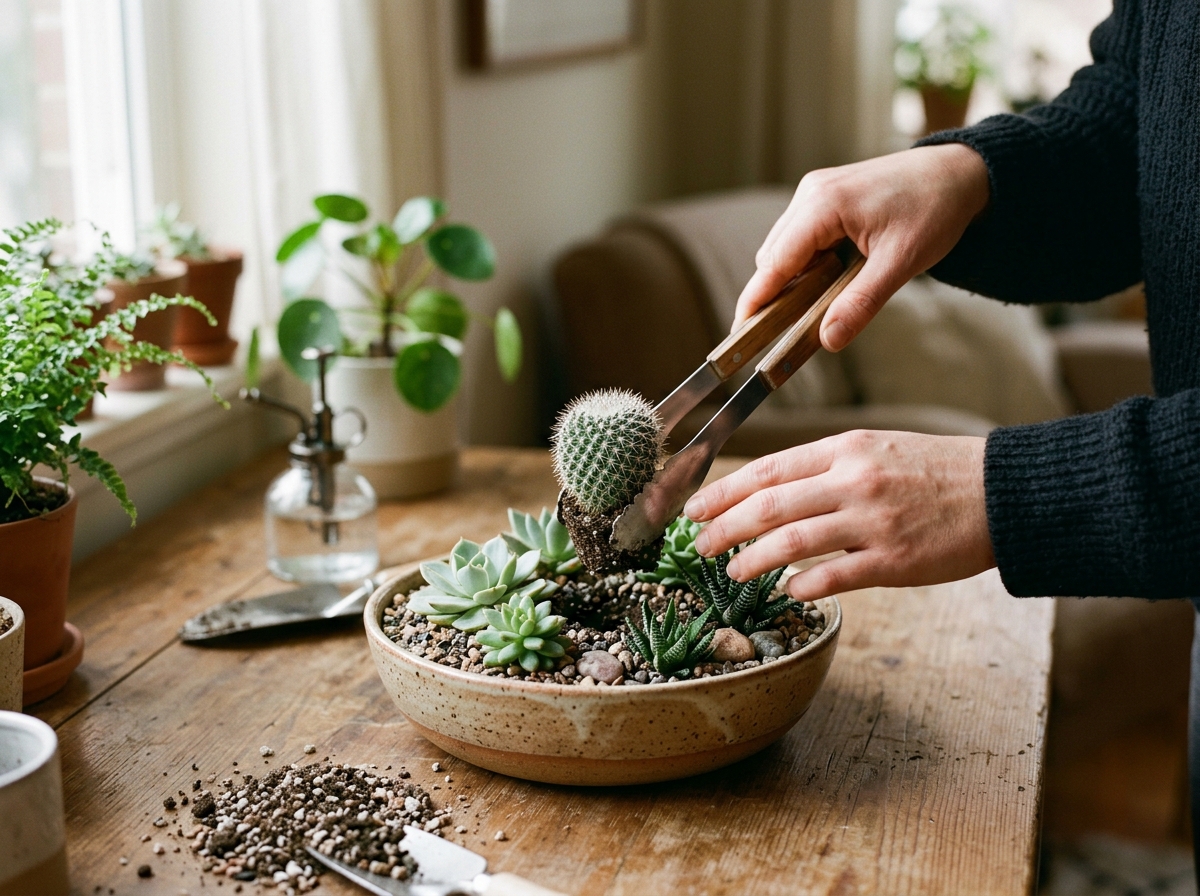
1. Prepare Your Plants
Remove your cacti and succulents from their nursery pots. Gently massage the roots to loosen the old, often compacted soil. If a succulent has grown too tall, you can trim the bottom leaves (save them for propagation!) to help it fit the scale of your bowl.
2. The Drainage Layer
Cover the drainage hole with a small piece of drywall mesh tape or a coffee filter. This keeps the soil in but lets the water out. Fill the bottom of your container with a high-quality, fast-draining cactus soil mix.
3. The “2/3 Root Ball” Technique (Pro Tip!)
This is the secret sauce for a successful cactus succulent arrangement. Because cacti need even less water than succulents, we plant them slightly higher.
- Place the cactus so the top 2/3 of its root ball is above the soil line of the rest of the arrangement.
- This prevents the “neck” of the cactus from sitting in damp soil for too long.
- You can hide the exposed roots later with decorative topdressing.
4. Arrange for Design
Start with your largest plant (the “thriller”) slightly off-center. Add your “fillers” (medium succulents) around it, and finish with “spillers” (trailing plants like Sedum) near the edges. We like to turn the pot as we work to ensure it looks beautiful from every angle.
5. Add Topdressing
Once the plants are in place, add decorative elements. Use small pebbles, white rocks, or even pieces of driftwood to create a “desert floor” look. This isn’t just for looks; topdressing helps keep the leaves off the damp soil and prevents soil from splashing up when you water.
Long-Term Care and Maintenance
Congratulations, you have a beautiful new arrangement! Now, how do you keep it alive?
The most important rule is the “soak and dry” method. We only water when the soil is bone-dry all the way through. You can check this by sticking a wooden chopstick or your finger deep into the soil. If it comes out clean and dry, it’s time for a drink.
For a standard 10-inch bowl, we typically use about 10oz of water. We aim for the soil, not the plants themselves. In grouped arrangements, water from the edges or in the gaps between plants.
Environmental Needs
- Air Circulation: This is often overlooked. Good airflow helps water evaporate and prevents fungal infections.
- Temperature: Most arrangements thrive in a range of 40–80°F. Keep them away from cold drafts in winter and scorching heaters.
- Fertilizer: During the growing season (Spring and Summer), you can use a diluted liquid cactus fertilizer. Some people even stick a slow-release liquid food bottle directly into the soil for a hands-off approach.
If you are looking for Succulent display ideas a touch of green for small spaces, light is your biggest factor.
Watering and Light for Your Cactus Succulent Arrangement
Light is the fuel for your arrangement. Most cacti and succulents need 4–6 hours of bright light per day. A south-facing windowsill is usually the “Goldilocks” spot—not too dark, not too scorching.
If your plants start to stretch out and look “leggy,” they are telling you they need more light. Conversely, if you see brown, crispy patches, they might be getting sunburned by intense afternoon sun. Filtered morning light is often the safest bet.
Watering Frequency Guide:
- Summer: Every 2–3 weeks.
- Winter: Every 3–5 weeks (plants go dormant and need very little water).
- The Golden Rule: Never mist. Misting creates a humid environment that cacti hate and can lead to rot.
Frequently Asked Questions about Mixed Arrangements
Can cacti and succulents be planted in shallow bowls?
Absolutely! In fact, they prefer it. An ideal depth is between 2.5 and 6 inches. Shallow bowls prevent excess soil from holding onto moisture that the plants can’t use, which is a major cause of root rot. These Minimalist succulent display ideas often utilize low-profile ceramic or stone dishes for a modern look.
What is the best time of year to create a new arrangement?
Spring and early Summer are the optimal times. This is when the plants are entering their active growth phase, meaning they will recover from the stress of repotting much faster. Creating Decorative succulent bowls a multi sensory experience during the warm months allows the roots to establish themselves before the winter dormancy sets in.
How do I prevent overwatering the cacti in a mixed pot?
Aside from the “2/3 root ball” technique mentioned earlier, use a squeeze bottle with a long, narrow neck. This allows you to direct water precisely to the succulents while keeping the area immediately around the cactus drier. Also, ensure your soil has plenty of “grit” (perlite, pumice, or coarse sand) to facilitate fast drainage.
Conclusion
Creating a cactus succulent arrangement is a rewarding way to bring a piece of the desert into your home. By choosing the right species, using a well-draining container, and mastering the “soak and dry” method, you can enjoy a vibrant, sculptural garden with very little effort.
At FinanceBoostX, we believe that gardening should be accessible and stress-free. Whether you are building a centerpiece for your own home or crafting a unique gift, these “prickly and plush” pairings offer the perfect balance of style and resilience.
Start your succulent journey today and see how easy it is to grow your own indoor oasis!
