
Yes, You Can Propagate Succulent Leaves in Winter — Here’s What to Know
Propagate succulent leaves winter-style is absolutely possible, and you don’t need expensive equipment to do it.
Here’s the quick answer for anyone short on time:
How to propagate succulent leaves in winter:
- Twist off a healthy, plump leaf with a clean snap at the base
- Let it callous for 3-5 days on a dry surface
- Lay it on dry soil on a south-facing windowsill
- Wait 6-10 weeks for roots and tiny pups to appear (longer than spring, but it works)
- Mist lightly only once roots form
Key expectations: Winter propagation is slower than spring. Roots and baby plants can take 2-3 times longer to appear. But it does work indoors with natural light.
Winter is the time most plant owners give up on growing. The days are short, the air is dry, and succulents slow way down. Many people assume propagation is off the table until spring.
But here’s the thing — it isn’t.
Succulents are remarkably resilient. Even in their dormant winter state, a healthy leaf pulled cleanly from the stem carries everything it needs to eventually sprout roots and grow a brand-new plant. It just asks for one thing in return: patience.
Think of it like a biological waiting game. The leaf sits quietly on your windowsill, sensing drought, and that stress is exactly what triggers it to grow roots and reach for survival. No fuss, no complicated setup required.
The trade-off is time. Spring propagations can grow 2-3 times faster than winter ones. A batch started in February might not show real progress until late April. But if you want a head start on a lush spring collection — or you simply can’t stop collecting succulents — winter propagation is well worth it.

Can You Propagate Succulent Leaves in Winter?
The short answer is an emphatic yes! However, we need to adjust our expectations. While spring and summer are the peak active growing seasons, succulents don’t completely “turn off” during the colder months. They enter a state of slowed metabolism known as dormancy.
During this biological waiting game, the success rate might be slightly lower than in June, but it is far from zero. In fact, many indoor gardeners find winter a great time to experiment because indoor heating provides a stable, warm environment that offsets the chill outside. The main difference is the timeline. While a leaf might sprout roots in 2 weeks during the summer, that same leaf might take 6 to 10 weeks in the winter.
The temperature threshold is key. Most succulents prefer temperatures between 65-75°F (18-24°C) for optimal rooting. If your home stays within this range, your leaves will eventually “wake up.” To learn more about the mechanics behind these processes, check out our guide on grow more succulents propagation techniques.
Essential Steps to Propagate Succulent Leaves Winter Success
Success in winter propagation starts with the “clean snap.” If you leave even a tiny fragment of the leaf attached to the mother plant, or if you tear the leaf base, it will not grow. You need the meristematic tissue—the plant’s version of stem cells—which is located exactly where the leaf meets the stem.
The Step-by-Step Process:
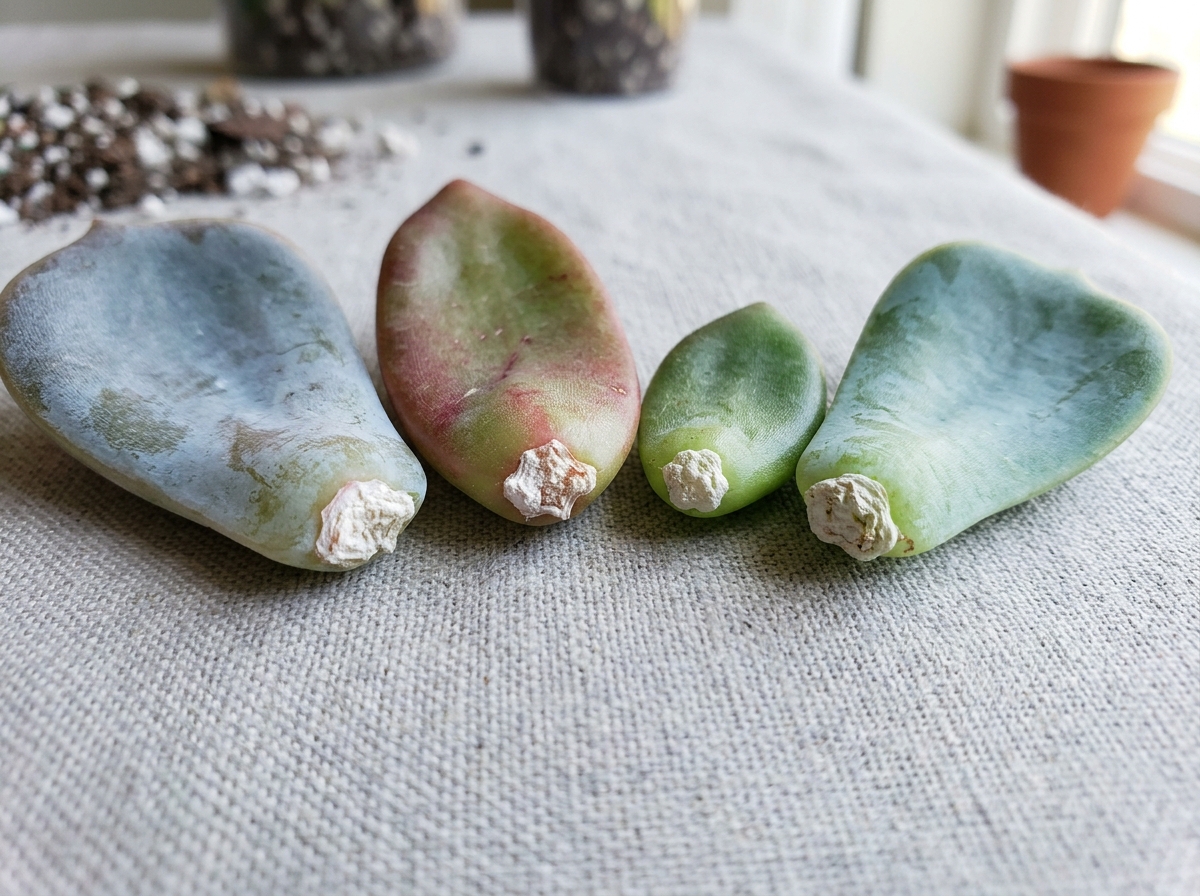
- The Harvest: Gently grasp a plump, healthy leaf. Wiggle it from side to side until it snaps off cleanly. It should have a “U” shaped indentation at the base.
- The Callousing Period: This is vital. Lay your leaves on a dry paper towel or a clean plate for 3 to 5 days. During this time, the wound heals and forms a callous. This prevents the leaf from absorbing too much moisture and rotting when it eventually touches soil.
- The Layout: Place your calloused leaves on top of a shallow tray filled with dry succulent or cactus soil. Do not bury them! Just let them rest on the surface.
- The Incubation: Place the tray in a warm spot with bright, indirect light. In winter, a south-facing windowsill is usually best.
- The First Drink: Do not water or mist until you see tiny pink or white roots. Once roots appear, you can lightly mist the soil around the roots every few days.
For those just starting their journey, we recommend reading our beginners-guide-propagating-succulents-2/ for more foundational tips.
Best Varieties to Propagate Succulent Leaves Winter Season
Not all succulents are created equal when it comes to winter leaf propagation. Some varieties are “hardier” propagators that seem to ignore the calendar.
- Echeveria: These are the classic rosette succulents. Most varieties propagate beautifully from leaves, though they are among the slower ones in winter.
- Sedum (Stonecrop): Varieties like Jelly Beans or Donkey’s Tail are incredibly prolific. They often drop leaves that start growing on their own without any help from us!
- Graptopetalum: Known for being “tough as nails,” the Ghost Plant is a winter propagation superstar.
- Jade Plants (Crassula ovata): These have thick, fleshy leaves that hold a lot of energy, making them very successful even in dry indoor winter air.
- Pachyphytum: Their “moonstone” like leaves are slow to root but very reliable.
If you are looking for a more detailed list of species, see our easy-guide-to-propagate-succulents-from-leaves/.
Overcoming Winter Challenges: Light and Temperature
The two biggest hurdles for propagate succulent leaves winter success are the lack of sunlight and fluctuating indoor temperatures.
Light Requirements: Winter sun is weaker and the days are shorter. A south-facing window is the “gold standard” because it receives the most consistent light throughout the day. However, be careful—if the leaves touch the cold glass, they can suffer frost damage. If your windows are drafty or you live in a very dark climate, supplemental lighting is a game-changer. Small LED grow lights can provide the 12-14 hours of “sun” these babies need to stay compact and healthy.
Temperature and Heat: Succulents root best when their soil is warm. If your windowsill is chilly, the roots may stay dormant indefinitely. This is where a heat mat can help. By providing gentle bottom heat, you simulate the warm soil of spring, which encourages the leaf to send out roots much faster.
| Feature | Summer Propagation | Winter Propagation |
|---|---|---|
| Rooting Time | 2 – 4 Weeks | 6 – 10 Weeks |
| Watering | Light misting every 2 days | Rare misting (only after roots) |
| Light | Bright Indirect | Brightest possible (South Window) |
| Success Rate | Very High (90%+) | Moderate (60-70%) |
| Equipment | None needed | Grow lights/Heat mats recommended |
Troubleshooting Common Winter Propagation Issues
Even with the best care, winter can throw a few curveballs. Here is how to handle the most common issues.
Root Rot: This is the number one killer. In winter, water evaporates slowly. If you mist your leaves before they have roots, or if the soil stays damp and cold, the leaf will turn translucent and mushy. The Rule: No roots, no water. If a leaf starts to rot, remove it immediately so the fungus doesn’t spread to healthy leaves.
Etiolation (Stretching): If your tiny new pups are growing tall, skinny, and pale instead of forming a tight rosette, they are “stretching” for light. This is called etiolation. You’ll need to move them to a brighter spot or introduce a grow light.
Zombie Leaves: Sometimes, a leaf will grow a massive system of healthy roots but never produce a “pup” (the baby plant). Other times, it grows a pup but no roots. These are “zombie leaves.” While frustrating, sometimes giving them a bit more light or a tiny drop of diluted fertilizer can kickstart the missing growth.
Fungal Diseases: Lack of air circulation in closed-up winter homes can lead to powdery mildew. Ensure your propagation trays aren’t overcrowded and consider using a small fan to keep the air moving. For a deeper dive into what to avoid, visit the-dos-and-donts-of-succulent-propagation-2/.
Frequently Asked Questions about Winter Propagation
How long does it take for roots to appear in winter?
Expect to wait. While spring cuttings might show life in a fortnight, winter propagation is a marathon. On average, it takes about 6 to 10 weeks for visible roots or tiny rosettes to appear. Factors like the specific variety (Sedums are faster, Echeverias are slower) and your indoor temperature will dictate the exact speed. We have seen winter batches started in late February finally “pop” in late April. Patience is your best friend here!
Do I need a heat mat for winter propagation?
You don’t need one, but it certainly helps. If your house is kept at a steady 70°F, the leaves will root eventually. However, if your propagation station is in a cool basement or on a drafty windowsill where temperatures dip below 60°F, a heat mat can speed up the process by several weeks. Bottom heat stimulates the meristematic cells to divide, effectively “tricking” the leaf into thinking spring has arrived early.
Why are my winter succulent leaves rotting?
Rot in winter is usually caused by a combination of two things: too much water and too little airflow. Because the plant is dormant, it isn’t “drinking” water like it does in the summer. Any moisture sitting on the surface of the leaf or in the soil just sits there, inviting bacteria and fungi.
To prevent this:
- Ensure a full 3-5 day callousing period before the leaf touches soil.
- Keep the soil bone-dry until roots are at least half an inch long.
- Avoid “humidity domes”—succulents need dry air to thrive.
Conclusion
Propagating succulent leaves in winter might take a little longer and require a bit more attention to light and temperature, but it is a deeply rewarding way to spend the colder months. By the time the spring sun starts to warm up your garden, you’ll already have a tray full of established baby plants ready to be potted up.
Propagation is a numbers game. Not every leaf will make it, and that’s okay! Take more cuttings than you think you need, keep them warm and dry, and enjoy the “magic” of watching new life sprout from a single leaf. For more ways to expand your green space, maximize your garden with more propagation tips from our experts at FinanceBoostX. Happy growing!
