
Can You Spray Cactus With Water? Here’s What You Need to Know
Can you spray cactus with water — and should you? The short answer depends on what type of cactus you have.
Quick answer:
| Cactus Type | Misting Recommended? | Why |
|---|---|---|
| Desert cactus (most common) | No | Leads to rot, weak roots, and fungal issues |
| Tropical/jungle cactus (Christmas cactus, Rhipsalis) | Occasionally | Mimics their natural humid habitat |
| Any cactus (for pest or dust removal) | Sparingly | Light spray can help, but use caution |
Most people own desert cacti. For those, misting does more harm than good.
Here’s why this matters: cacti are remarkable at storing water. Their stems hold anywhere from 90 to 95% water by content. Some desert species can survive over a year — even up to two years — without a single drop of water. They evolved to drink deeply and rarely, not to sip constantly from a mist.
Think of them like camels. A camel doesn’t benefit from someone spraying its back. It needs a real drink, then it’s good for a long stretch.
Spraying the surface of your cactus doesn’t reach the roots where water is actually absorbed. It just keeps the topsoil damp — which is exactly the wrong environment for most cacti.
That said, there are specific situations where a light spray makes sense. We’ll walk through all of them.
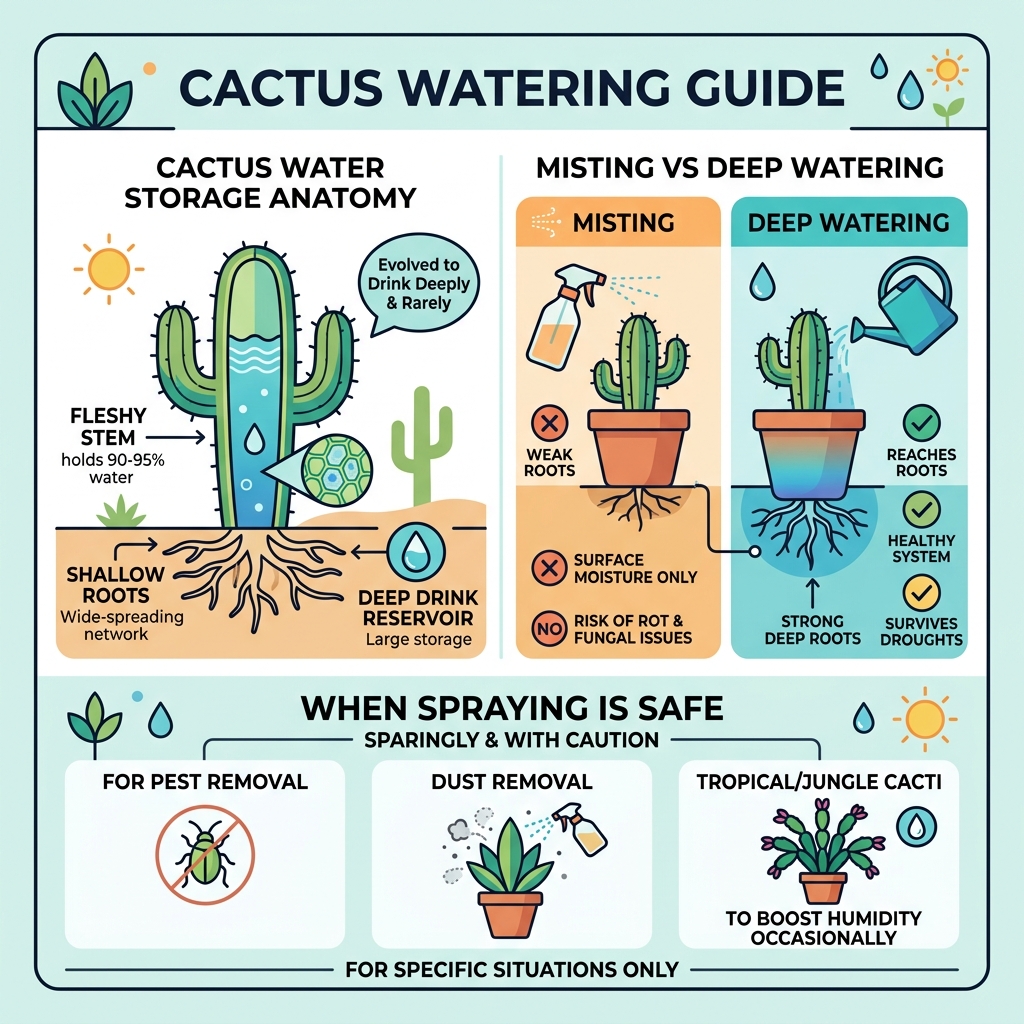
The Reality of Misting Desert Cacti
To understand why a spray bottle might be the enemy of your prickly friend, we have to look at where they come from. Most cacti are children of the desert—vast, arid landscapes where humidity is a foreign concept and rain is a rare but dramatic event. In these environments, plants have adapted to survive on very little, but when they do get water, they want a lot of it all at once.
When we mist a cactus, we are essentially trying to change its DNA. We are introducing high humidity to a plant that thrives in dry air. This creates a conflict between the plant’s biology and its environment. Understanding the Understanding Succulent Watering Needs of these plants reveals that they are built for “pulse” watering—big drinks followed by long droughts.
Misting only provides surface moisture. While it might look refreshing to us, it barely dampens the soil and never reaches the deep root systems these plants use to anchor themselves and find hydration. Furthermore, indoor environments are often already more humid than a desert; adding more through misting can lead to health declines. If your home feels muggy, you might actually be better off Lowering Humidity for Healthier Indoor Succulents rather than reaching for the spray bottle.
Why desert species dislike high humidity
Cacti have a very specific way of “breathing” through pores called stomata. To prevent water loss during the scorching day, many cacti keep these pores closed until the cool of the night. This process, known as Crassulacean Acid Metabolism (CAM) photosynthesis, is a survival masterpiece.
When you mist a cactus, you create a layer of moisture on the skin that can interfere with this delicate gas exchange. Moisture traps can also form in the nooks, crannies, and areoles (the fuzzy spots where spines grow). This stagnant water becomes a breeding ground for bacteria and fungi. For most indoor growers, the goal should be Lowering Humidity for Healthier Indoor Succulents to keep the air circulating and the plant’s skin dry.
Can you spray cactus with water for hydration?
If you are wondering, “can you spray cactus with water to keep it hydrated?” the answer is a resounding “not effectively.” Cacti are not like air plants (Tillandsia) that pull moisture directly from the air through their leaves. A cactus is designed to drink through its roots.
Think of their water storage like a high-capacity battery. Their stems and leaves are 90-95% water, allowing them to last 4 to 6 months—or even years—without rain. Spraying the skin is like trying to charge a car battery by splashing water on the hood. It just doesn’t get where it needs to go. As noted in botanical discussions regarding cactus anatomy, the root system is the only “straw” the plant has for significant hydration.
Exceptions: When Spraying Your Cactus is Beneficial
While the “No Misting” rule applies to about 90% of the cacti people keep, there is a group of rebels: the tropical or epiphytic cacti. These include the Christmas cactus, Rhipsalis, and the Fishbone cactus. Unlike their desert cousins, these plants evolved in rainforests and cloud forests where they grow on trees or rocks rather than in the sand.

Because these plants are used to humid air, they actually enjoy a light misting now and then. This helps mimic the damp jungle canopy. However, even for these varieties, misting should be done sparingly—perhaps once or twice a month—and never to the point where the plant is dripping wet. It’s all about Understanding Variations in Succulent Watering Needs across different species.
Misting for cleaning and pest prevention
There is one practical reason we might recommend a spray bottle for a desert cactus: hygiene. Over time, dust settles on the spines and the body of the plant. This isn’t just an aesthetic issue; dust can actually block sunlight, hindering the plant’s ability to photosynthesize.
A light, occasional spray can help wash away this debris. Additionally, certain pests like spider mites absolutely loathe moisture. If you notice fine webbing on your cactus, a spray of water mixed with a tiny bit of dish soap can be an effective first line of defense. Keeping the plant clean is a major part of How to Keep Your Indoor Succulents Healthy. Just ensure the plant has plenty of airflow afterward so it can dry out quickly.
Can you spray cactus with water during propagation?
Propagation is the “infant” stage of a cactus’s life, and babies have different rules. When you are trying to grow a new plant from a leaf or a stem cutting, the goal is to encourage roots to sprout.
During leaf propagation, the leaf isn’t yet a full plant with a root system. Misting the top of the soil (not necessarily the leaf itself) can provide just enough humidity to signal to the leaf that it’s safe to send out roots. It’s a delicate balance of Proper Watering Techniques for Succulent Plants—you want the soil slightly damp to stimulate growth, but not so wet that the cutting rots before it even begins.
Risks and Consequences of Spraying Your Cactus
If we ignore the warnings and mist our desert cacti daily, the consequences can be dire. One of the most common sights in online gardening forums is a confused owner wondering why their plant is developing mysterious holes or soft spots.
The risks include:
- Stem Rot: Water sitting on the plant body can seep into the tissue, causing it to turn mushy and black.
- Fungal Infections: High humidity and stagnant water are invitations for mold.
- Edema: If a plant takes in more water than it can use, its cells can literally burst, creating unsightly bumps or scars.
- Sun Scald: Water droplets can act like tiny magnifying glasses, focusing sunlight and burning the plant’s skin.
By avoiding these pitfalls, you are Avoiding Overwatering: Succulent Care Guide and Learning from Common Mistakes in Watering Succulents.
The danger of standing water and rot
Cacti have specialized structures called areoles. These are the small, cushion-like bumps where spines, hairs, or flowers emerge. Unfortunately, areoles are also excellent at trapping water. If you spray your cactus and water settles in these spots or in the “crown” (the very top) of the plant, it can lead to crown rot. Once the center of a cactus rots, it is almost impossible to save. This highlights The Role of Drainage in Succulent Watering—not just in the soil, but on the plant itself.
How misting affects root health
Perhaps the most invisible danger of misting is what it does to the roots. Cacti need deep, infrequent watering to encourage their roots to grow downward and outward in search of moisture.
If you only mist the surface, the water never penetrates more than a few millimeters into the soil. The roots will remain shallow and weak because they have no reason to grow deeper. Over time, the plant becomes unstable and dehydrated, even though the surface of the soil looks “wet.” This is why The Importance of Well-Draining Soil in Watering Succulents is so vital; the soil needs to allow water to flow all the way to the bottom of the pot.
The Better Way: Proper Watering Techniques for Cacti
So, if we aren’t misting, how should we be watering? The gold standard for cactus care is the “Soak and Dry” method. This mimics the natural desert cycle of a heavy rainstorm followed by a long dry spell.
- The Soak: Pour water onto the soil (not the plant) until it runs out of the drainage holes at the bottom.
- The Wait: Let the pot sit for a few minutes to ensure the soil has absorbed what it needs, then discard any excess water in the saucer.
- The Dry: Do not water again until the soil is bone-dry all the way through. You can check this by sticking a finger or a wooden skewer two inches into the soil.
This method is the cornerstone of Watering Succulents: The Soak and Dry Method and is further detailed in The Ultimate Guide to Watering Succulents.
Seasonal watering schedules
A cactus’s thirst changes with the seasons. During the growing season (spring and summer), they are active and can handle watering every 2 to 4 weeks. However, in the winter, many cacti go into a state of dormancy. Their metabolism slows down, and they need significantly less water—sometimes only once every 4 to 8 weeks, or even not at all if the environment is cold.
When figuring out How Often Should You Water Your Succulents, always consider the light and temperature. An indoor cactus under bright LED lights in a heated room will need more water than one sitting on a chilly, dim windowsill in December.
Choosing the right water and tools
Believe it or not, the type of water matters. While most cacti are hardy, some are sensitive to the chlorine and minerals found in tap water. If you can, use rainwater or filtered water. If tap water is your only option, let it sit out for 24 hours to allow the chlorine to dissipate. You can learn more about this in How Water Type Affects Succulent Health.
As for tools, ditch the mister for a watering can with a long, narrow spout. This allows you to direct the water exactly where it needs to go—the soil—without getting the body of the cactus wet. Check out our Succulent Watering Guide: Tools and Techniques for more equipment recommendations.
Frequently Asked Questions about Spraying Cacti
Can you spray cactus with water to cool it down in summer?
In extremely hot climates (think Arizona or Australia), some growers do use a “fogger” or a very fine mist to cool their plants when temperatures soar above 90°F. This can provide temporary heat relief and boost humidity just enough to prevent the plant from shriveling. However, this should only be done in the early morning so the water evaporates before the sun gets too intense. As discussed in various cactus enthusiast communities, this is a niche practice for specific climates and usually isn’t necessary for indoor houseplants.
Does misting help a cactus flower?
Actually, the opposite is often true. Many cacti need a period of “drought stress” and cooler temperatures in the winter to trigger flower production in the spring. Constant misting provides a level of humidity that might signal to the plant that it’s still in a growing phase, preventing it from entering the necessary resting period. For more tips on getting those elusive blooms, see Demystifying Succulent Watering: Tips for Healthy Plants.
What are the signs that I have over-sprayed my cactus?
If your cactus is unhappy with your misting routine, it will tell you. Watch for:
- Yellowing or browning at the base or in the crevices.
- Soft, mushy spots that feel like a bruised apple.
- Black spots or fuzzy mold growing on the skin.
- A “leaking” appearance where the plant seems to be oozing fluid.
If you see these signs, stop misting immediately and let the plant dry out completely. Review the Dos and Don’ts of Watering Succulents to get your care routine back on track.
Conclusion
So, can you spray cactus with water? While you can, it is rarely the best way to care for your plant. For the vast majority of desert cacti, misting is a recipe for rot, weak roots, and fungal disease. These plants are built for the “all or nothing” lifestyle of the desert—they want a deep, satisfying drenching followed by a period of total neglect.
Save the spray bottle for your tropical Christmas cacti or for the occasional cleaning session to keep the dust off their spines. By respecting the desert origins of your plants and sticking to the “Soak and Dry” method, you’ll ensure your cactus lives a long, healthy life—potentially for decades!
For more expert advice on keeping your prickly collection thriving, explore our full range of guides in Succulent Care at FinanceBoostX. Happy growing!
