
The Only Snake Plant Care Tips You Need to Keep It Alive (and Thriving)
Snake plant care tips can be summed up simply: water rarely, give it indirect light, and don’t overthink it.
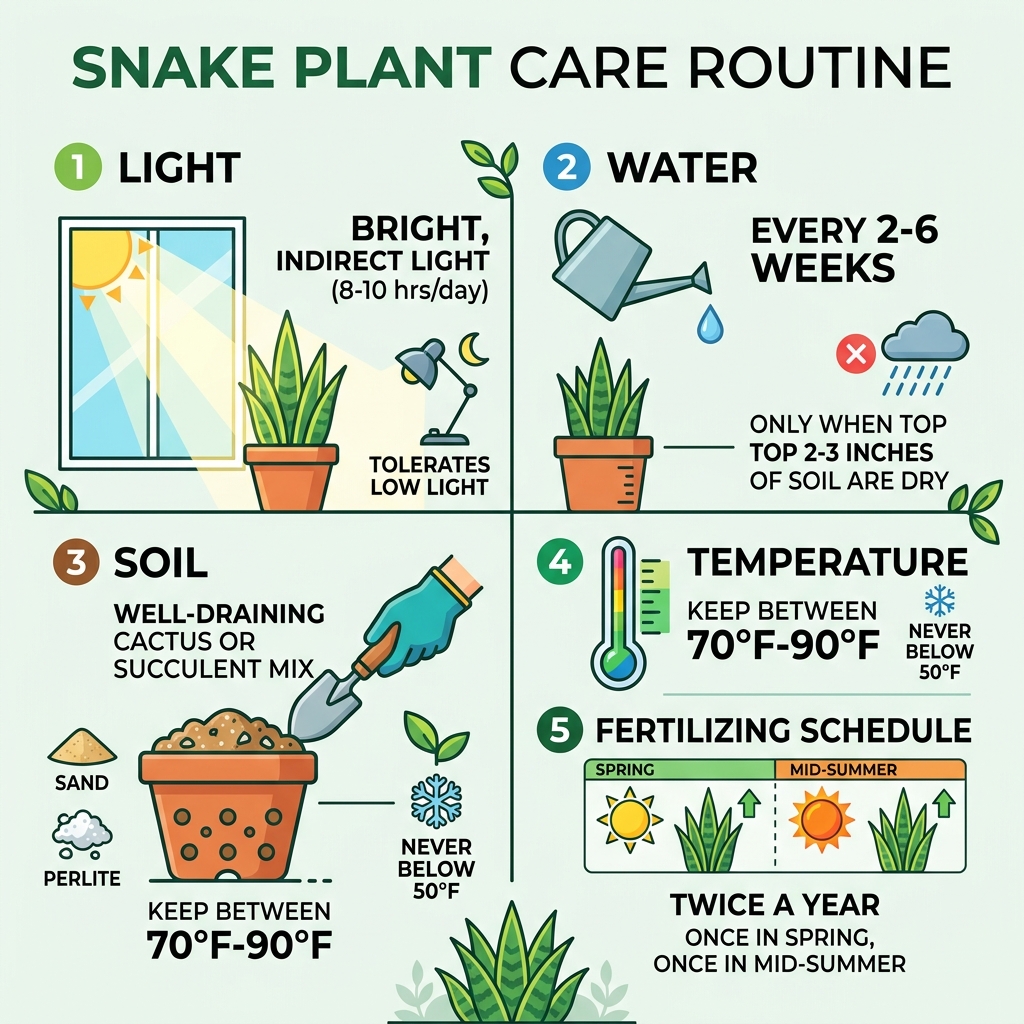
Here’s a quick snapshot of what your snake plant needs:
| Care Factor | What to Do |
|---|---|
| Light | Bright, indirect light (8-10 hrs/day); tolerates low light |
| Watering | Every 2-6 weeks; only when top 2-3 inches of soil are dry |
| Temperature | Keep between 70°F-90°F; never below 50°F |
| Humidity | Average indoor levels (30-50%) are fine |
| Soil | Well-draining cactus or succulent mix |
| Pot | Terracotta with drainage holes |
| Fertilizer | Twice a year — once in spring, once in mid-summer |
| Repotting | Every 3-5 years, into a pot 1-2 inches larger |
If you’ve ever killed a houseplant and sworn off greenery for good, the snake plant might just change your mind.
Scientifically known as Dracaena trifasciata (formerly Sansevieria trifasciata), this striking plant has been a fixture in American homes since the 1920s. It belongs to the Asparagaceae family — making it a distant cousin of the agave — and it’s about as close to indestructible as a living thing gets.
It tolerates low light. It forgives missed watering. It even cleans your air, with NASA research confirming it can filter toxins like benzene and formaldehyde. And it releases oxygen at night, making it a smart pick for bedrooms.
But “hard to kill” doesn’t mean “impossible to kill.” Overwatering is the most common way people lose their snake plants — and there are a few other easy-to-avoid mistakes that make the difference between a plant that merely survives and one that genuinely thrives.
This guide covers everything you need to know, from watering and light to propagation, pests, and the best varieties to grow.
Essential Snake Plant Care Tips for Beginners
When we talk about snake plant care tips, we have to start with the “why.” Why is this plant so popular? For one, it’s a “set it and forget it” kind of companion. Originally hailing from tropical West Africa, these plants have adapted to survive in harsh environments. This genetic history makes them perfect for the modern indoor gardener who might have a busy schedule or a slightly forgetful memory when it comes to chores.
One of the most vital snake plant care tips involves understanding light. While these plants are often marketed as “low light” superstars, that doesn’t mean they want to live in a windowless closet. They are adaptable, yes, but they truly thrive when they receive 8 to 10 hours of indirect sunlight daily. Think of them as light-loving succulents that just happen to be very polite about being ignored in a darker corner.
If you place your plant in a spot with bright, indirect light, you’ll notice faster growth and more vibrant patterns on the leaves. On the other hand, if you keep it in a very dark room, it will survive, but it might become “leggy” or lose some of its beautiful variegation. To learn more about positioning your plants for success, check out our guide on best-lighting-options-for-indoor-succulents.
Temperature is another area where we need to be careful. Snake plants are comfortable when you are comfortable. They prefer a range between 70°F and 90°F. While they can handle a bit of a dip, prolonged exposure to temperatures below 50°F can be fatal. This is why we always recommend keeping them away from drafty windows or air conditioning vents that blast cold air directly onto their leaves.
Mastering the Snake Plant Care Tips for Watering
If you only remember one of our snake plant care tips, let it be this: less is more. Most people kill their snake plants with kindness — specifically, too much water. Because these are semi-succulents, they store water in their thick, leathery leaves and their underground rhizomes (which look like thick, white roots).
The golden rule for watering is to wait until the soil has completely dried out. We usually suggest watering every 2 to 6 weeks. The frequency depends on your home’s light and temperature. In a bright, warm room, you might water every 2 weeks. In a darker, cooler room, once every 6 weeks is plenty. During the winter, when the plant goes into a semi-dormant state, you might only need to water once a month.
How do you know for sure? Use the “finger test.” Stick your finger into the soil; if the top 2 to 3 inches feel dry, it’s time for a drink. If you feel any moisture at all, walk away! For a deeper dive into the mechanics of thirst, read our article on how-often-should-you-water-your-succulents.
When you do water, do it thoroughly. Pour water until it runs out of the drainage holes at the bottom of the pot. Then — and this is crucial — empty the saucer. Never let your snake plant sit in a pool of standing water, as this is the fastest way to cause root rot.

Ideal Humidity and Environment
Unlike many tropical houseplants that require constant misting and expensive humidifiers, snake plants are perfectly happy with average household humidity levels, typically between 30% and 50%. This makes them ideal for living rooms, offices, and especially bedrooms.
In fact, the bedroom is one of the best places for a snake plant. Most plants take in oxygen and release carbon dioxide at night, but the snake plant is one of the few that continues to produce oxygen and filter toxins while you sleep. This unique trait, documented by NASA, makes it a literal breath of fresh air for your sleeping environment.
When choosing a spot, north or east-facing windows are usually the “sweet spot” for light. They provide enough brightness without the scorching intensity of direct afternoon sun, which can actually burn the leaves. To keep your plant in peak condition throughout the seasons, see our tips on how-to-keep-your-indoor-succulents-healthy.
Advanced Maintenance: Repotting and Propagation
Even though snake plants are slow growers, typically only gaining a few inches per year, they will eventually outgrow their homes. Fortunately, you won’t have to worry about this often. We recommend repotting every three to five years.
The best time to repot or perform any major maintenance is during the spring, which is the start of the growing season. If you see roots crawling out of the drainage holes or if the plant’s rhizomes are actually starting to crack the pot (yes, they are that strong!), it’s time for an upgrade. For more on the basics of getting your hands dirty, visit our beginners-guide-to-indoor-succulent-gardening.
Soil Selection and Potting Needs
The foundation of good snake plant care tips starts below the surface. You need a soil mix that drains quickly. We suggest a high-quality cactus or succulent potting soil. If you want to make your own “super mix,” try a 50:50 blend of regular potting soil and cactus mix, or add a handful of perlite or orchid bark to improve aeration. This prevents the soil from becoming a heavy, soggy mess that suffocates the roots.
As for the pot, terracotta is our favorite choice. Because terracotta is porous, it allows the soil to “breathe” and helps excess moisture evaporate. This acts as a safety net if you happen to be a little heavy-handed with the watering can.
When you move your plant to a new home, don’t go too big. Choose a container that is only 1 to 2 inches larger in diameter than the current root ball. Snake plants actually enjoy being a bit root-bound; it makes them feel secure and can even encourage them to produce those rare, fragrant flowers.
Step-by-Step Propagation Methods
One of the coolest things about snake plants is that they are “the gift that keeps on giving.” You can easily turn one plant into many using propagation.
There are three main ways to do this:
- Rhizome Division: This is the easiest and most reliable method. When you repot, you’ll see thick, ginger-like roots (rhizomes) connecting the “pups” (baby plants) to the mother plant. Simply use a clean, sharp knife to cut the rhizome, ensuring the pup has its own set of roots. Plant it in its own pot, and you’re done!
- Leaf Cuttings in Soil: Cut a healthy leaf into 2 to 3-inch sections. Important: Remember which end was the “bottom” (the part closest to the soil). Let the cuttings sit out for a day to “callous” over. Then, stick them upright into moist soil.
- Water Propagation: You can place a leaf cutting in a jar of clean water. We like using the “V-cut” technique (cutting an inverted ‘V’ at the bottom of the leaf) to increase the surface area for root growth. Change the water weekly. Once the roots are 1 to 2 inches long, you can move the cutting to soil.
Pro-tip: If you have a variegated variety (like one with yellow edges) and you propagate it via leaf cuttings, the new plant will often lose its variegation and turn solid green. To keep those yellow stripes, you must use the division method!
Troubleshooting and Frequently Asked Questions
Even the most “indestructible” plant can run into trouble. Most issues are visible on the leaves, which act as a communication system for the plant’s health.
Overwatering vs. Underwatering
It can be tricky to tell the difference at first, but here is a quick guide:
| Symptom | Likely Cause | Fix |
|---|---|---|
| Mushy, yellow, or foul-smelling base | Overwatering (Root Rot) | Stop watering immediately; repot in fresh, dry soil and trim rotten roots. |
| Wrinkled, shriveled leaves | Underwatering | Give the plant a deep, thorough soak. |
| Leaves falling over/drooping | Overwatering or Lack of Light | Reduce water and move to a brighter location. |
| Brown, crispy tips | Low humidity or tap water chemicals | Use filtered water and avoid placing near heaters. |
Safety Warning: Snake plants contain saponins, which are natural chemicals designed to protect the plant from insects and fungi. Unfortunately, these are mildly toxic to cats and dogs if ingested. Keep your plants on high shelves or in areas where curious pets and toddlers can’t reach them.
Cleaning and Pest Prevention Snake Plant Care Tips
Because snake plant leaves are so broad and upright, they act like little “dust magnets.” This isn’t just an aesthetic issue; a thick layer of dust can actually block the leaf’s pores, hindering photosynthesis and the plant’s ability to clean your air.
Every few weeks, we recommend wiping the leaves with a damp microfiber cloth. Not only does this keep the plant looking shiny and “Instagram-ready,” but it also gives you a chance to inspect for pests.
Snake plants are generally pest-resistant, but they can occasionally attract mealybugs or spider mites. If you see tiny white cottony spots or fine webs, don’t panic. You can treat these by wiping the leaves with a cotton ball dipped in rubbing alcohol or by spraying the plant with neem oil. For a list of other plants that handle low-light and pest pressure well, see our list of top-succulent-varieties-for-low-light.
Why is my snake plant drooping?
If your once-regal plant is starting to look like a wilted noodle, it’s usually a sign of stress. Drooping is most often caused by overwatering, which softens the “spine” of the leaf at the base. However, it can also be a cry for more light. If the plant is in a very dark corner, it might not have the energy to keep those heavy leaves standing tall.
Other culprits include:
- Temperature Extremes: A sudden frost or a blast from a heater can shock the plant.
- Pot Size: If the plant is severely root-bound, it might struggle to take up enough water to stay turgid.
- Fertilizer Burn: We only recommend fertilizing twice a year. If you do it more often, or use a full-strength liquid fertilizer without diluting it, the salt buildup can damage the roots.
Popular Snake Plant Varieties to Grow
One of the reasons we love snake plants is the sheer variety. There are over 70 species, ranging from tiny “Bird’s Nest” types to giants that can reach 8 feet tall!
- Laurentii: The classic. It features deep green centers with vibrant yellow margins. It’s a tall grower and perfect for floor planters.
- Hahnii (Bird’s Nest): These stay small, usually only reaching about 6 inches. They grow in a rosette shape that looks like a little nest, making them perfect for desks or shelves.
- Moonshine: This variety has stunning, silvery-pale green leaves. It adds a modern, “ghostly” aesthetic to any room.
- Cylindrica (African Spear): Instead of flat leaves, this one has round, spear-like foliage that grows upward and outward. It’s often sold with the spears “braided” together.
- Bantel’s Sensation: A rarer variety with very thin leaves and unique white vertical stripes. It grows to about 3 feet and is incredibly elegant.
- Whale Fin (Dracaena masoniana): As the name suggests, this variety produces one or two massive, wide leaves that look like a whale’s fin breaching the surface of the soil.
- Silver Queen: Similar to Moonshine but with a slightly more mottled, silvery-green pattern.
Conclusion
At FinanceBoostX, we believe that bringing nature into your home shouldn’t be a source of stress. The snake plant is the ultimate companion for a low-maintenance lifestyle. It works hard to clean your air, requires very little of your time, and adds a bold, architectural beauty to your decor that few other plants can match.
By following these snake plant care tips, you aren’t just keeping a plant alive — you’re cultivating a piece of “living art” that can stay with your family for 25 years or more. Remember: water sparingly, give it some indirect sun, and enjoy the peace of mind that comes with owning one of the world’s most resilient plants.
Ready to expand your indoor garden? Explore our full succulent care category for more guides on how to make your home a green sanctuary.
