
Why Echeveria Leaf Propagation Is the Easiest Way to Grow Your Collection
Echeveria leaf propagation is the process of growing brand-new plants from a single detached leaf — and it’s one of the simplest, most rewarding things you can do as a plant owner.
Here’s how it works, in short:
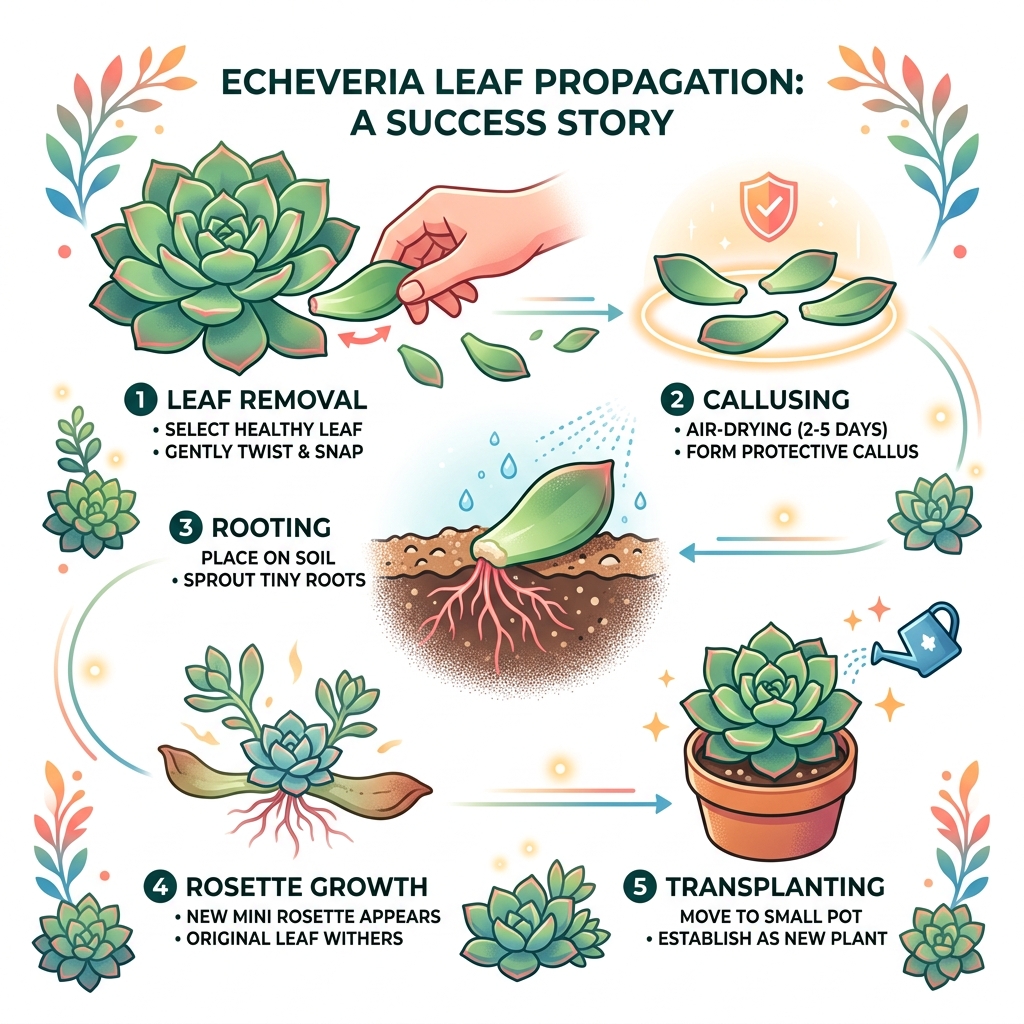
- Remove a healthy, plump leaf from the base of your Echeveria rosette
- Let it callous for 2–5 days in a dry, shaded spot
- Place it on top of well-draining succulent soil
- Mist lightly every few days
- Wait 2–4 weeks for roots and a tiny new rosette to appear
- Transplant once the baby plant reaches about 1 inch wide
That’s it. No greenhouse. No special tools. No green thumb required.
What makes this method so popular is how little it asks of you. Each fleshy Echeveria leaf acts like a self-contained power pack — it stores enough moisture and energy to sprout roots and a new rosette entirely on its own. You’re not grafting or cutting. You’re just letting the plant do what it naturally wants to do.
One honest note: not every leaf will make it. A failure rate of 50% or more on your first try is completely normal. The trick is to start several leaves at once and let the process surprise you.
Whether you have one Echeveria on a windowsill or a growing collection, this method lets you multiply your plants with almost zero cost or effort.
Selecting and Preparing Your Echeveria Leaf Propagation
The foundation of a successful propagation journey starts with the mother plant. Think of the parent Echeveria as the genetic blueprint; if the parent is struggling, the “clones” will likely struggle too. We always recommend choosing a healthy, hydrated plant that isn’t currently under stress from pests or extreme dehydration.
When we talk about echeveria leaf propagation, the “clean twist” is our most important technique. You don’t need scissors or a knife for this. In fact, using tools can sometimes crush the delicate tissues at the base of the leaf. Instead, grasp a mature leaf near the base of the rosette. Gently wiggle it back and forth until you hear or feel a “snap.”
The goal is to ensure the meristematic tissue—the specialized cells responsible for new growth—remains entirely on the leaf and not on the stem. If the leaf tears in the middle or leaves a chunk behind on the mother plant, it likely won’t propagate. For more foundational tips, check out our Beginner’s Guide: Propagating Succulents.

The Importance of Callusing in Echeveria Leaf Propagation
Once you have your leaves, your first instinct might be to stick them straight into water or wet soil. Resist that urge! Because Echeverias are desert-dwellers, a fresh “wound” is an open door for bacteria and fungi.
Callusing is the process where the leaf develops a layer of dry, protective scar tissue over the break point. We recommend placing your leaves on a dry paper towel or an empty tray in a spot with good air circulation but away from direct sunlight.
This waiting period typically takes 2 to 5 days. You’ll know they are ready when the end of the leaf feels dry and firm to the touch, rather than wet or sticky. This simple step is your best defense against the dreaded “mushy leaf” syndrome.
Selecting the Right Leaves for Success
Not all leaves are created equal. If you’re looking for the highest success rate, we suggest picking leaves from the bottom or middle tiers of the rosette. These are mature enough to have stored plenty of energy but aren’t so old that they are naturally reaching the end of their life cycle.
Look for leaves that are:
- Plump and firm: This indicates high water reserves.
- Uniform in color: Avoid leaves with yellowing, black spots, or translucent patches.
- Undamaged: Scratches or “bites” from pests can sap the leaf’s energy.
Each leaf is a tiny battery. A thin, dehydrated leaf will often run out of “juice” before it has time to grow roots. For a deeper dive into selecting the best material, see our Mastering Succulent Propagation: An In-Depth Guide.
Setting Up the Ideal Rooting Environment
While the leaf does most of the heavy lifting, the environment we provide can make or break the results. Echeverias hate “wet feet,” and this applies to their babies too.
The best medium for echeveria leaf propagation is a well-draining cactus or succulent mix. We often enhance store-bought mixes by adding extra perlite or pumice (a 1:1 ratio works wonders). This ensures that when we do mist the leaves, the water doesn’t sit and stagnate.
When choosing a tray, shallow is better. You don’t need a deep pot yet because the roots will be tiny. Many gardeners prefer terracotta saucers because the porous clay helps regulate moisture and allows the soil to breathe. For advice on picking the right setup, read about Choosing the Best Container for Succulent Propagation and The Importance of Well-Draining Soil in Watering Succulents.
Optimal Light and Temperature for Echeveria Leaf Propagation
Light is the fuel for growth, but too much of a good thing can be deadly. While mature Echeverias love basking in the sun, propagation leaves are vulnerable. Direct afternoon sun can literally cook a detached leaf in hours.
We aim for bright, indirect light. A north-facing windowsill or a spot a few feet away from a sunny south-facing window is usually perfect. If you’re growing outdoors, a shaded porch or “bright shade” under a tree works well.
Temperature-wise, these little guys are happiest when we are—between 60°F and 80°F. If it gets too cold, the metabolism of the leaf slows down, and it may take months to see progress. If it’s too hot, the leaf might dry out before the roots can find the soil.
Humidity and Airflow Requirements
Succulents generally prefer lower humidity, ideally in the 30–40% range. If the air is too stagnant and humid, you risk fungal infections or mold growing on the soil surface.
Good ventilation is key. We like to keep a small fan nearby if propagating indoors, or simply ensure the leaves aren’t crowded too closely together. Think of it as giving each baby plant its own personal “bubble” of fresh air. You can find more environmental tips in our guide on Succulent Propagation Techniques for Every Home Gardener.
Step-by-Step Guide to Growing New Rosettes
Now for the fun part: the actual growing. There are two main schools of thought here: soil propagation and dry air propagation.
| Feature | Soil Propagation | Dry Air Propagation |
|---|---|---|
| Setup | Lay leaves on top of succulent mix. | Lay leaves in an empty tray or egg carton. |
| Watering | Mist soil every few days when dry. | No water until roots appear. |
| Risk | Slightly higher risk of rot if over-misted. | Risk of roots drying out if not moved to soil quickly. |
| Success Rate | Very high for beginners. | Great for humid climates. |
Most of our success comes from the soil method. Simply lay your callused leaves flat on the soil. You don’t need to bury them! In fact, burying the “neck” of the leaf can lead to rot.
After about 2 weeks, you should start seeing tiny pink or white threads—these are the roots! Shortly after, a miniature rosette (the “pup”) will emerge from the same spot. For a step-by-step visual, refer to our Easy Guide to Propagate Succulents from Leaves.
Troubleshooting Common Echeveria Leaf Propagation Issues
Propagation is a game of patience, but sometimes things go sideways. Here are the “Big Three” issues we see:
- Leaf Rot: If the leaf turns black, translucent, or mushy, it’s game over for that specific leaf. This is usually caused by too much water or a leaf that didn’t callus properly. Remove it immediately so it doesn’t spread bacteria to the others.
- Etiolation: If the new tiny rosette looks “stretched out” or pale, it’s begging for more light. Move the tray to a brighter spot.
- Mealybugs: These tiny white fluff-balls love tender new growth. If you see them, use a cotton swab dipped in 70% isopropyl alcohol to dab them away.
While some gardeners use rooting hormone, we find that Echeverias are so vigorous that it’s rarely necessary. If you do use it, just a tiny “dusting” on the callused end is enough. Avoid common pitfalls by reading The Dos and Don’ts of Succulent Propagation.
Monitoring Root and Rosette Development
As the new plant grows, you’ll notice the “mother leaf” starts to look a bit sad. It might wrinkle, turn yellow, or shrivel up. Don’t panic! This is exactly what is supposed to happen.
The mother leaf is acting as a biological battery, pumping all its stored nutrients and water into the baby rosette. We never recommend pulling the mother leaf off prematurely. Let it fall off naturally once it is completely dry and crispy. This ensures the baby gets every last bit of help it can get. For more on this lifecycle, see Grow More Succulents: Propagation Techniques.
Transplanting and Long-Term Care
The “golden rule” for transplanting is the 1-inch rule. We wait until the new rosette is about an inch in diameter and the mother leaf has mostly shriveled away. At this point, the baby plant has enough of its own root system to survive in its own pot.
When you’re ready, gently lift the plantlet (and its roots) and place it in a small pot—usually no more than 2 inches wide. Using a pot that is too large can hold too much moisture, which we want to avoid. Use a high-quality succulent soil mix to give it the best start. Learn more about keeping your new plants thriving in our guide on How to Keep Your Indoor Succulents Healthy.
Post-Transplant Watering and Light
Once in its own home, the young Echeveria needs to be treated a bit differently than a mature plant. Its roots are still shallow, so it can’t go as long without water as a giant specimen could.
We recommend “gradual acclimation.” Slowly introduce the plant to slightly brighter light over a week or two. For watering, use the “soak and dry” method: water deeply until it runs out the drainage holes, then wait until the soil is completely dry before watering again. This encourages the roots to grow deep into the pot. For more on watering mechanics, see The Role of Drainage in Succulent Watering.
Frequently Asked Questions about Echeveria Propagation
What should I do if a rosette grows but no roots appear?
This is a common “glitch” in echeveria leaf propagation. Sometimes the leaf focuses all its energy on the leaves and forgets the roots. If this happens, try misting the soil directly under the rosette more frequently. The moisture can often “coax” the roots to emerge. If it still won’t root, you can try a tiny bit of rooting hormone or simply wait—sometimes they just take their sweet time!
Can I propagate Echeveria from damaged or older leaves?
You can try, but the success rate is much lower. Older leaves often lack the vigor to sustain a new plant, and damaged leaves are prone to rotting before they can sprout. If you’re short on material, go ahead and try, but don’t be discouraged if they don’t make it.
How long does it take for a propagated leaf to become a full-sized plant?
Succulents are not known for their speed! While you’ll see roots in 2–4 weeks, it can take 6 months to a year for a leaf cutting to look like a “real” plant you’d buy at a nursery. Enjoy the slow journey—it makes the final result even more satisfying.
Conclusion
At FinanceBoostX, we believe that gardening shouldn’t be a high-stress endeavor. Echeveria leaf propagation is the perfect entry point into “plant parenting.” It teaches us patience, observation, and the incredible resilience of nature.
Before you know it, that one Echeveria on your desk will have “grand-babies” all over your house. It’s a rewarding hobby that grows along with your collection. If you’re ready to dive deeper into “hens and chicks,” explore our full range of Succulent Care resources. Happy growing!
