
Turn One Succulent Into Many: What You Need to Know
Replanting succulents cuttings is one of the easiest and most rewarding things you can do as a plant lover — even if you’re short on time.
Quick answer: Here’s how to replant succulent cuttings in 5 steps:
- Take a cutting — snip a 2-6 inch stem or gently twist off a healthy leaf
- Let it callous — set it in a dry spot for 4-7 days until the cut end dries out
- Prepare your pot — use a small pot with drainage holes and gritty, fast-draining cactus mix
- Plant the cutting — push the stem 1-2 inches into the soil, or lay leaves flat on top
- Wait before watering — hold off for 2-3 weeks, then water lightly once roots form
Succulents store water and energy in their leaves, which means a single cutting can survive — and even thrive — with almost no help from you. That’s what makes propagation such a perfect fit for busy people who want beautiful plants without complicated care routines.
The best part? It costs almost nothing. One healthy plant can produce dozens of new ones. Commercial nurseries already know this — they grow 70-80% of all succulents from cuttings, with success rates above 85%.
You don’t need a green thumb. You just need the right steps.
Essential Tools and Materials for Success
Before we start snipping, we need to gather our “mise en place.” Just like a chef prepares their kitchen, a successful gardener prepares their station to avoid scrambling once the plants are vulnerable. Propagation is essentially creating a genetic clone of your favorite plant, and the secret lies in the meristem cells — these are the “stem cells” of the plant world that can transform into brand-new roots.
To give these cells the best chance, we need clean tools. Using dirty scissors is like a surgeon using a rusty scalpel; it’s an invitation for bacteria and fungus to ruin your hard work.
Here is our essential checklist:
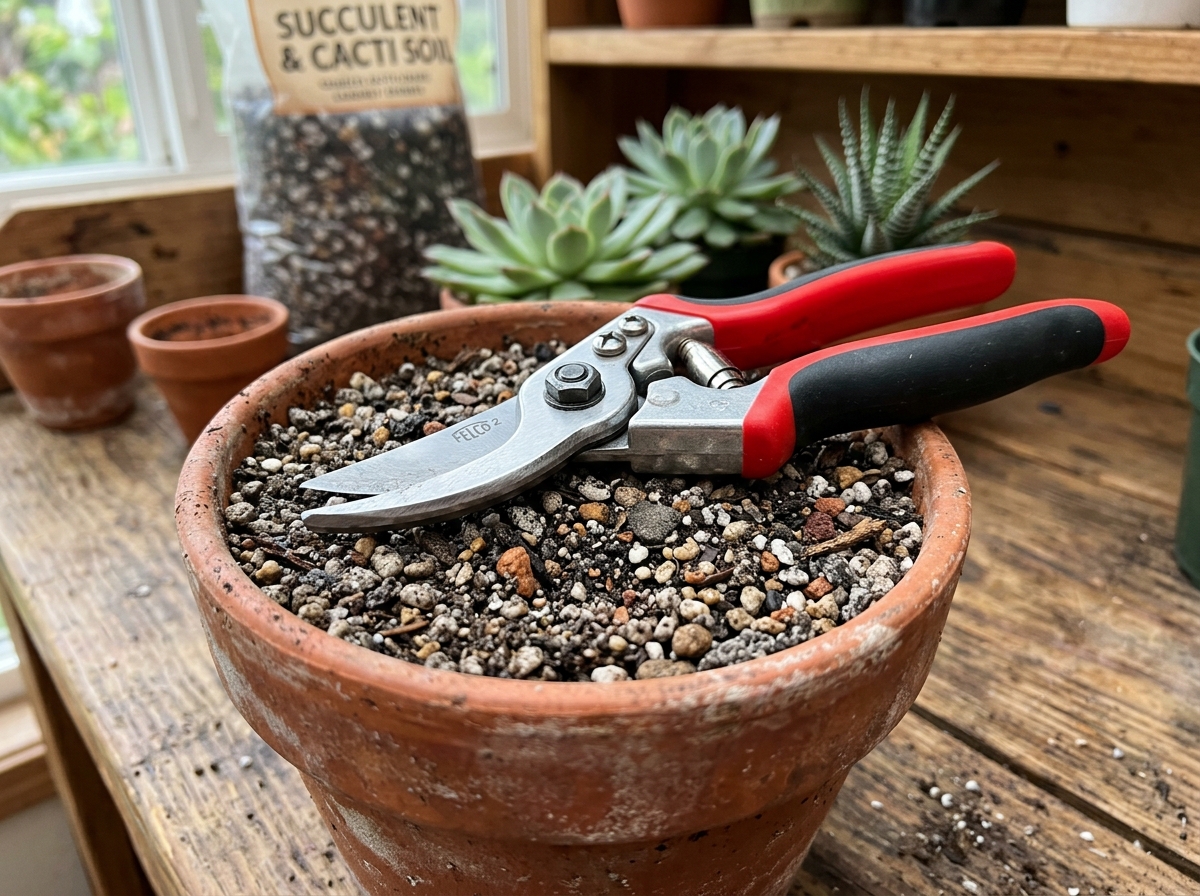
- Sharp Pruning Shears or Scissors: Use a clean, sharp blade to ensure a “swift” cut. Ragged edges take longer to heal and are more prone to rot.
- Sanitization Solution: We recommend a 10% bleach solution (1 part bleach to 9 parts water) or a quick wipe with rubbing alcohol to sterilize your tools between every single plant.
- Small Pots: New cuttings don’t need much space. In fact, a 2- to 4-inch pot is perfect. Large pots hold too much moisture, which is the number one enemy of a rootless cutting.
- Drainage Holes: This is non-negotiable. If your pot doesn’t have a hole at the bottom, your cutting will likely drown before it ever grows a root.
For more detailed technical advice on tool preparation, the How to Propagate Succulents | Yard and Garden guide from Iowa State University is a fantastic resource for horticultural standards.
Choosing the Best Soil and Pot
We cannot stress this enough: do not use standard garden soil or heavy potting mix. These are designed to hold onto water, but for replanting succulents cuttings, we need the opposite. We want soil that lets water pass through like a sieve.
The ideal “gritty” texture comes from a mix of organic and inorganic materials. A popular DIY recipe is:
- 3 parts potting soil
- 2 parts coarse sand (not beach sand!)
- 1 part perlite or pumice
This ratio ensures that the “meristem” area of the cutting stays oxygenated. If you’re feeling a bit overwhelmed by the choices, check out our guide on choosing-the-best-container-for-succulent-propagation to find the perfect home for your new plant babies. The goal is moisture control; we want the soil to be “damp” but never “wet.”
Preparing Your Cuttings: Stem, Leaf, and Pups
Not all succulents are created equal, and neither are the ways we take cuttings. Depending on the species, you might be looking for a stem, a leaf, or a “pup.”
Stem Cuttings: This is the most common method for branching plants like Jades or “leggy” Echeverias. We aim for a stem that is 2 to 6 inches long. The trick is to cut at a slight angle about one-quarter inch below a leaf node (the spot where a leaf meets the stem). This is where those magical meristem cells are most concentrated.
Leaf Cuttings: Perfect for rosettes like Echeveria or Sedum. Instead of cutting, we use a “gentle twist.” Hold a healthy, plump bottom leaf and wiggle it side-to-side until it “pops” off. It must be a clean break; if the base of the leaf stays on the stem, it won’t grow roots. A successful leaf will have a tiny concave “scoop” at the end.
Pups (Offsets): Some succulents, like Aloe or Haworthia, do the hard work for us by growing “babies” at their base. These are called pups. We wait until the pup is about one inch in diameter or 1/3 the size of the mother plant, then gently snip the connecting root and lift it out.
For a deeper dive into which method fits your specific plant, see our guide on up-your-gardening-game-propagating-succulents.
The Importance of Callousing Before Replanting Succulents Cuttings
This is the step most beginners skip, and it’s usually why their cuttings turn to mush. When you cut a succulent, you’ve essentially created an open wound. If you put that wound directly into moist soil, it will suck up too much water and rot.
The Callousing Process:
- Place your cuttings on a dry paper towel or a clean tray.
- Keep them in a warm, dry spot out of direct sunlight.
- Wait. For thin leaves, this might take 24–48 hours. For thick stems or cacti, it can take 4 to 7 days.
- Look for the “scab.” The cut end should look dry, puckered, and feel firm to the touch, not slimy.
Think of callousing as the plant’s version of a scab. It creates a protective barrier that prevents pathogens from entering the plant. According to the experts at How to Propagate Succulents: A Complete Guide – Smart Garden Guru , this waiting period is the single most important factor in preventing propagation failure. Humidity plays a role here, too — if you live in a damp climate, give it an extra day or two to be safe.
Step-by-Step Guide to Replanting Succulents Cuttings
Once your cuttings have a nice, dry callous, it’s time for the main event: replanting succulents cuttings.
For Stem Cuttings:
- Fill your pot with the gritty mix we discussed.
- Use a chopstick or pencil to poke a hole about 1-2 inches deep.
- Remove any leaves from the bottom inch of the stem so they don’t sit under the soil (they will rot!).
- Insert the stem into the hole and gently firm the soil around it to keep it upright.
For Leaf Cuttings: You don’t actually “plant” these in the traditional sense. Simply lay them flat on top of the soil. Some gardeners like to slightly tuck the calloused end into the dirt, but laying them on the surface works just as well. Within a few weeks, you’ll see tiny pink roots searching for the soil.
For Pups: Since pups often already have tiny roots, you can plant them directly into their own small pots. Treat them like miniature versions of the adult plant.
| Propagation Type | Time to See Roots | Time to Maturity | Best For |
|---|---|---|---|
| Stem Cuttings | 1 – 2 Weeks | 2 – 4 Months | Jade, Aeonium, Leggy Plants |
| Leaf Cuttings | 2 – 4 Weeks | 9 – 12 Months | Echeveria, Sedum, Graptopetalum |
| Pups/Offsets | Immediate | 1 – 2 Months | Aloe, Haworthia, Agave |
If you’re just starting out, our beginners-guide-propagating-succulents offers a simplified walkthrough to get your first tray started.
Initial Care After Replanting Succulents Cuttings
Congratulations! They are in the ground. Now, the hardest part: leave them alone.
New cuttings don’t have roots yet, so they cannot drink water. Watering them now is like trying to give a glass of water to someone who doesn’t have a mouth — it just makes a mess.
- Light: Place your pots in bright, indirect light. Avoid direct afternoon sun, as the cuttings are currently stressed and can sunburn easily. A windowsill with a sheer curtain is perfect.
- Temperature: Roots love warmth. Aim for 75-80°F (24-27°C). If your house is cold (below 60°F), root formation will slow down or stop entirely.
- Watering: Wait 2 to 3 weeks before watering stem cuttings. For leaves, you can lightly mist the soil surface every 5-7 days once you see those tiny pink roots appear.
- The Tug Test: After about 4 weeks, give the cutting a very gentle tug. If you feel resistance, it means roots have anchored into the soil! You can now transition to a regular “soak and dry” watering schedule.
For a list of what not to do during this sensitive phase, read the-dos-and-donts-of-succulent-propagation.
Troubleshooting Common Propagation Problems
If you find that your propagation attempts aren’t going as planned, don’t worry. Even professional nurseries expect a small percentage of failure. If 50% to 70% of your cuttings thrive, you’re doing a great job!
The “Mushy” Leaf (Rot): If your leaf turns yellow, translucent, or black and mushy, it’s rotting. This is usually caused by skipping the callousing step or watering too early. Discard these immediately so the fungus doesn’t spread.
Shriveled Cuttings: It’s normal for the “mother leaf” to shrivel as it gives its energy to the new baby plant. However, if the cutting itself is shriveling before roots form, it might need a tiny bit more humidity or slightly less light.
Leggy Growth: If your new babies are growing tall and skinny with lots of space between leaves, they are “stretching” for light. Move them to a brighter spot or consider a grow light positioned 6-12 inches above them for 14-16 hours a day.
No Roots After a Month: Some species are just slow. Kalanchoe can take over 50 days to root! If the cutting still looks healthy and green, just be patient. You can try adding a bit of “bottom heat” (like a seed starting mat) to speed things up.
For more solutions to tricky growth habits, check out succulent-propagation-techniques-for-every-home-gardener.
Frequently Asked Questions about Succulent Cuttings
Do I need rooting hormone for succulent cuttings?
In our experience, rooting hormone is entirely optional for most common succulents. These plants are naturally high in auxin, the hormone that drives root growth. However, if you are working with a rare or “difficult” species, dipping the calloused end in a rooting powder (which usually costs less than $10) can speed up the process by a week or two. It’s a nice “insurance policy” but not a requirement.
How long does it take for cuttings to root?
Generally, you should see the first signs of roots within 2 to 4 weeks. Environmental factors like temperature and light play a huge role. In a warm, bright room, a Sedum might root in just 10 days, while a larger cactus cutting might take a month or more to establish itself.
Which succulent species are easiest to propagate?
If you want a quick win, start with these:
- Sedum (Stonecrop): These are the overachievers of the succulent world.
- Echeveria: Most varieties root very easily from leaves.
- Jade Plant (Crassula ovata): Stem cuttings are almost foolproof.
- Graptosedum: These hybrids are incredibly resilient and fast-growing.
Conclusion
At FinanceBoostX, we believe that gardening shouldn’t be an expensive or stressful hobby. Replanting succulents cuttings is the ultimate way to grow your collection sustainably and for free. Whether you’re trying to fix a leggy plant that didn’t get enough sun or you want to create beautiful handmade gifts for friends, propagation is a skill that keeps on giving.
Remember: be patient, keep it dry, and don’t be afraid to experiment. With a little bit of time and the right soil, that one single leaf on your windowsill today could be a thriving, beautiful plant by next year.
For more advanced tips on taking your garden to the next level, explore our mastering-succulent-propagation-an-in-depth-guide or browse through our full library of Propagation Tips. Happy planting!
