
Why Most People Struggle With Caring for a Succulent Plant Indoors
Caring for a succulent plant indoors is simpler than most people think — once you know the rules.
Here’s the quick version:
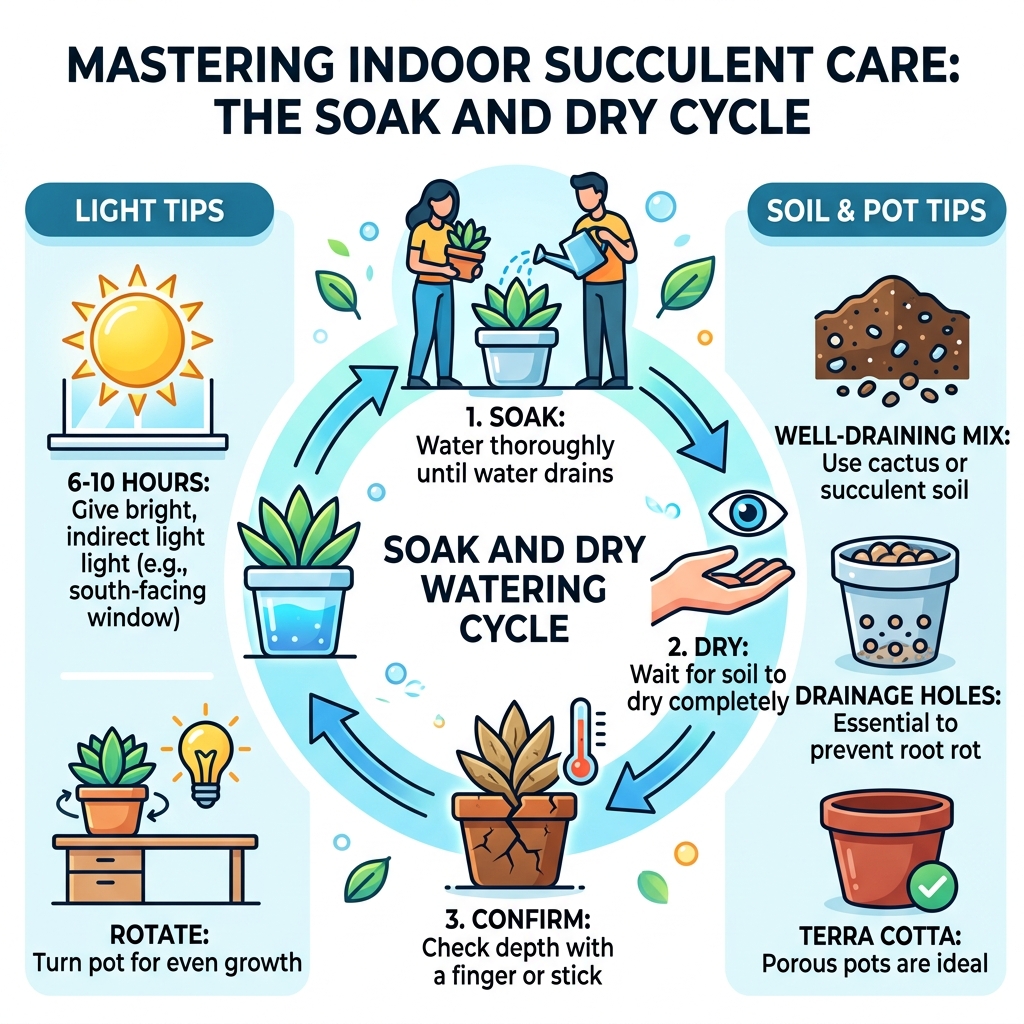
- Light: Place in the brightest spot you have. Aim for 6-10 hours of bright, indirect light daily.
- Water: Use the “Soak and Dry” method. Water thoroughly, then wait until the soil is completely dry before watering again.
- Soil: Use a well-draining cactus or succulent mix. Add perlite or coarse sand if needed.
- Pot: Always use a container with drainage holes. Terra cotta works best.
- Temperature: Keep between 55°F and 75°F. Succulents like it a little cooler at night.
- Fertilizer: Feed lightly in spring and summer only, at half strength.
That’s the core of it. Everything else is fine-tuning.
Succulents have a reputation for being nearly impossible to kill. And yet, overwatering is the single most common reason they die indoors. It’s a frustrating irony — people kill their low-maintenance plants by caring too much.
If you’ve ever watched a perfectly healthy succulent turn soft and mushy within weeks, you’re not alone. The problem usually isn’t neglect. It’s the wrong watering habit, the wrong pot, or a windowsill that doesn’t get enough light.
The good news? These are all easy fixes. With a few simple adjustments, succulents can thrive indoors for years — and with over 10,000 varieties to choose from, there’s one for every corner of your home.
Understanding the Basics of Caring for a Succulent Plant Indoors
To truly master caring for a succulent plant indoors, we first need to understand where these plants come from. Most succulents are desert natives, evolved to survive in some of the harshest environments on Earth. They are the ultimate survivalists of the plant world.
The word “succulent” comes from the Latin word sucus, which means “juice.” This is a nod to their most famous feature: thick, fleshy leaves and stems that act as internal reservoirs. When it rains in the desert, these plants drink up as much as they can, storing it for the long droughts ahead. This biological “water tank” is why they don’t need—and actually hate—frequent sips of water.
With over 10,000 species available, there is a staggering amount of variety in terms of color, texture, and size. While they are famous for their drought tolerance, growing them inside our homes presents a unique set of challenges. Indoors, we lack the intense desert sun and the constant airflow that helps moisture evaporate. This makes our choice of environment and tools critical for success. If you are just starting out, our Beginners Guide to Indoor Succulent Gardening is a fantastic place to get your feet wet (metaphorically speaking, of course).
According to Scientific research on succulent adaptations, these plants have developed specialized metabolic pathways to conserve water, but they still rely on us to provide the right balance of light and drainage to mimic their natural habitats.
Choosing the Best Varieties for Caring for a Succulent Plant Indoors
Not all succulents are created equal when it comes to living inside. Some demand “staring at the sun” levels of light, while others are perfectly happy in a bright corner.
When we are caring for a succulent plant indoors, we generally recommend starting with green varieties. A professional secret from expert growers is that succulents with deep green leaves typically have a higher survival rate indoors compared to those that are gray, blue, or bright purple. Those vibrant reds and purples often require intense, direct sunlight that most windows simply can’t provide.
Here are our top picks for indoor success:
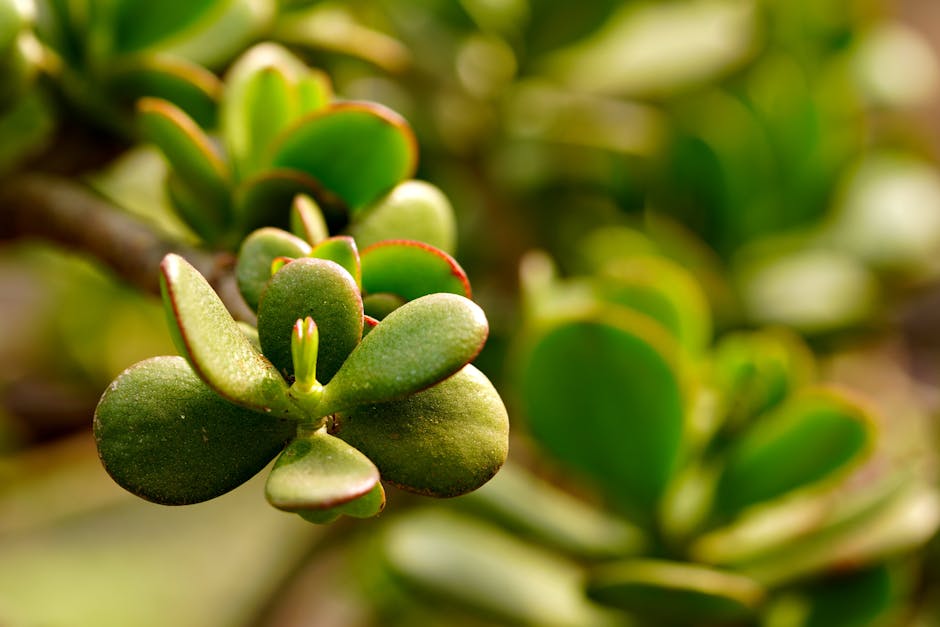
- Jade Plant (Crassula ovata): These are the “old faithfuls” of the succulent world. They can grow into miniature trees and are incredibly resilient.
- Aloe Vera: Not only is it hard to kill, but the sap inside is a famous remedy for burns and scrapes.
- Haworthia (Zebra Plant): These are fantastic because they actually prefer lower light than many other succulents. They stay small and have striking white stripes.
- Snake Plant (Sansevieria): Technically a succulent, these are the champions of low light. They are nearly indestructible.
For more detailed recommendations, check out our list of Top Succulent Varieties for Low Light.
Essential Tools for Caring for a Succulent Plant Indoors
You don’t need a shed full of equipment, but a few specific tools will make your life much easier.
- Terra Cotta Pots: If you are a beginner, unglazed terra cotta is your best friend. The porous clay “breathes,” allowing water to evaporate through the walls of the pot. This provides a safety net against overwatering.
- Drainage Holes: This is non-negotiable. If a pot doesn’t have a hole in the bottom, don’t use it for a succulent. Standing water at the bottom of a pot is a death sentence for succulent roots.
- Moisture Meter: If you struggle to tell if the soil is dry, a simple moisture meter can take the guesswork out of watering.
- Soft Brush: Succulent leaves can be delicate. A soft makeup brush or paintbrush is perfect for whisking away dust or stray soil without damaging the plant’s protective waxy coating.
Using the right gear is a big part of How to Keep Your Indoor Succulents Healthy over the long term.
Mastering Light and Temperature for Indoor Success
Light is often the most limiting factor when caring for a succulent plant indoors. In the wild, they might get 12 hours of intense sun. Inside, even a “bright” window provides significantly less energy.
Most succulents need at least six hours of sunlight per day, but many varieties actually thrive better with 10 or more hours of bright, indirect light. If your plant isn’t getting enough light, it will start to perform a “stretch” known as etiolation. This is when the plant grows tall and leggy, with wide spaces between the leaves, as it desperately reaches for a light source.
To prevent this, place your plants in the brightest window you have—usually south-facing in the Northern Hemisphere. We also recommend rotating your pots a quarter turn every week. Because of phototropism (the tendency of plants to grow toward the light), a stationary plant will eventually start to lean or grow lopsided.
Light Requirements Comparison
| Succulent Type | Light Level Needed | Best Placement |
|---|---|---|
| Echeveria | Very High | Direct sun, South window |
| Jade Plant | High | Bright indirect, some direct |
| Haworthia | Medium | Bright indirect, East/West window |
| Snake Plant | Low to Medium | Can handle corners or North windows |
If your home is naturally dim, don’t worry. There are plenty of Best Lighting Options for Indoor Succulents, including full-spectrum LED grow lights that can mimic the sun’s rays.
Temperature-wise, succulents are quite comfortable in our homes. They thrive in temperatures between 55°F and 75°F. Interestingly, they appreciate a “diurnal shift”—meaning they like it a bit cooler at night than during the day, which mimics the desert temperature drops. They also love low humidity, making them the perfect companions for the dry air found in most homes during the winter.
The “Soak and Dry” Method: Watering and Soil Essentials
If you take only one thing away from this guide, let it be this: Stop misting your succulents.
Succulents do not want a humid environment. Misting can lead to rot on the leaves and doesn’t actually provide enough water to the roots. Instead, we use the “Soak and Dry” method.
When the soil is bone-dry (test it by sticking your finger an inch or two into the soil), take the plant to the sink and water it until water pours out of the drainage holes. This ensures the entire root ball is saturated. Then—and this is the hard part—you must wait. Do not water again until the soil is completely dry from top to bottom. Depending on your home’s light and humidity, this might be every two weeks in the summer and once a month in the winter.
Overwatering is the leading cause of succulent death. When the soil stays wet, the roots can’t breathe, and they begin to rot. This rot then travels up the stem, turning the plant mushy. For a deeper dive, read How Often Should You Water Your Succulents and The Ultimate Guide to Watering Succulents.
The Perfect Soil Mix
Standard potting soil is designed to hold onto moisture—exactly what we don’t want. For caring for a succulent plant indoors, you need a “fast-draining” mix. You can buy a commercial cactus and succulent mix, or make your own. A great DIY recipe is:
- 1 part potting soil
- 1 part coarse sand
- 1 part perlite or pumice
This mixture ensures that water can flow through quickly and that air can reach the roots. Following these Pro-approved watering tips will keep your plants’ roots healthy and vibrant.
Troubleshooting Common Problems and Propagation
Even with the best care, you might run into a few hiccups. The key is to act fast.
Common Pests:
- Mealybugs: These look like tiny bits of white cotton hiding in the crevices of your plant. They suck the sap out of the leaves. The fix? Dip a cotton swab in rubbing alcohol and dab it directly onto the bugs.
- Fungus Gnats: These tiny black flies are a sign that your soil is staying too wet. Let the plant dry out completely, and they will usually disappear.
Plant Signals:
- Shriveling Leaves: If the bottom leaves are shriveling, it’s usually just the plant aging. If the new leaves are shriveling and the soil is dry, the plant is thirsty.
- Yellow/Mushy Leaves: This is the classic sign of overwatering. Stop watering immediately and consider repotting into fresh, dry soil.
The Magic of Propagation
One of the most rewarding parts of caring for a succulent plant indoors is making new plants for free! Most succulents are incredibly easy to propagate.
- Leaf Cuttings: Gently twist a leaf off the stem. Make sure it’s a clean break with no part of the leaf left on the stem. Let the leaf “callous” (dry out) for a few days, then lay it on top of some succulent soil. In a few weeks, you’ll see tiny pink roots and a miniature plant starting to grow.
- Stem Cuttings: If a plant has become “leggy,” you can cut the top off, let the end dry for a few days, and stick it back into the soil. It will grow new roots and become a compact plant again.
- Offsets: Many succulents, like Aloe or Echeveria, produce “pups” or offsets around the base. You can simply snip these off and give them their own pot.
Feeding and Repotting: Succulents aren’t heavy feeders. We recommend fertilizing only during the growing season (spring and summer) using a water-soluble fertilizer diluted to half or even quarter strength. As for repotting, succulents actually enjoy being a little bit “root-bound.” You only need to repot every two years or so, or when the plant has clearly outgrown its container.
Frequently Asked Questions
Are succulents safe for cats and dogs?
Many are, but some are definitely not. If you have curious pets, stick to Haworthia, Burro’s Tail, or Echeveria, which are generally non-toxic. Avoid Aloe Vera, Kalanchoe, and Jade, as these can cause stomach upset or more serious issues if ingested. Always place your plants on high shelves or in hanging planters if you’re unsure.
Can I move my indoor succulents outside for the summer?
Yes! They will love the extra light. However, you must wait until nighttime temperatures are consistently above 60°F. Most importantly, do not move them directly into full sun. They will get a “sunburn” (permanent white or brown patches). Move them to a shaded spot first and gradually introduce them to more light over two weeks.
Why is my succulent turning yellow and mushy?
This is almost always a sign of overwatering and the beginning of root rot. Check the roots; if they are black and slimy, they are rotten. You may be able to save the plant by cutting away the rotten parts and repotting the healthy top section as a new cutting in fresh, dry soil.
Conclusion
Caring for a succulent plant indoors is a journey of observation. These plants don’t ask for much, but they do ask for the right things. By providing ample light, a gritty soil mix, and mastering the “Soak and Dry” watering method, you can transform your home into a thriving indoor oasis.
Succulents are resilient. If you make a mistake, they are often forgiving enough to let you try again. Gardening should be therapeutic, not stressful! If you’re ready to dive even deeper into these “juicy” plants, Explore our full range of succulent care resources at FinanceBoostX. Happy planting!
