
How Long to Propagate Succulent Leaf – And What to Expect
How long to propagate succulent leaf depends on the stage you’re tracking – here’s a quick breakdown:
| Stage | Timeframe |
|---|---|
| Callousing (wound sealing) | 3-5 days |
| First roots appear | 2-3 weeks |
| Baby rosette (pup) visible | 4-8 weeks |
| Mother leaf shrivels, pup independent | 2-3 months |
| Pup ready to pot on its own | 3-4 months |
| Fully mature plant | 6-12 months |
These are averages. Spring propagations can run 2-3x faster than winter ones.
There is a moment many succulent owners know well. You accidentally knock a leaf off your Echeveria, leave it on the windowsill, and come back weeks later to find a tiny, alien-looking baby growing from the end.
That is not an accident. That is biology doing exactly what it is supposed to do.
Succulent leaves contain specialized cells at their base – called meristematic tissue – that can generate an entirely new plant. No soil, no water, no special tools required at first. The leaf is essentially a packed lunch for the baby plant, supplying nutrients until the new roots can take over.
The catch? It takes patience. The full journey from a single leaf to an independent plant takes anywhere from 3 months to nearly a year, depending on the species, season, and conditions.
If you are a busy person who wants results without fuss, knowing the timeline upfront saves a lot of frustration. Most people give up too early – or water too soon – and lose their propagations without ever knowing why.
The Step-by-Step Timeline: How Long to Propagate Succulent Leaf?
When we talk about how long to propagate succulent leaf cuttings, we have to look at it as a series of biological milestones. It isn’t a “set it and forget it” for three days; it is a slow-motion transformation. Understanding the timeline helps you resist the urge to tinker with the leaves, which is often the leading cause of propagation failure.
The process begins the moment the leaf leaves the mother plant. If you’ve ever had a leggy plant that needs a haircut, you’re in the perfect position to up your gardening game: Propagating succulents by turning those extra leaves into a brand-new collection.
One of the most important things we’ve learned is that the leaf needs to feel a bit of “stress” to trigger its survival mechanism. If the environment is too perfect — too wet or too dark — the leaf might just sit there or, worse, rot. It needs to realize it is no longer attached to its water source to start pushing out those tiny pink roots in search of moisture.
Phase 1: Callousing and Initial Rooting (Weeks 1-3)
The very first step is the “clean snap.” To propagate successfully, the leaf must be removed entirely from the stem. If the base of the leaf is torn or left behind on the stem, it won’t have the necessary meristematic tissue to grow a new pup. We always recommend a gentle wiggle and twist until the leaf pops off with a “U” shaped base.
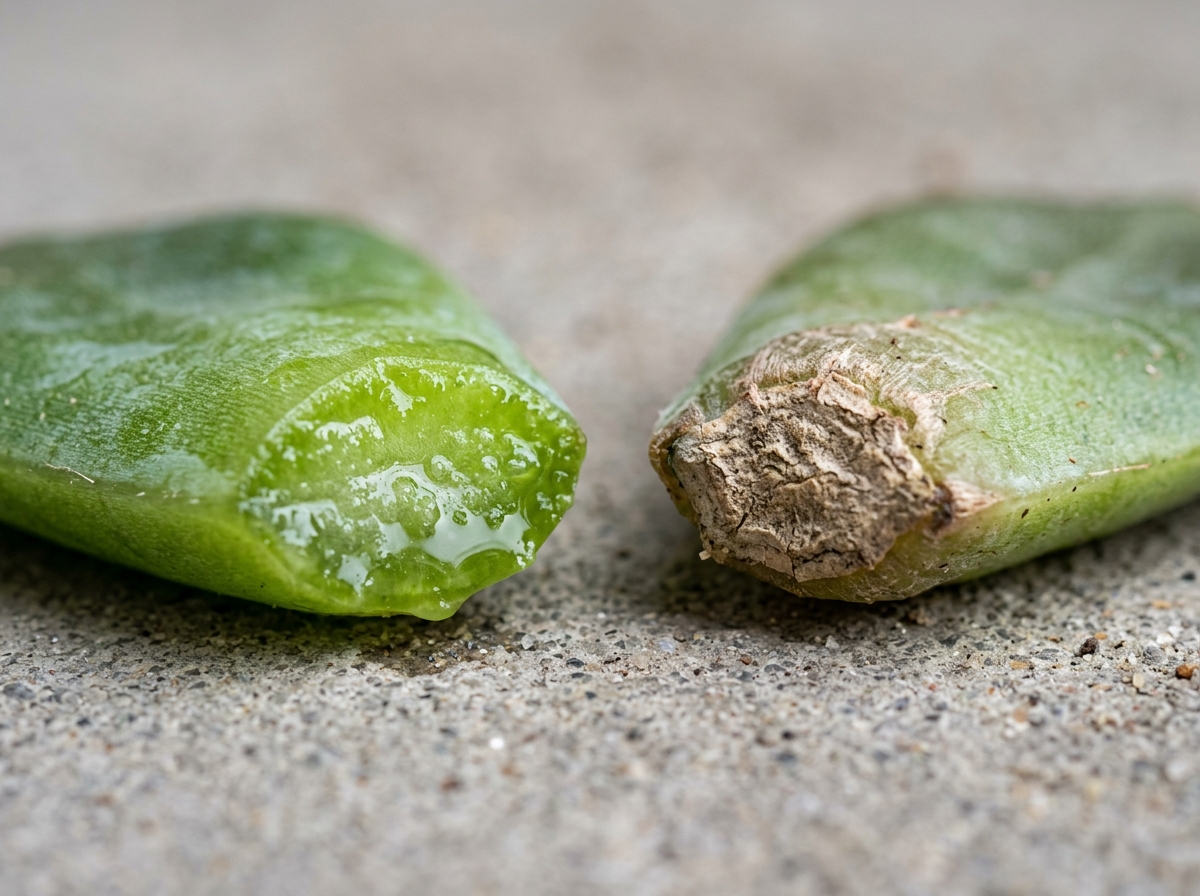
Once harvested, the leaf has an open wound. Just like a scraped knee, it needs to form a scab. This is called callousing. We recommend laying your leaves on a dry paper towel in a spot with bright, indirect light. How long to propagate succulent leaf callouses? Usually 3 to 5 days. In humid climates, it might take up to a week. Do not skip this! If you put a “wet” leaf on moist soil, it will absorb too much water through the wound and turn into black mush.
By the end of week two or three, you should see the first signs of life. These usually appear as tiny, hair-like pink or white roots stretching out from the calloused end. At this stage, the leaf is still living off its own internal water stores.
Phase 2: Seeing Results and How Long to Propagate Succulent Leaf Pups (Weeks 4-8)
This is the most exciting part of the journey. Once roots are established, the plantlet (or pup) will begin to form. It looks like a miniature version of the parent plant, often starting as a tiny speck that grows into a recognizable rosette.
During this phase, the mother leaf is still plump and green. It is actively pumping all its stored water and nutrients into the baby. According to our easy guide to propagate succulents from leaves, you might see roots first, the pup first, or both at once. Don’t panic if you see roots but no leaves — sometimes the baby is just a late bloomer.
By week 8, most common succulents like Echeveria or Sedum will have a visible pup. This is the “incubation” period where the leaf is most vulnerable to rot if overwatered, but also most in need of bright (but not direct) light to prevent the new baby from stretching.
Phase 3: Independence and How Long to Propagate Succulent Leaf to Maturity (3-8 Months)
As the baby grows, the mother leaf will begin to look like a raisin. It will wrinkle, yellow, and eventually become a crispy brown shell. This is a good sign! It means the pup has successfully drained its “packed lunch” and is ready to be a grown-up plant.
Never pull the mother leaf off while it is still fleshy. If you tear it away too early, you might damage the delicate connection to the pup’s roots. Wait until it falls off with a gentle touch. Once the mother leaf is gone, the pup is independent.
How long to propagate succulent leaf cuttings to full maturity depends heavily on the species. Here is a comparison of what we typically see in our propagation trays:
| Succulent Type | Roots Appear | Pup Appears | Ready to Pot |
|---|---|---|---|
| Echeveria | 2-3 Weeks | 4-6 Weeks | 3-4 Months |
| Pachyphytum | 5-6 Weeks | 3 Months | 8 Months |
| Sedum | 1-2 Weeks | 3-4 Weeks | 2-3 Months |
| Graptopetalum | 2-3 Weeks | 5-7 Weeks | 4 Months |
Critical Factors That Influence Your Propagation Speed
While the biology of the plant sets the baseline, we can certainly influence the speed of the process. If you are propagating in the middle of a dark, cold winter, how long to propagate succulent leaf babies can double or even triple. Conversely, spring is the “magic window” where everything moves at lightning speed.
For those looking to master the art, mastering succulent propagation: An in-depth guide highlights that timing is often more important than the specific soil you use. Succulents have natural dormancy periods. Most are active in the spring and fall, meaning they are biologically “primed” to grow. If you take a leaf from a dormant plant, it might just sit there for months without doing a single thing.
The Role of Light and Temperature
Light is the engine of growth. However, baby succulents are delicate; they don’t have the thick, waxy UV protection that adult plants have. If you put your propagation tray in direct afternoon sun, you will likely fry them in a matter of hours.
We recommend “bright shade” or filtered light. A north or east-facing window is usually perfect. If the light is too low, you’ll notice the tiny pups growing tall and skinny rather than forming a tight rosette. This is called etiolation, and it’s a sign your babies are “stretching” to find the sun.
Temperature also plays a huge role. The sweet spot for most succulents is between 70°F and 85°F. If your house is chilly, a seedling heat mat can drastically reduce how long to propagate succulent leaf roots. Warmth signals to the plant that it is the growing season, encouraging faster cell division.
Watering Schedules and Soil Moisture
This is where most beginners fail. We often hear the question: “Should I mist my leaves every day?” The answer is a resounding no — at least not until you see roots.
A leaf without roots has no “mouth.” It cannot drink water from the soil. Misting a rootless leaf only increases the humidity around the wound, which invites fungal rot. We follow the “No Roots, No Water” rule. Once you see those little pink fingers reaching into the air, you can place the leaf on top of well-draining soil and begin light misting every 2-3 days.
The goal is to keep the roots hydrated without soaking the mother leaf. Some growers prefer bottom watering, where you let the soil wick up moisture from a tray. This encourages the roots to grow downward into the soil in search of water. For a deeper dive into these techniques, check out the dos and don’ts of succulent propagation.
Troubleshooting: Why Some Leaves Fail and How to Speed Up Growth
Even with perfect conditions, you should expect a few casualties. Not every leaf is destined to become a plant. In fact, a 50-70% success rate is actually quite good for beginners. If you want to increase those odds, you might want to look into grow more succulents: Propagation techniques that go beyond just laying leaves on dirt.
One common frustration is the “Zombie Leaf.” This is a leaf that grows a massive, healthy root system but never produces a pup. It can stay alive for years as a single leaf with roots. Unfortunately, there isn’t much you can do for a zombie leaf; it simply lacked the right growth cells at the base. On the flip side, you might get a pup with no roots. In this case, keep the pup on damp soil and hope it eventually decides to grow its own “mouth.”
Identifying and Preventing Rot
Rot is the number one killer of succulent propagations. It usually presents as the leaf turning translucent, yellow, or black and mushy. Once rot starts, the leaf is toast. You cannot save a rotting propagation leaf.
To prevent this:
- Ensure a clean break: Use only healthy, plump leaves. Wrinkled or damaged leaves are already struggling.
- Air circulation: Don’t crowd your leaves. They need airflow to keep the surface dry.
- Sterilize your tools: If you are taking cuttings, wipe your scissors with rubbing alcohol first.
Methods to Accelerate Root Development
If you’re impatient (and we don’t blame you!), there are a few “hacks” to speed up the how long to propagate succulent leaf timeline.
- Water Propagation: Some enthusiasts swear by hovering leaves over a jar of water. The humidity encourages roots to reach down quickly. While roots often grow faster in water (sometimes in just 1-2 weeks), they are “water roots” and can be fragile when you finally move them to soil.
- Rooting Hormone: Dipping the calloused end of the leaf into a rooting powder can give it a chemical nudge. While not strictly necessary for most succulents, it can help stubborn varieties.
- Cinnamon Powder: A natural antifungal, dusting the fresh cut with cinnamon can help the callous form safely without the risk of mold.
For a more detailed comparison of these methods, our succulent propagation: A comprehensive look explores which techniques work best for specific climates.
Frequently Asked Questions about Succulent Leaf Propagation
When is the best time of year to propagate succulents for the fastest results?
Spring and early summer are undoubtedly the best times. This is when succulents are in their active growth phase. A leaf that takes 8 weeks to grow a pup in the winter might do the same in just 3 weeks during a warm, bright April. If you must propagate in winter, consider using a grow light and a heat mat to mimic spring conditions.
Should I water my succulent leaves before roots appear?
No. Until the leaf has roots, it has no way to absorb water. Adding moisture to the soil before roots appear only increases the risk of the leaf rotting. The mother leaf has all the water the baby needs for the first few weeks of its life.
Why do some leaves grow roots but never produce a new plantlet?
These are often called “Zombie Leaves.” This happens when the leaf was removed in a way that didn’t include the necessary growth cells (meristematic tissue) from the stem. While the leaf can still produce roots to sustain itself, it doesn’t have the “blueprint” to build a new rosette.
Conclusion
Propagating succulents from a single leaf is one of the most rewarding experiences in gardening. It feels like a “cloning glitch” in nature — the idea that a single fallen leaf can turn into a magnificent, multi-headed plant over time.
While the answer to how long to propagate succulent leaf cuttings is “longer than you think,” the process is remarkably low-maintenance once you understand the rhythm. By respecting the callousing phase, providing the right light, and resisting the urge to overwater, you can turn one leggy plant into a dozen new gifts for friends or additions to your own indoor jungle.
At FinanceBoostX, we believe in sustainable gardening that doesn’t have to cost a fortune. Propagation is the ultimate way to grow your collection for free. For more advice on keeping your new pups thriving, check out our more succulent care tips.
